
Established engineering systems
Design artifacts, models, test evidence
Continue using the specialized tools that own your design data, numerical simulations, product records and experimental results.
CAD / CAE · Simulation · PLM · Test
Engineering solutions / By team
Build a stronger basis for what to develop, test, and invest in next.
The R&D reality
Whether a team is developing equipment architecture, new materials, process chemistry, or another product capability, the technical path is rarely obvious. Requirements compete. Assumptions are untested. Several approaches may look promising.
The real challenge is deciding which questions deserve attention before the next major development commitment.
The engineering challenge behind innovation
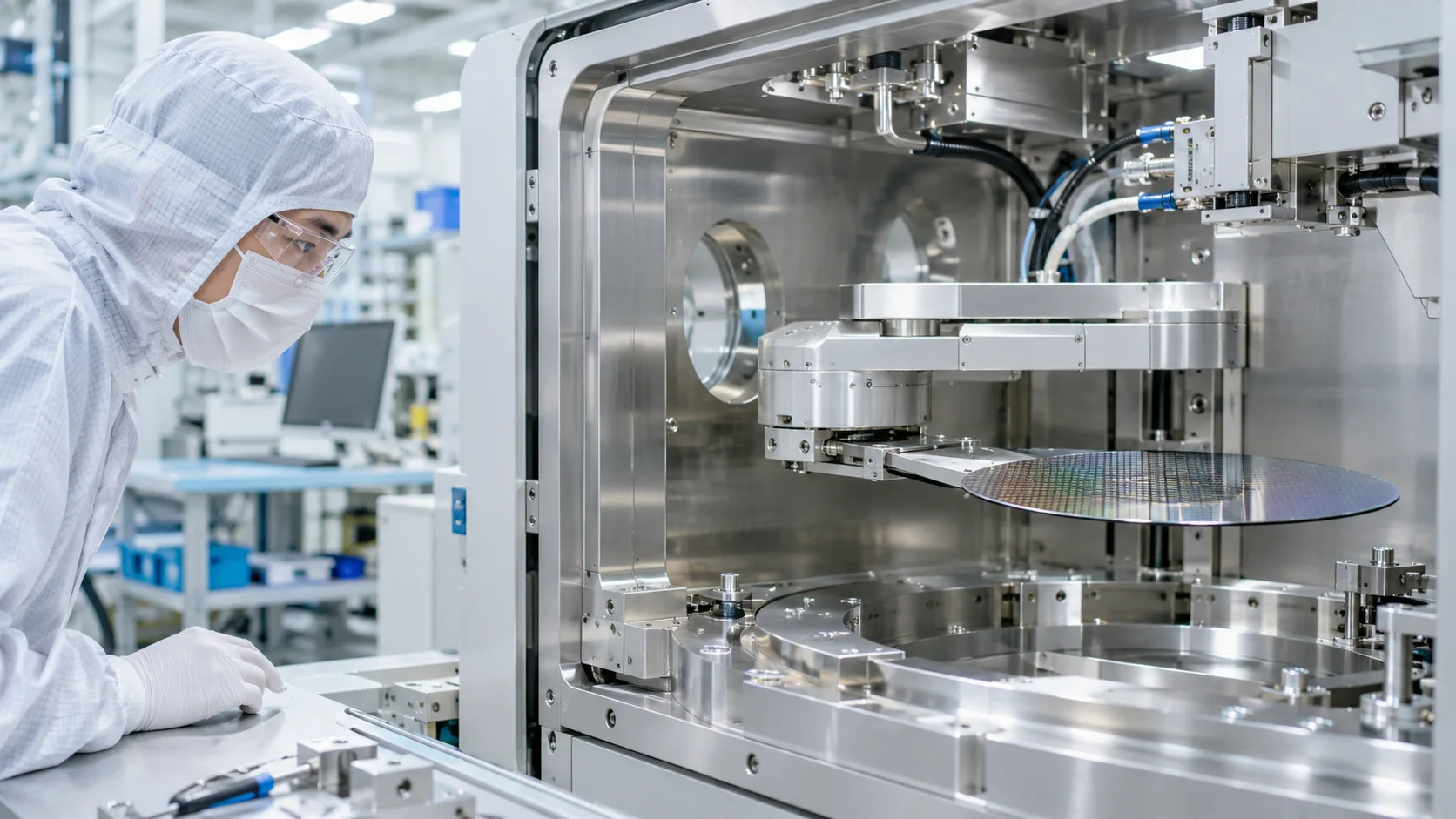
Whether developing equipment architectures, new materials, process chemistries or product capabilities, Ru0026D teams must understand competing requirements and test assumptions before choosing where to invest. Below is one illustrative wafer-handling example.
Illustrative example · Wafer-handling development
Engineering question / Throughput
Faster motion may shorten one part of the cycle while increasing the importance of settling time, coordination, and repeatability.
Which functions or interactions determine cycle time—and which assumptions require measurement or a controlled test?
Engineering question / Precision
Repeatable positioning depends on the behavior of the mechanism, trajectory, sensing and operating conditions. The important contributors must be understood rather than assumed.
Which mechanical and control effects might move wafer placement out of tolerance, and how would the team test them?
Engineering question / Particle risk
Changes intended to improve performance can affect contact, wear, vibration or material exposure. The team needs evidence about the dominant risk mechanisms.
Which contacts, motions or surfaces merit attention—and what experiment could distinguish them?
Engineering question / Reliability
A design that looks promising in a short trial still requires an understanding of component loads, wear modes, maintenance conditions and operating variability.
Which lifetime assumptions are critical, and what evidence is needed before committing to a hardware architecture?
Beyond wafer handling
The technology changes, but the engineering practice carries across Ru0026D: clarify the system, challenge assumptions, explore alternatives, and identify the evidence needed for the next human decision.
Where PRIZ contributes
PRIZ supports the engineering thinking around a difficult development decision: shaping the opportunity, making functions and unknowns explicit, developing alternatives, and retaining what the team learns.
Better concepts begin with questions the team can actually investigate.
Explore how PRIZ works Explore Systematic InnovationFrame the target capability, value at stake, constraints, and the decision that needs to be made before committing meaningful resources.
Use Functional Thinking and appropriate engineering methods to examine what the system must do, how elements interact, and which assumptions are still open.
Challenge the first plausible concept and develop different technical approaches with their own unknowns and validation needs.
Preserve models, evidence, rejected directions, decisions, and later learning as the engineering work develops.
From exploration to investment
Before committing significant development resources, engineers and technical leaders need to understand the alternatives, the assumptions behind them, and what evidence would justify moving forward.
Make expected benefits, constraints, and the technical reasoning behind plausible approaches visible.
Identify critical assumptions, technical risks, and questions that still need investigation.
Determine which experiment, analysis, or prototype could provide useful evidence for the next decision.
Human decision
Which direction deserves more engineering effort—and what evidence would justify that investment?
What survives the decision
A selected concept is only one result. The reasoning that led there—and the evidence that changed minds along the way—can inform the next design challenge.
Observations, design constraints, models, and the evidence behind the starting point.
Assumptions, open questions, and why particular experiments mattered.
Alternatives, trade-offs, rejected approaches, and the rationale for development decisions.
Findings and outcomes that can strengthen later engineering work.
Alongside your engineering environment
CAD, CAE, simulation, PLM and test systems have their own jobs. PRIZ focuses on developing the engineering questions, functional understanding, alternatives, decisions and learning around the work.
Established engineering systems
Continue using the specialized tools that own your design data, numerical simulations, product records and experimental results.
CAD / CAE · Simulation · PLM · Test
PRIZ · Engineering Operating System
Keep the questions, assumptions, functional understanding, alternative concepts and engineering rationale together as work develops.
Develop a clearer system-level understanding, explore directions with more continuity, and preserve the contribution behind a technical decision.
See the opportunity, uncertainty and rationale behind proposals so development attention and resource decisions can be discussed on a stronger basis.
Questions from R&D teams
No. PRIZ supports engineering reasoning and retained learning around technical work. Specialized systems remain responsible for their own engineering artifacts, measurements and execution.
No. Engineers and leaders retain responsibility for design, resource and investment decisions. PRIZ helps structure the understanding, alternatives, unknowns and rationale used to decide.
Yes. A competing requirement, unclear design behavior, untested technical assumption or a promising direction whose feasibility remains uncertain can be a useful Engineering Opportunity.