

01 / Existing systems
Signals and records
SPC, equipment history, process measurements, and quality records remain in the systems that own them.
Solutions · By team
Make better-informed decisions about recurring defects, excursions, and change risks—and carry the learning into the next investigation.
For quality and engineering leaders
Recurring defects, process excursions, and change risks consume valuable engineering attention. PRIZ helps teams connect evidence, develop stronger technical understanding, and carry learning into future work.
PRIZ guides the engineering work. Your team owns the judgment, decisions, and implementation.

The reality of quality work
Quality teams protect the next run while evidence is still scattered and the mechanism uncertain.
A similar failure returns after an earlier investigation or temporary corrective action.
A new trend appears across tools, lots, shifts, or operating conditions.
Maintenance, equipment, materials, or recipes introduce new questions about stability.
Evidence, rejected hypotheses, and decisions remain scattered across teams and files.
An illustrative investigation
See how the situation moves from fragmented observations to a more defensible next engineering decision.
Shape / before resource commitment
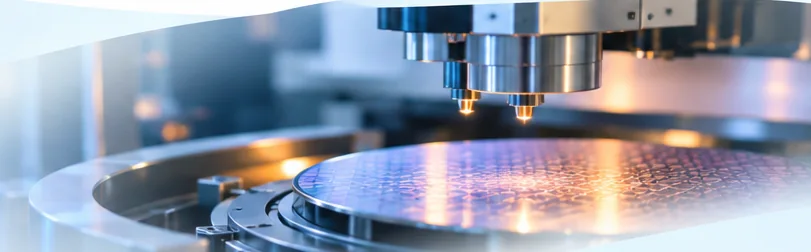
A particle trend appears after filter maintenance and a chemistry-container change. The team’s first job is to turn scattered observations into a coherent Engineering Opportunity, not to jump to a conclusion.
Guide & Develop / after commitment
Once resources are committed, the engineering team develops competing explanations, makes unknowns explicit, and identifies the observations or tests most likely to separate one explanation from another.
Solve & learn / human ownership remains central
After technical work progresses, people still own the decision. They decide what actions to take, who is accountable, and what should be retained so the next investigation begins with better context.
Value for quality leaders
Give teams a clearer basis for judgment and make their technical contribution easier to understand, review, and build on.
Evidence, assumptions, and unknowns remain visible as understanding develops.
Leaders review a shared view of the situation and what may be at stake.
Options can be understood through the reasoning and trade-offs behind them.
Future teams can revisit earlier observations, decisions, and related investigations.
Where PRIZ fits
Technical systems hold measurements and records. PRIZ supports the engineering reasoning that connects the evidence to possible responses. People decide what to change and how to verify results.
01 / Existing systems
SPC, equipment history, process measurements, and quality records remain in the systems that own them.
02 / PRIZ
Evidence, unknowns, hypotheses, methods, solution thinking, and retained learning develop together.
03 / Human-led action
Engineering, quality, and operations leaders determine action, execute changes, and verify outcomes.
Questions from quality teams
No. PRIZ is positioned to support engineering understanding and solution development alongside existing measurement, quality-record, and execution systems.
No. PRIZ helps people examine evidence, expose unknowns, apply appropriate methods, and develop alternatives. Engineers and leaders remain responsible for technical conclusions, approvals, and implementation.
A recurring defect, unexplained excursion, or a change that introduces technical uncertainty. Partial evidence can be a useful starting point if the signal and next decision are clear.