Get Started Free

PRIZ Riddles

Put your engineering intuition to work.

Short, sharp challenges designed to make you pause, reason, and see the problem differently.
Every problem rewards a different way of thinking.

Riddle #07 • Logic 4 min Hard
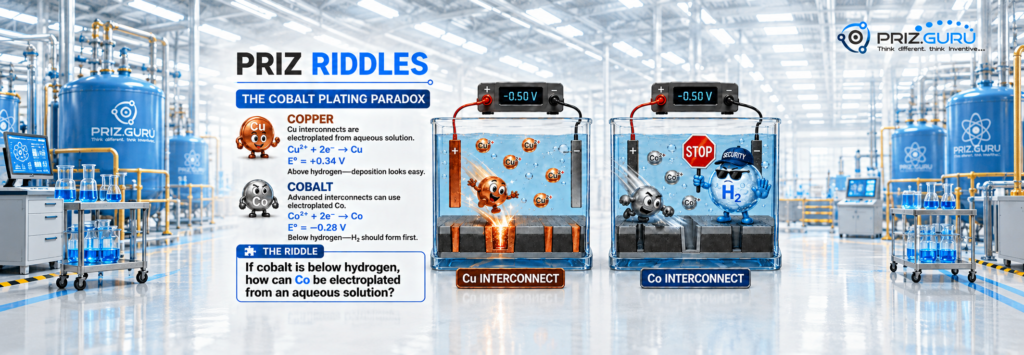
The Cobalt Plating Paradox
Copper can be electroplated from an aqueous solution. Cobalt is below hydrogen in the electrochemical series, yet cobalt can also be electroplated from water. How is that possible?
Solve it
Riddle #06 • Logic 3 min Hard
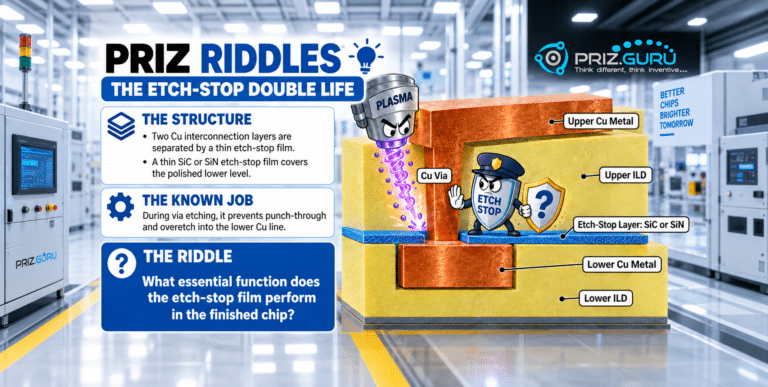
The Etch-Stop Double Life
An etch-stop film protects the lower copper line during via etching, but its job does not end when fabrication is complete.
Solve it
Riddle #05 • Logic 4 min Medium
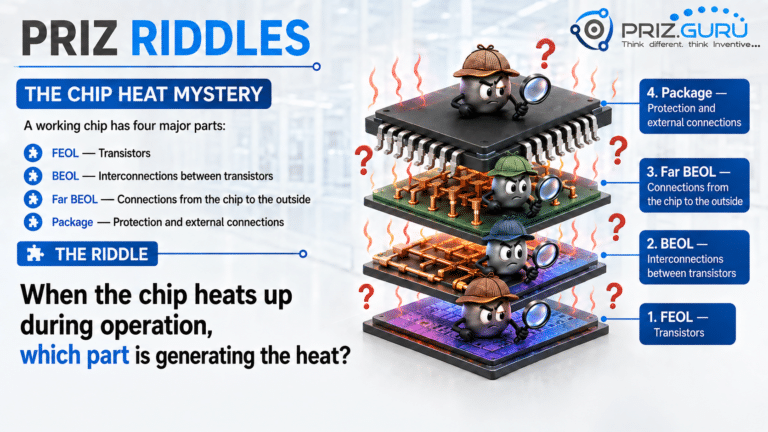
The Chip Heat Mystery
A working chip contains billions of transistors and many layers of metal interconnections. When the chip becomes hot, where is the heat actually generated?
Solve it
Riddle #04 • Logic 4 min Medium
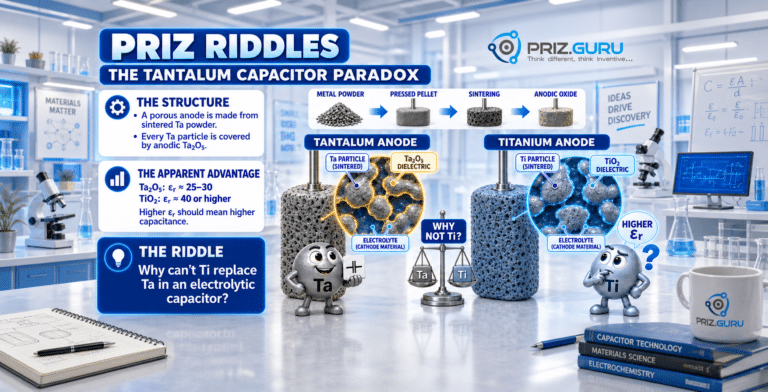
The Tantalum Capacitor Paradox
Titanium oxide has a higher dielectric permittivity than tantalum oxide. So why are porous electrolytic capacitors made from tantalum rather than titanium?
Solve it
Riddle #03 • Logic 3 min Medium
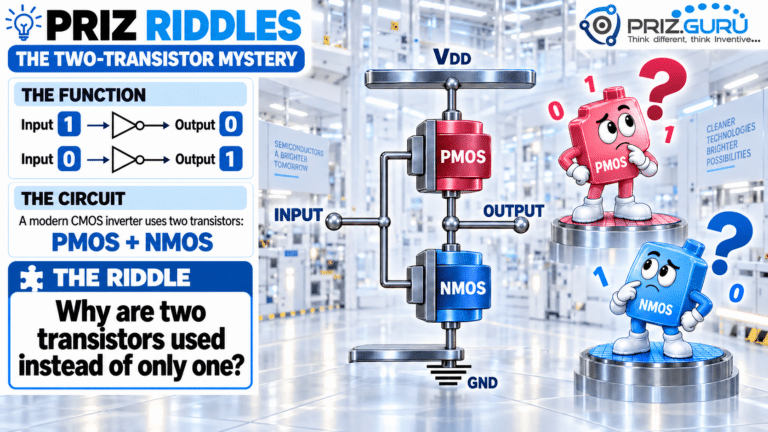
Two Transistors. One Inverter.
A digital inverter performs the simplest possible logic operation: it changes 1 into 0 and 0 into 1. So why does it need two transistors?
Solve it
Riddle #02 • Logic 5 min Hard
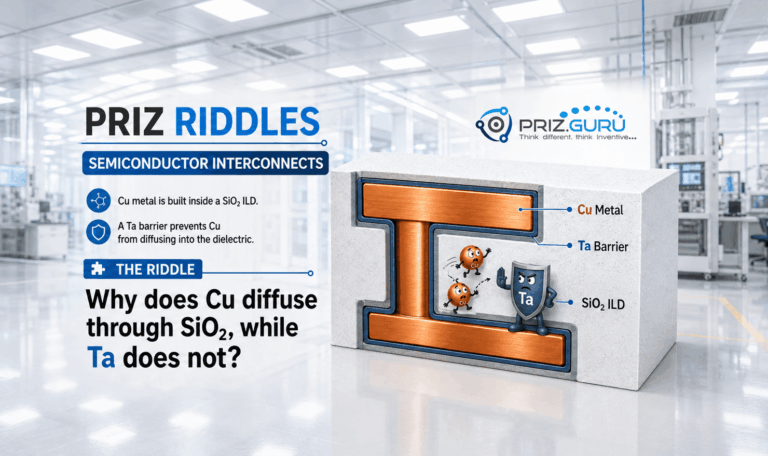
Copper Interconnects
The back end of line (BEOL) connects the transistors formed in the chip’s front end of line (FEOL). The interconnect lines are built within an interlayer dielectric (ILD), typically based on silicon oxide. Copper is widely used for these interconnects because of its excellent electrical conductivity.
Solve it
Riddle #01 • Logic 5 min Medium
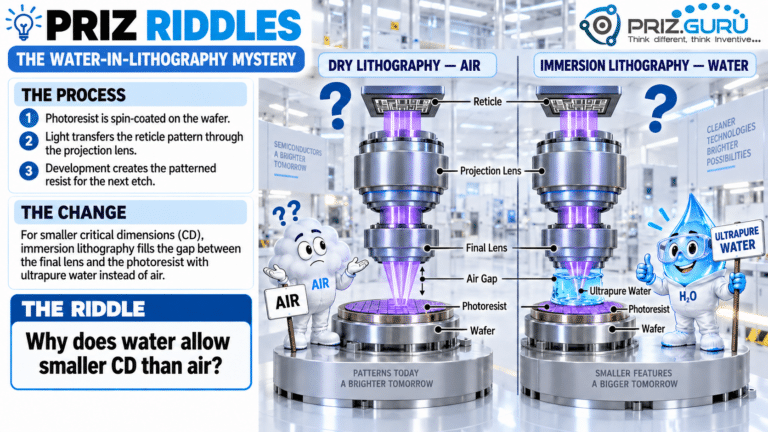
Water in the Light Path
The light source is unchanged. The reticle is unchanged. The projection lens is unchanged. Only air is replaced with water, yet smaller features can be printed.
Solve it

More than a brain teaser.

Practice the habits behind better problem solving.

Each explanation connects the answer to a practical thinking principle you can use on real engineering challenges.

Explore PRIZ methods