
Product Tour
Follow one engineering opportunity from the first signal to shared learning.
See how a team can bring a technical situation into focus, agree where to invest engineering attention, develop a stronger solution, and retain what they learn.

Where engineering work begins
The work starts before there is a project.
A recurring defect. An unexpected trend. A process change that raises questions. The first signal is rarely a complete problem definition.
Before resources are committed, engineers need to understand what happened, what remains uncertain, and why the situation may be worth pursuing.
01 / Shape
Start with what the team already knows.
Bring the notes, observations, and unanswered questions. PRIZ structures them into an editable Problem Candidate for the engineer to check before it is saved.
The engineer owns the framing. Saving does not approve the work.
Shape Investigation See how the process works
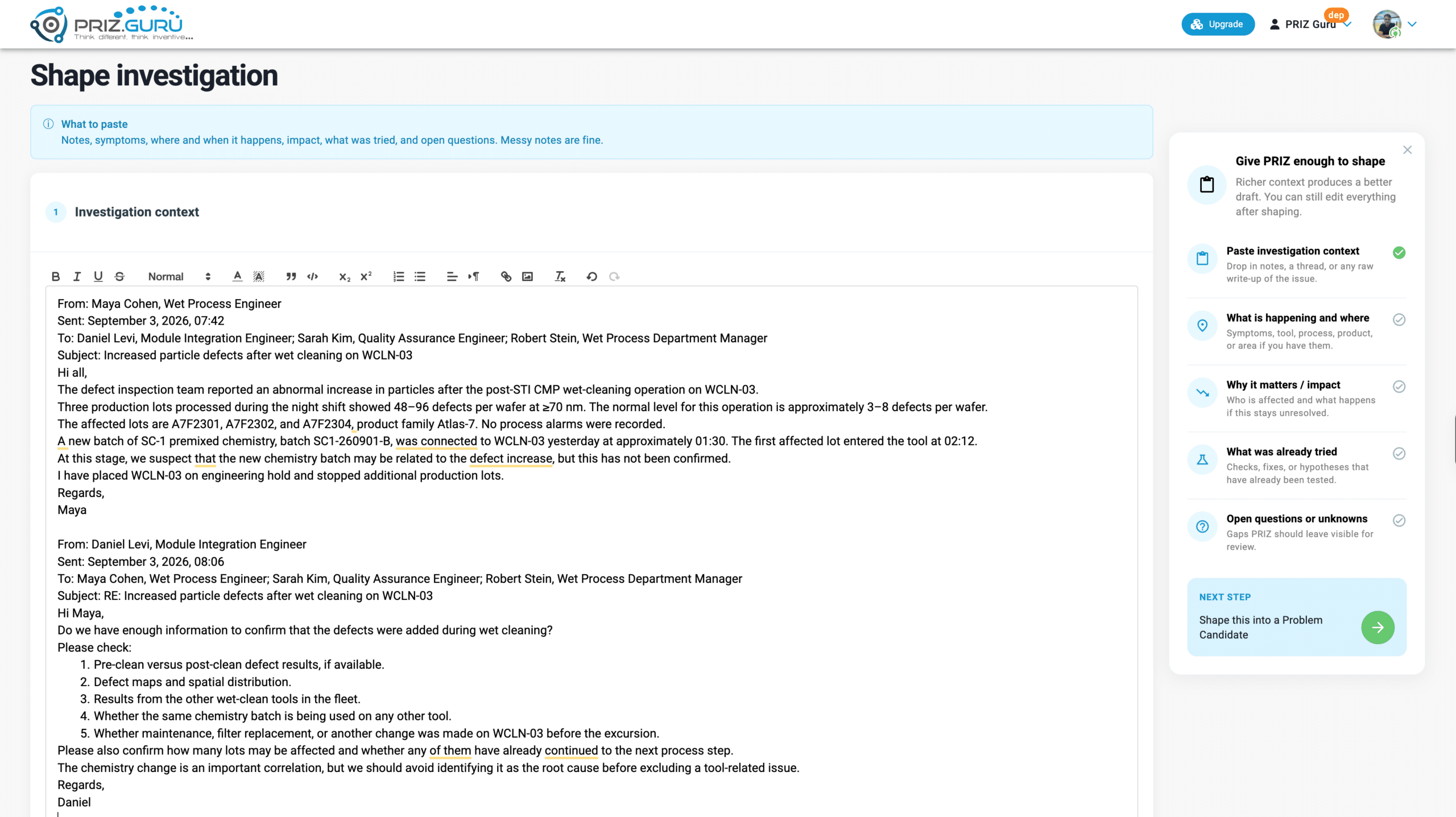
01 / Paste context
Bring existing notes and observations into one place. On-screen guidance helps engineers capture what matters without writing a polished report.
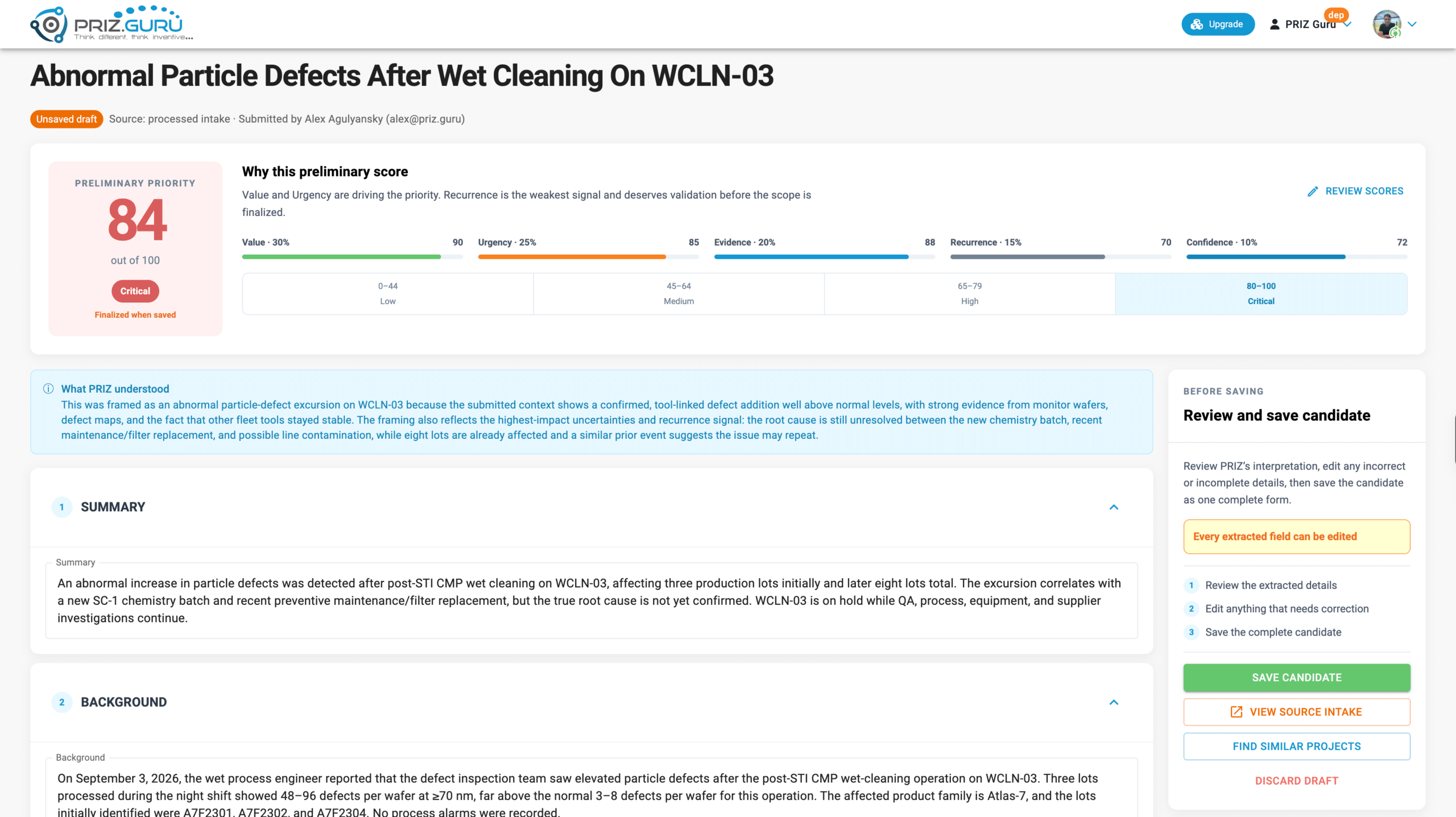
02 / Review draft
PRIZ prepares an editable Problem Candidate. The engineer checks the evidence, assumptions, unknowns, and priority before deciding whether to save it.
Once saved, the candidate enters the Inbox as Needs review. A manager decides what should happen next.
02 / Align
Give managers the evidence and uncertainty behind the request.
A saved Problem Candidate arrives in the Inbox as Needs review. A responsible person opens it, checks the framing, evidence and open questions, then decides what deserves to advance.
Approval stays with people. Turning an approved candidate into a project is a separate decision.
Problem Candidate workflow From Inbox to review
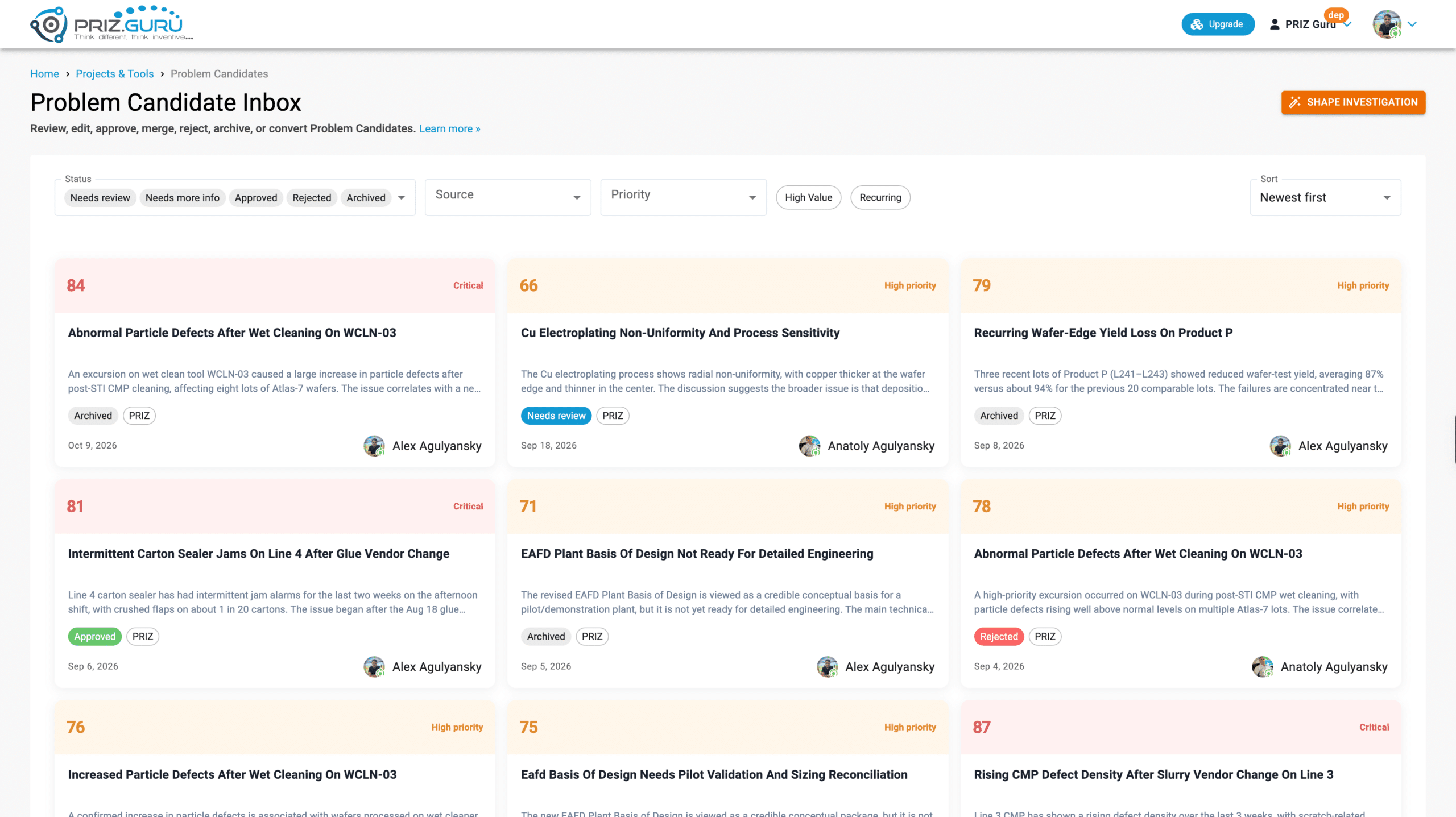
01 / Candidate Inbox
See what needs attention.
Candidates arrive here as Needs review. The list brings status, priority, ownership, and opportunity context together so managers can choose what deserves a closer look.
02 / Review candidate
Make the decision with the evidence in view.
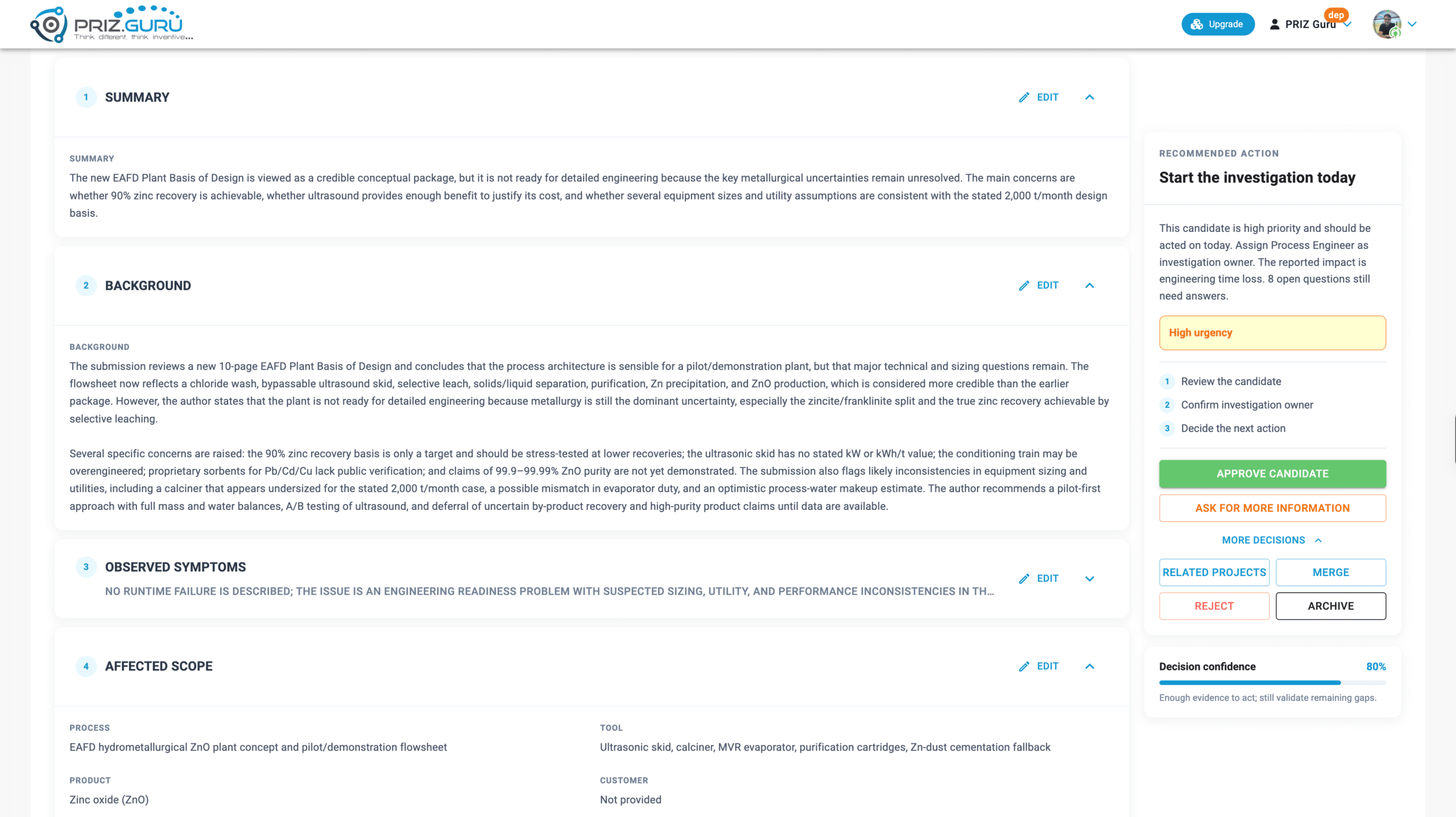
Opening a candidate reveals its structured details, priority, uncertainties, and recommended next action. The reviewer can ask for more information or approve the candidate. Project conversion comes later, as a separate decision.
Decision flow
What happens to this candidate?
A reviewer can ask for clarification or approve the candidate. Creating a project is a separate decision.
Needs review
The framing is ready for a human decision. No project has been created.
Decision owner: Engineering manager
Clarification requested
The reviewer requests additional charging tests, coolant-flow measurements, and clearer evidence around the thermal model. The candidate returns to the engineering team.
Human decision: Ask for clarification
Candidate approved
A human reviewer has approved the candidate. A separate action is needed to create a project.
Human decision: Resource approval
Project created
The approved candidate is now an engineering project. Engineers still own the analysis and the solution.
Human decision: Project commitment
03 / Guide
Work through the engineering, using methods that fit the problem.
Once the team converts an approved candidate into a project, PRIZ brings the scope, evidence, people, and engineering activities into one place.
Engineers choose the methods and remain responsible for the reasoning.
Engineering project Project overview and working methods
01 / Project overview
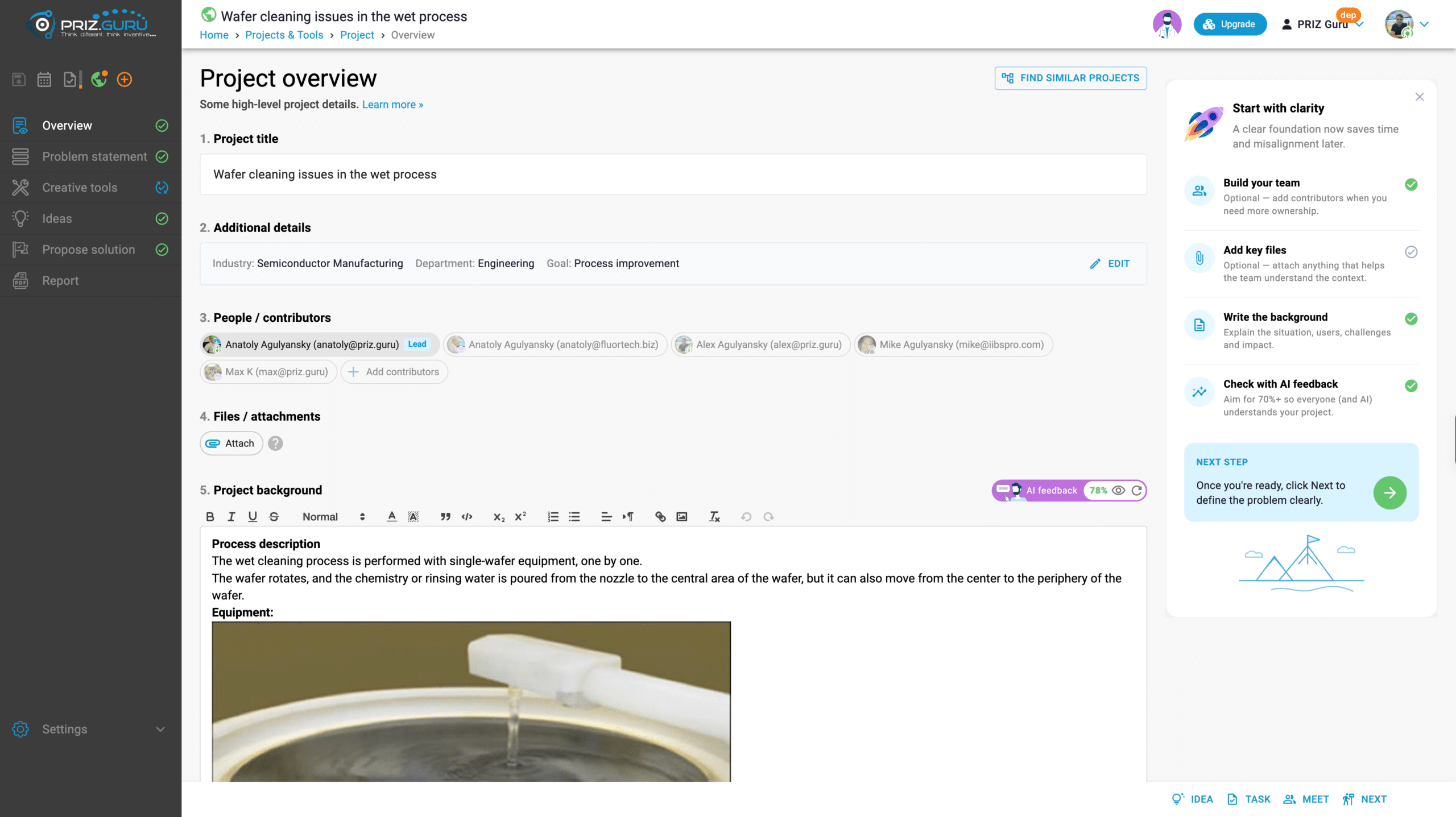
Keep the engineering work together.
The project overview gives engineers a shared place for scope, ownership, progress, and supporting evidence. The team can navigate the work without reconstructing the context.
02 / Methods & tools
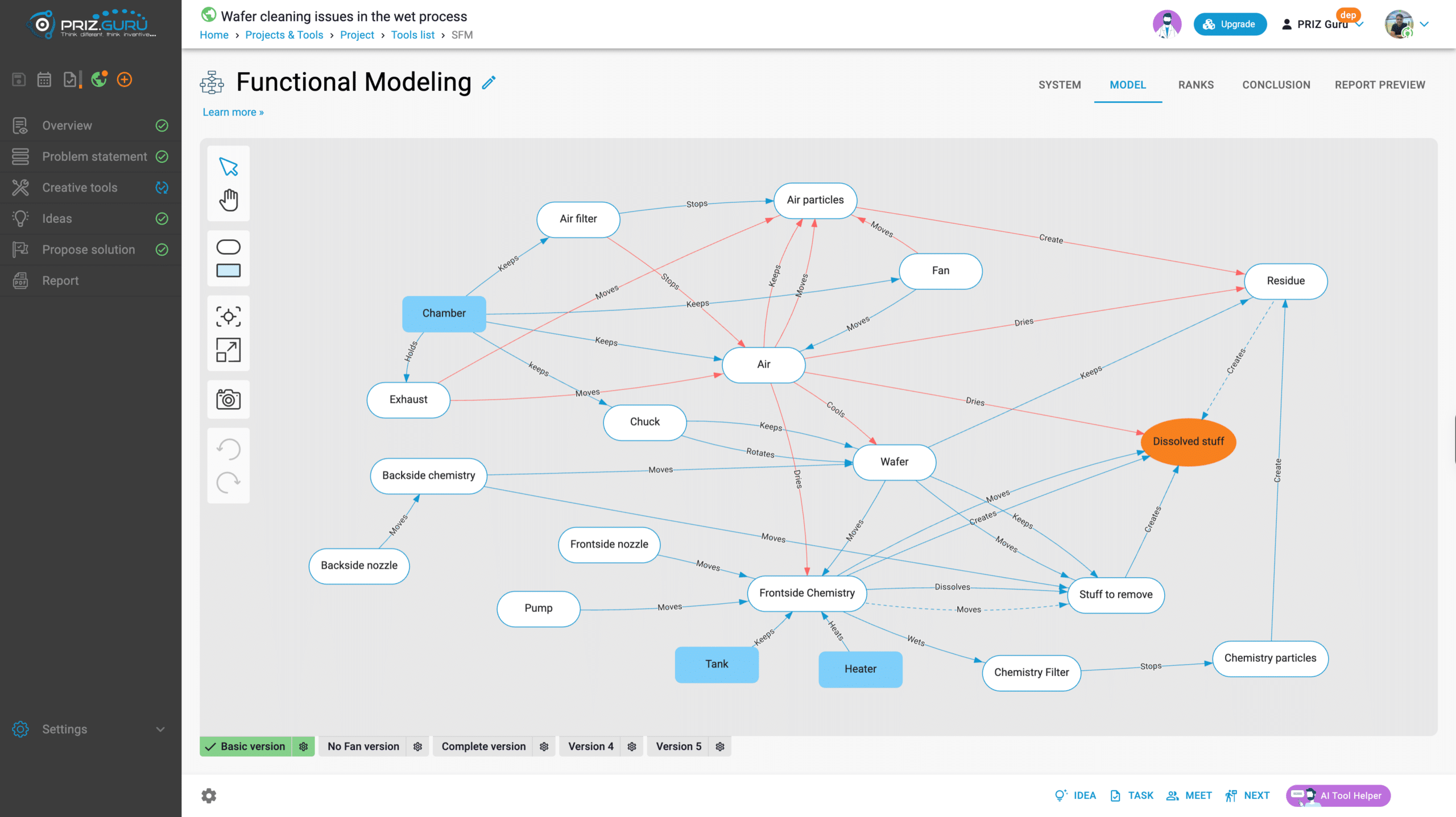
Choose the right way to investigate.
Within the project, engineers use structured approaches such as Functional Modeling, Cause and Effect Chain, and 5+ Whys. PRIZ provides the workspace; engineers develop and test the reasoning.
04 / Develop
Compare directions. Develop a solution worth testing.
As understanding improves, engineers generate ideas, compare alternatives, and build a reasoned solution proposal. The team determines what must be validated.
Implementation and validation—not the proposal alone—establish whether a change works.
Ideas and solutions Explore and evaluate alternatives
01 / Ideas & alternatives
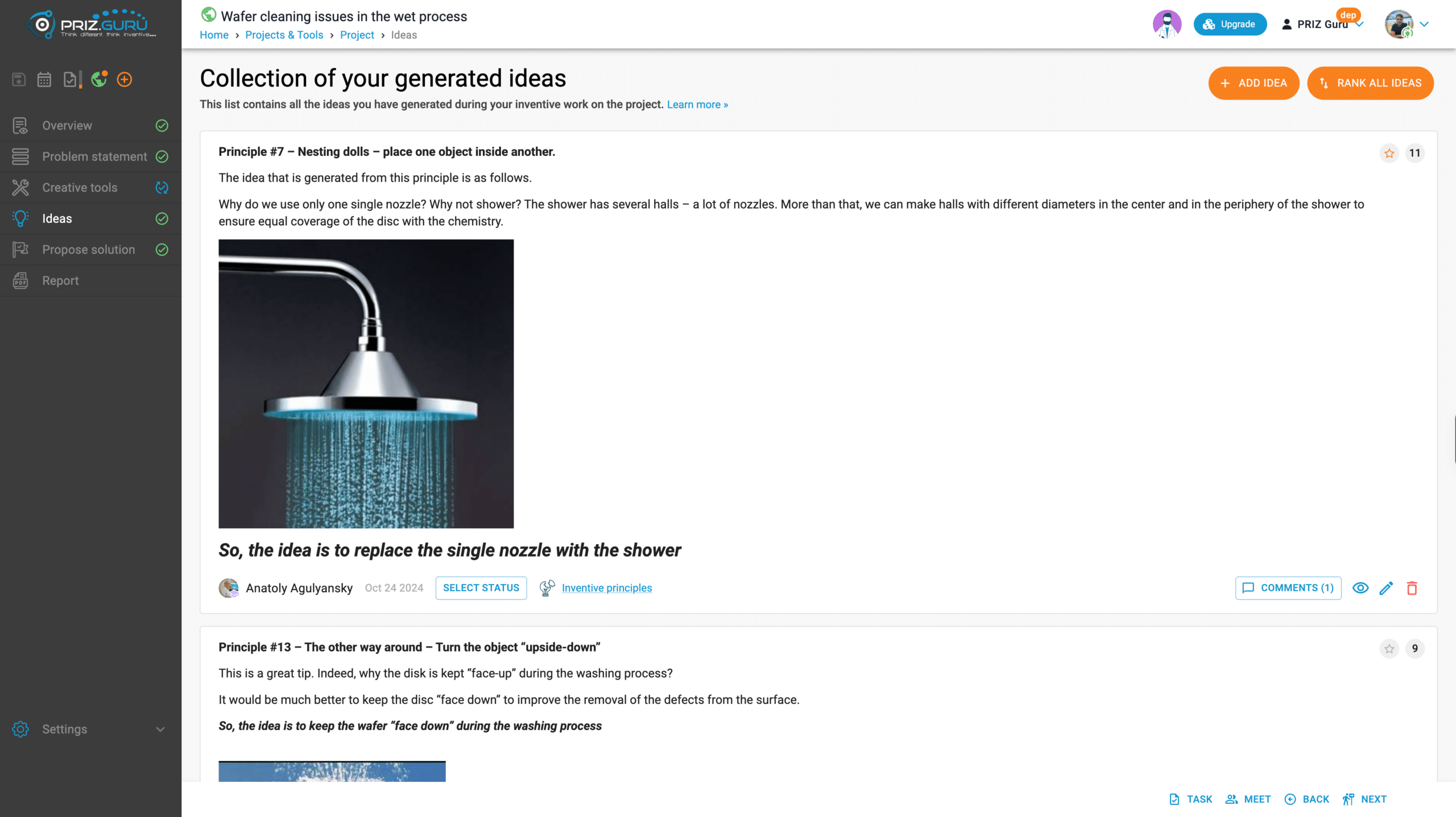
Explore more than one answer.
The ideas view holds alternative approaches for the team to assess. For the battery example, temporary charge limits, thermal-system investigation, and possible redesign are distinct directions.
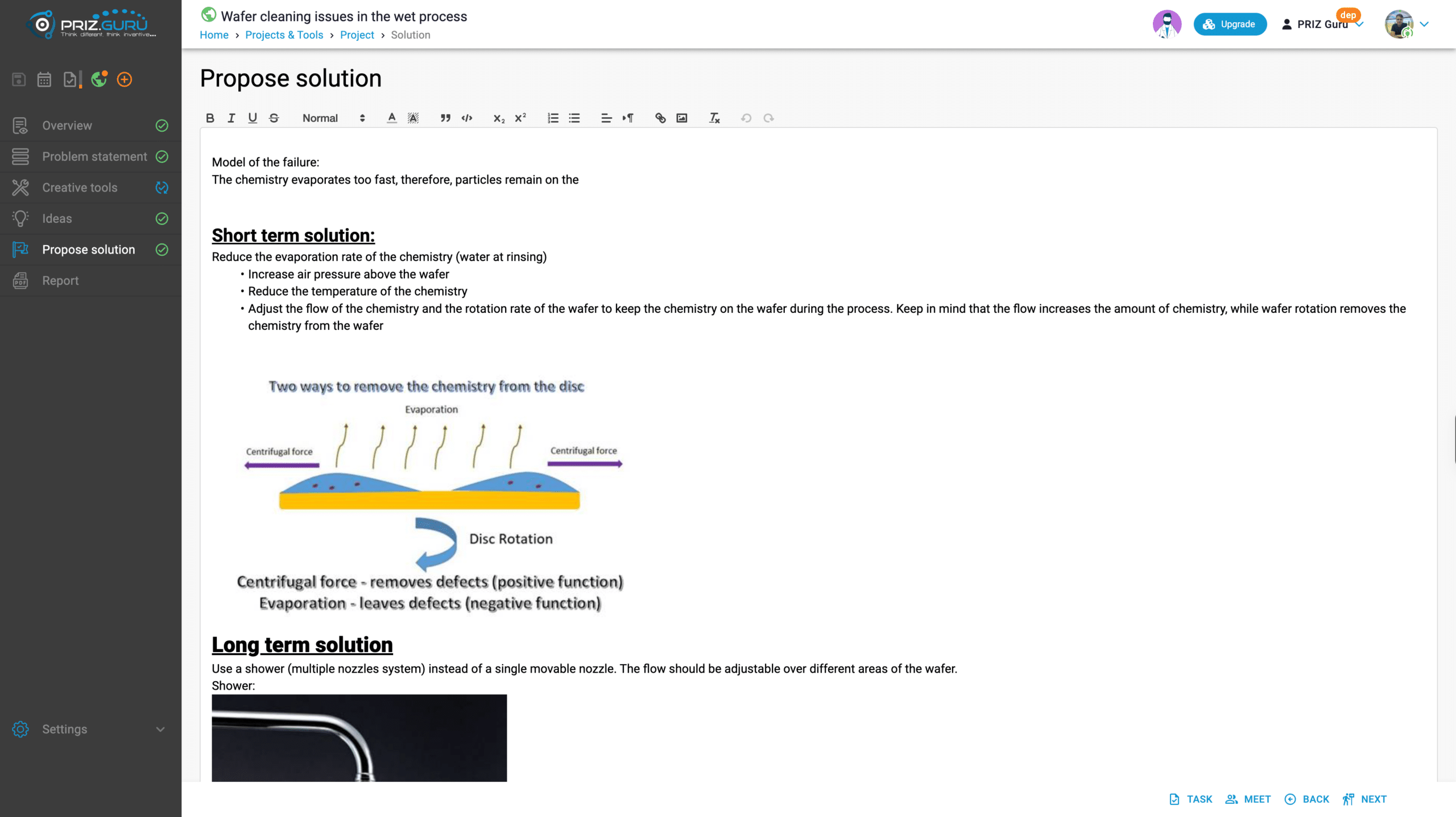
02 / Solution proposal
Explain the proposed change.
A solution proposal records the preferred direction and the reasoning behind it. Engineers still have to decide what evidence and validation are needed before the change can be trusted.
05 / Learn
Make the reasoning available to the next engineer.
Keep the findings, evidence, explored ideas, and decisions connected to the engineering work so another team can understand where the conclusions came from.
Knowledge stays with the organization; engineering accountability stays with people.
Engineering knowledge Report and retained project
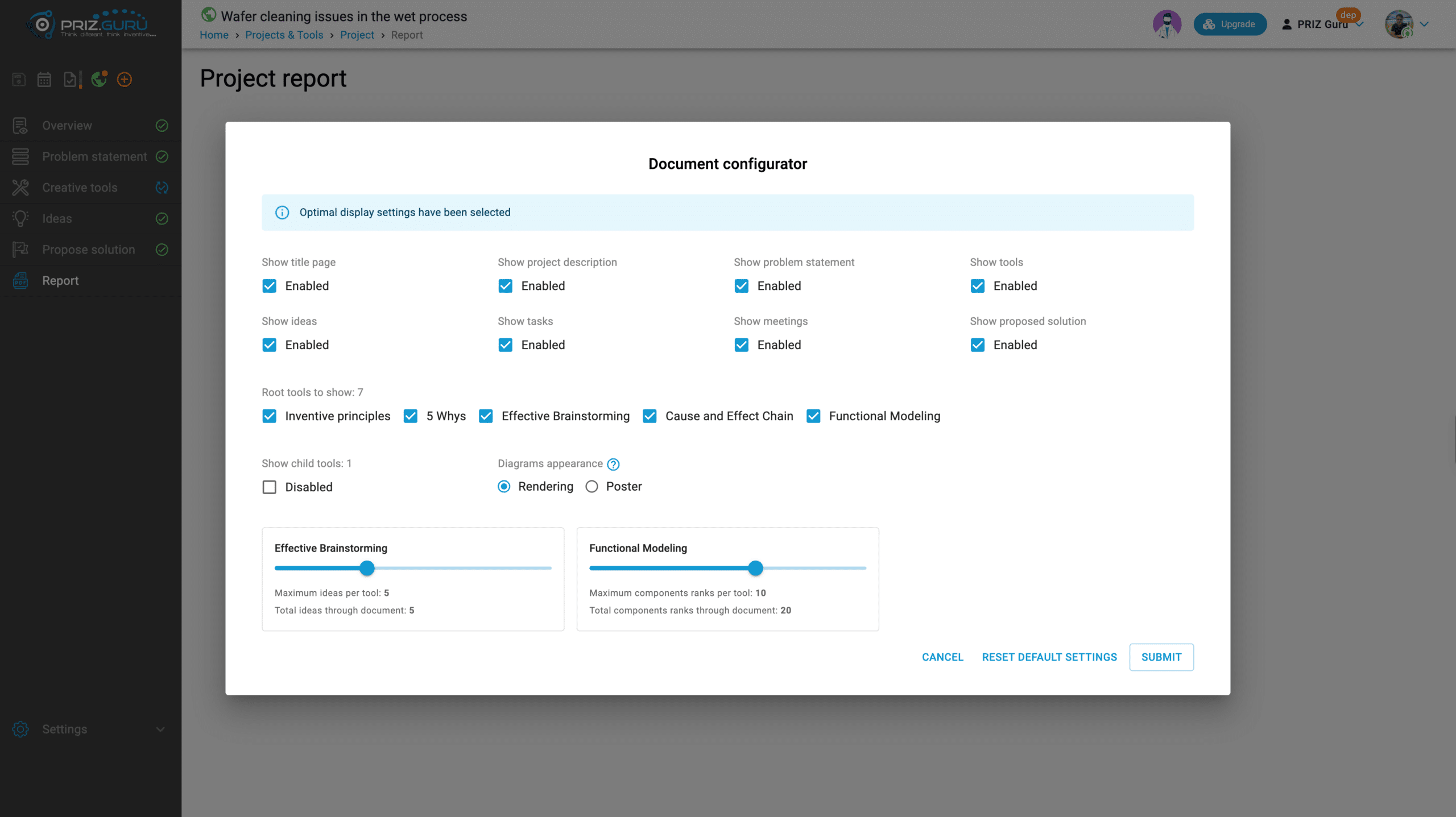
01 / Project report
Report the reasoning, not just the result.
The report brings findings and selected project material into a form that can be shared with colleagues and decision-makers, while preserving the engineering detail.
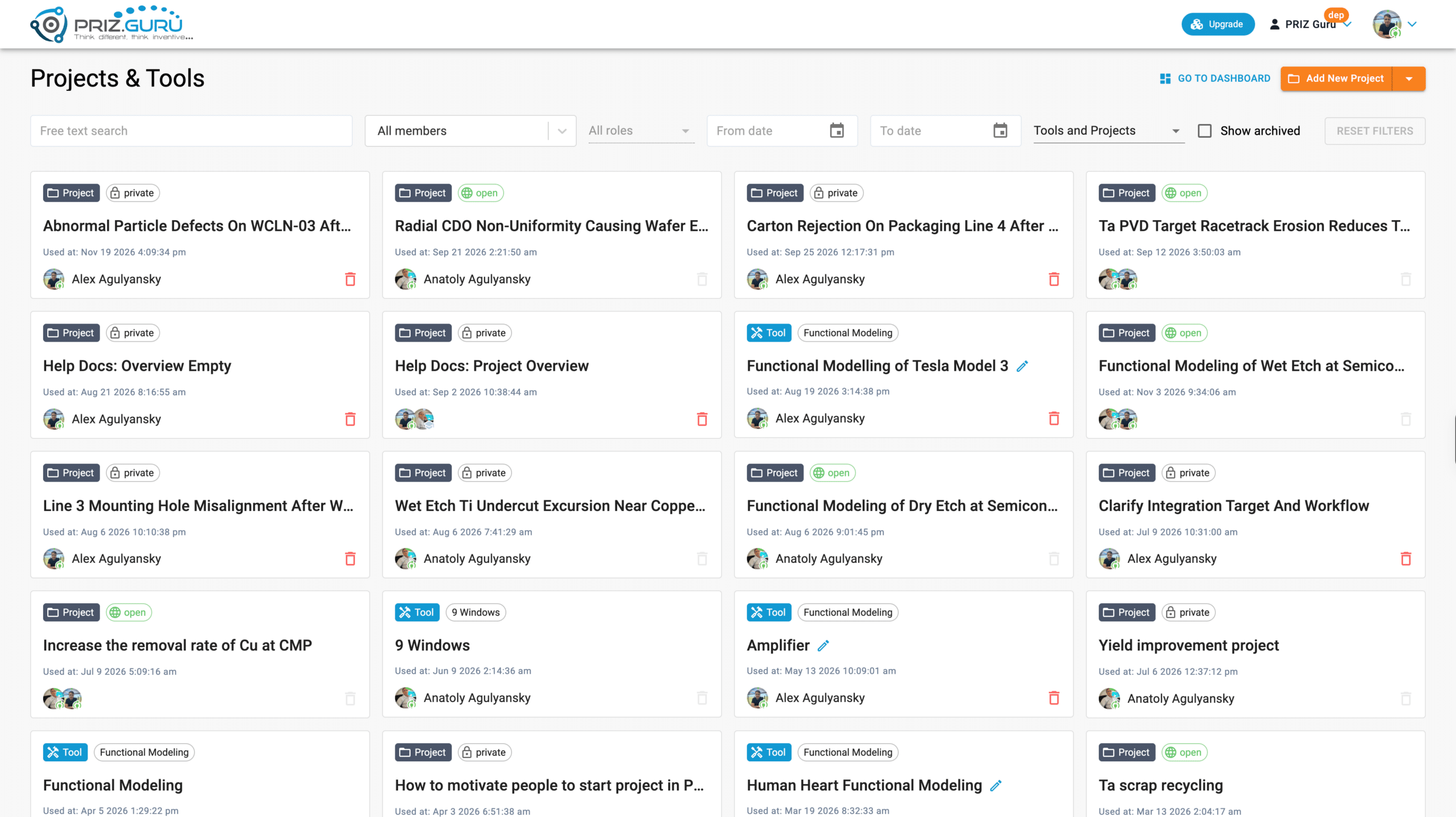
02 / Retained project
Leave the next team a usable record.
The project remains a place to revisit prior models, decisions, and open questions.
Product tour
Questions this tour answers
Short answers from the tour, for anyone deciding whether PRIZ fits the way their engineers already work.
What does the PRIZ product tour show?
It follows one engineering opportunity from the first signal to shared learning. A team brings a technical situation into focus, agrees where to invest engineering attention, develops a stronger solution, and retains what they learn.
When does the engineering work begin?
The work starts before there is a project. A recurring defect, an unexpected trend, or a process change can be the first signal, and that signal is rarely a complete problem definition.
What happens when an engineer saves a candidate?
The engineer owns the framing. Saving places the Problem Candidate in the Inbox as Needs review. Approval is a later human decision, and saving does not create a project.
Who decides whether a candidate becomes a project?
A reviewer can ask for clarification or approve the candidate. Creating a project is a separate decision. Approval stays with people.
What happens inside a project?
PRIZ brings the scope, evidence, people, and engineering activities into one place. Engineers choose the methods, including Functional Modeling, Cause and Effect Chain, and 5+ Whys, and remain responsible for the reasoning. Implementation and validation establish whether a change works.
What does the next team receive?
The report keeps the findings, evidence, explored ideas, and decisions with the engineering work, so another team can see where the conclusions came from. Knowledge stays with the organization. Engineering accountability stays with people.