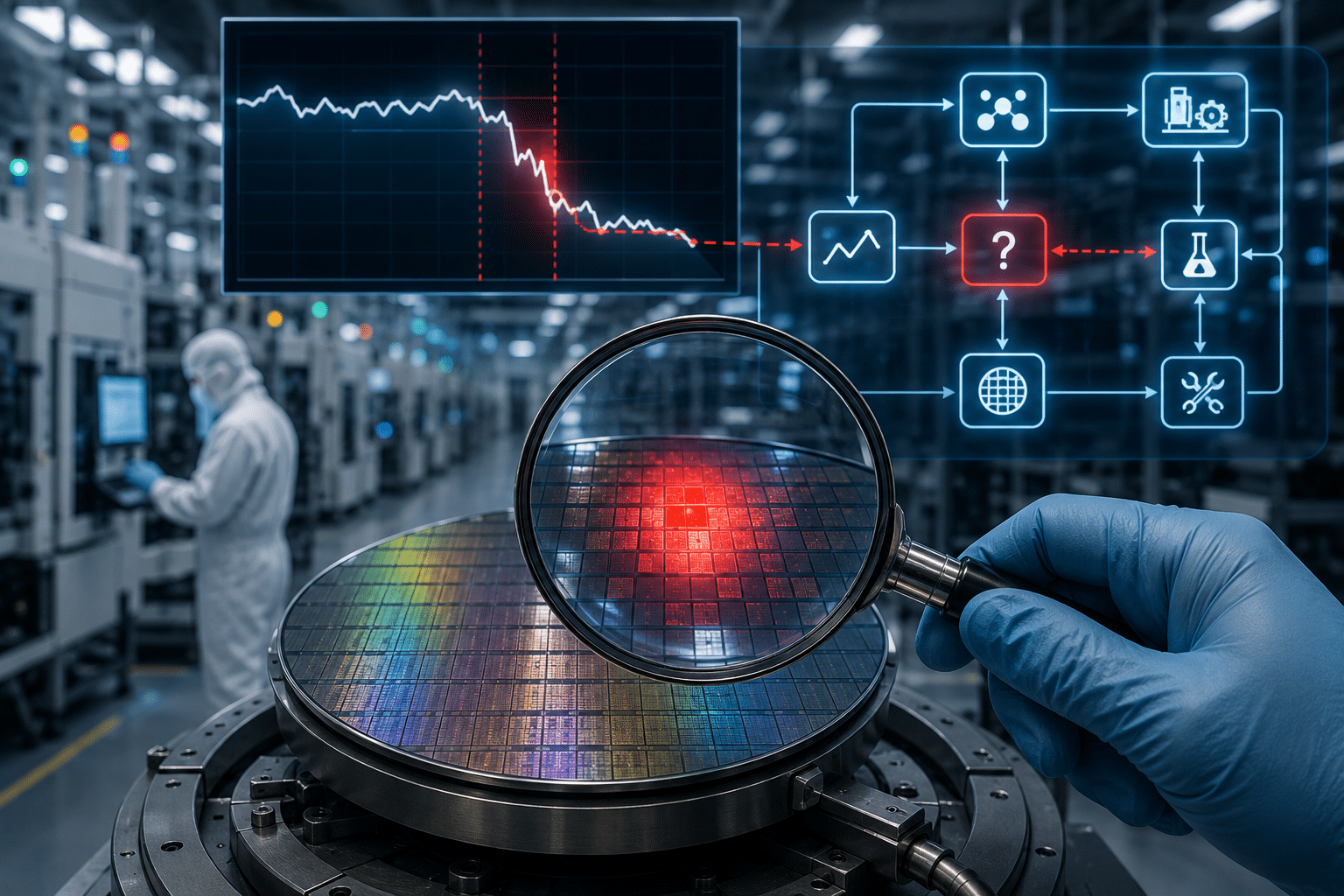
The chamber ticks past 55 °C. Two flagship GPUs are chewing through a power-fault test while a validation lead, Lena, watches a thermal camera bloom orange over a tiny rectangle of plastic. At ~600 W on a single 16-pin plug (about 50 A at 12 V), even a whisper of extra resistance becomes heat. The smell arrives first—sweet, acrid, unmistakable. On-screen, a pixelated flare crawls from the corner of a 12VHPWR/12V-2×6 receptacle where the plug isn’t fully home. I²R wins.
“Kill it,” Lena says, already calculating: one adapter, one $1,500-class board, a week of schedule slip, and another notch in an RMA trend line that’s been creeping the wrong way since marketing promised “smaller, cooler, faster.”
She snaps the charred connector free and studies the witness marks. The sense pins look untouched—no wonder the card stayed live. The note she writes is short and radioactive: partial insertion + current crowding + poor derating. Then the question that decides a launch: do we ship on swagger, or stop for physics? The room is quiet except for the cooling fans. Outside, the slide deck is already at the printer.
The pattern is painfully consistent. A compact power standard, the original 12VHPWR, promised neat delivery of up to 600 W through one connector. Failures forced a revision 12V-2×6 with shorter sense pins and longer power terminals so a card won’t assert full power until the plug is truly seated. Yet melting incidents still appear when seating or load distribution goes wrong. Compliance paperwork moved; physics didn’t. Reliability doesn’t negotiate.
Mechanical shortcuts compound the damage. Intel’s LGA1700 socket shipped with an ILM (clamping frame) that can bow a CPU’s heat-spreader, degrading cooler contact and pushing temperatures up. Third-party contact frames shaved as much as ~12 °C in testing; Intel’s newer sockets are moving to reduced-load ILMs. A tacit admission that contact mechanics are not footnotes but first-order reliability variables.
And sometimes the failure is aesthetic. Apple’s ultra-slim butterfly keyboard prized millimeters over margin. Dust ingress + short travel + tight tolerances yielded sticky or dead keys, followed by a $50 M settlement and a return to a more reliable scissor mechanism. Fashionable can be fragile; engineering arrogance sends the bill to reliability.

Even when fixes arrive, they’re late and costly. After public instability with Raptor Lake desktop CPUs, Intel isolated a voltage/clock-tree behavior that accelerated aging under heat and rolled out microcode and BIOS mitigations (0x12B, then 0x12F). Updates can prevent new damage; they can’t resurrect already degraded parts. Physics still cashes the check.
An RMA on a high-end GPU erases four figures of hardware value before anyone touches shipping, support, or reputation. Multiply a basis-point-level field failure across a million-unit class and you’ve set fire to seven figures of margin, not counting channel friction when customers start posting melted plugs.
CPU instability plays the same tune in a different key: firmware caps and warranty extensions steady the ship, but only after confidence and inventory absorb the hit. And vanity taxes linger, Apple’s keyboard episode remains a case study in how thinness can bleed reliability for years.
Then there’s wear: the 12VHPWR/12V-2×6 family’s typical 30–40 mating cycles should discourage cable-shuffling. Small contacts have short runways. Ignore derating, and I²R turns tolerances into toast.
When Lena freezes the release, it’s a vote for models over rituals. The team strips the problem to physics and rebuilds reliability from first principles.
Design to ΔT, not brochure watts. Use temperature-rise vs. current data (EIA-364-70) and cap ΔT at ~30 °C, then back off another 15–20% for the real world. If the enclosure runs hot, the connector’s safe current drops. Period.
Instrument the contact. Add in-situ voltage-drop and contact-temperature probes during load sweeps. Edge-biased current shows up as asymmetric heating. If the plug tolerates partial insertion, treat that as a failure mode to be tested and blocked—mechanically and electrically.
Mechanics before MHz. Map ILM pressure, cooler flatness, and die-area contact before chasing clock headroom. If a pressure frame yields double-digit temperature drops in the lab, that’s not an accessory ad; it’s reliability evidence.
Adopt the revision and the discipline. Move to 12V-2×6 (shorter sense pins, longer terminals) as a guardrail, not a cure-all. Require an audible/tactile click, add a visual seating marker, and block boot when sense isn’t made. Verify with abuse tests: side-load, thermal soak, and 40 connect/disconnect cycles under load to mimic how people actually use hardware.
Two sprints later, the scoreboard reflects it. Connector-related RMAs fall. Effective thermal headroom on LGA1700-class tests climbs by 8–12 °C after load-path corrections. Change failures on thermal-mechanical ECOs halve as tests pivot from “demonstrate” to “break.” That’s what reliability looks like when arrogance gets out of the way.
The GPU program Lena paused was already three weeks late when the lab found the partial-insert hotspot. The reflex would have been to publish “golden rules” to the field—push harder, listen for a click. She refused the placebo.
The team adopted 12V-2×6 sockets, added a boot-block on missing sense, and ran an abuse matrix: forty plug cycles, 55 °C soak, 10 N side-load, and a live wiggle test while logging per-pair Vdrop. They discovered geometry that crowded the current at the edges and swapped to longer terminals with improved spring design. Manufacturing added a bright seating collar. In parallel, the CPU subsystem validated ILM pressure maps and recovered double-digit thermal headroom.
By pilot release, incident reports faded to noise. Social feeds, once plastered with melted plugs, went quiet. The postmortem was short and specific: failure mode, hypothesis, evidence, change, KPI moved. Then the team moved on.
Run a two-hour “Derate or Delete” pass on every interface above 10 A. Demand ΔT evidence at enclosure-hot with margin, or don’t ship. Add a Partial-Seat abuse scenario to DVT and fail it if the system continues to pull big power. Enforce 12V-2×6 sense behavior in firmware. Validate ILM load distribution and cooler planarity before tuning fan curves. Publish one-page postmortems that honor physics, not politics.
If your roadmap prizes “thin and fast,” add a gate that asks: what did we trade away in reliability and why? That single question pays for itself.
Part II—The Dead Code That Blew Up a Rocket follows Ariane 5 and Mars Climate Orbiter to show how reused software, wrong units, and missing guardrails turn quiet assumptions into spectacular failures—and how disciplined reviews and defensive tests stop it.
[1] PCI-SIG — 12V-2×6 ECN (Base 6.0), 2023 — Official note that the 12V-2×6 replaces 12VHPWR and why the encoding & behavior changed. (pcisig.com)
[2] Seasonic KB — ATX 3.0 vs 3.1 (Dec 17 2024) — Practical summary: shorter sense pins, longer terminals to mitigate partial-seat risk. (Seasonic Knowledge Base)
[3] Wikipedia — 12VHPWR (updated this week) — Context: 600 W, revision to 12V-2×6, and ~30–40 mating cycles lifespan reported. (Wikipedia)
[4] Tom’s Hardware — LGA1700 Contact Frame Testing (Oct 12 2024) — ILM bow raises temps; contact frames reduced temps by up to ~12 °C in testing. (Tom’s Hardware)
[5] Tom’s Hardware — Raptor Lake Instability Root Cause (Sep 26 2024) — Clock-tree / voltage behavior under heat; mitigation via microcode (0x12B). (Tom’s Hardware)
[6] Tom’s Hardware — 0x12F Update (May 7 2025) — Follow-on microcode; majority of issues addressed; prevention vs. repair. (Tom’s Hardware)
[7] MacRumors — Settlement Payouts (Aug 5 2024) — $50 M butterfly-keyboard payments begin; amounts by repair history. (MacRumors)
[8] Samtec Blog — CCC & Derating (Apr 9 2025) — ΔT=30 °C rise rule and 20% derating mindset per EIA-364-70. (The Samtec Blog)
[9] Anderson Power — Temperature Charts — Safety ratings tie to 30°C rise above ambient; why derating protects the margin. (Anderson Power)
[10] The Verge — Nvidia cable melt investigations & Intel warranty/mitigations (2019–2025) — Early connector reports and Intel’s public “Vmin shift” framing & extended warranty. (The Verge)