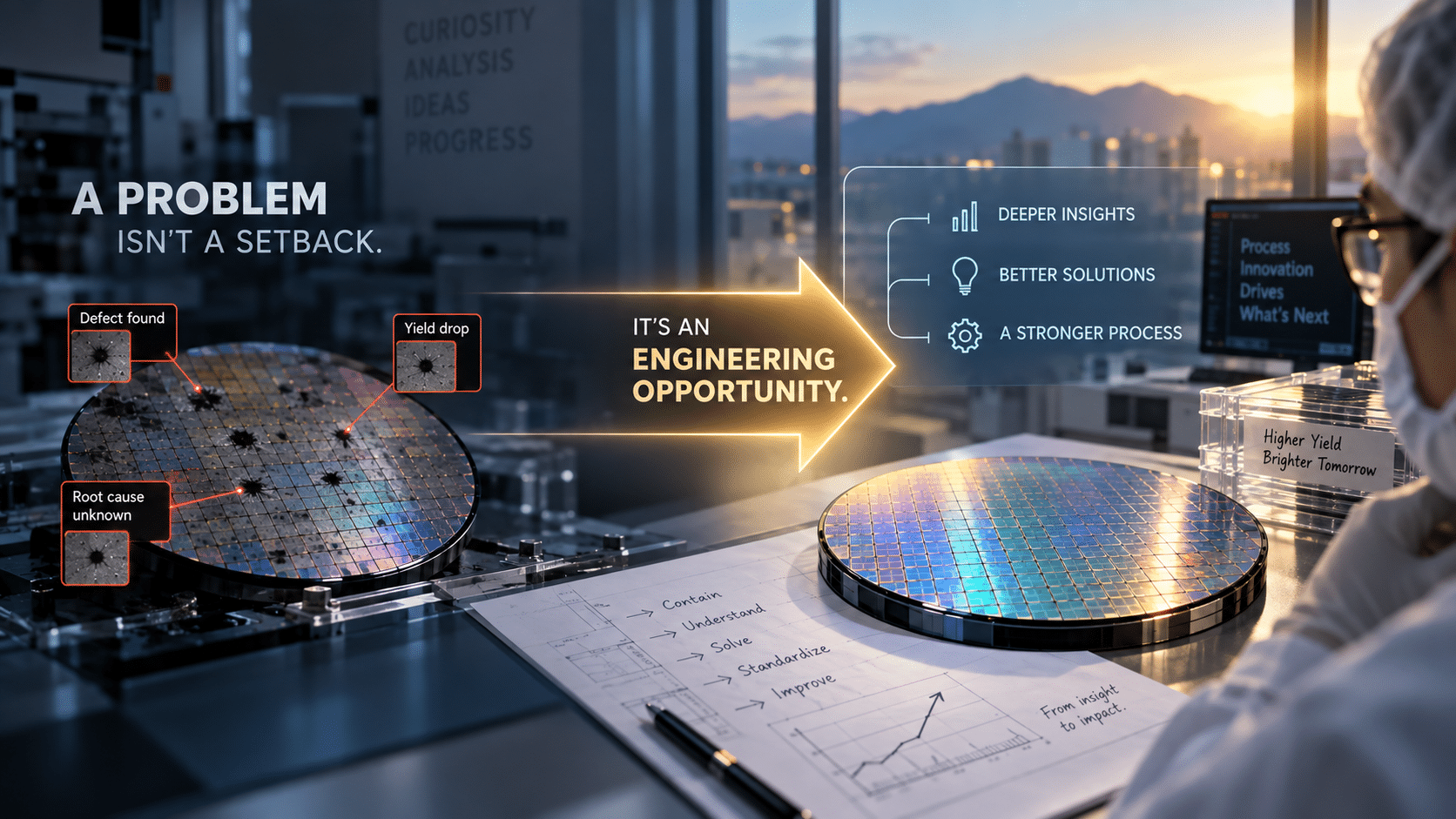
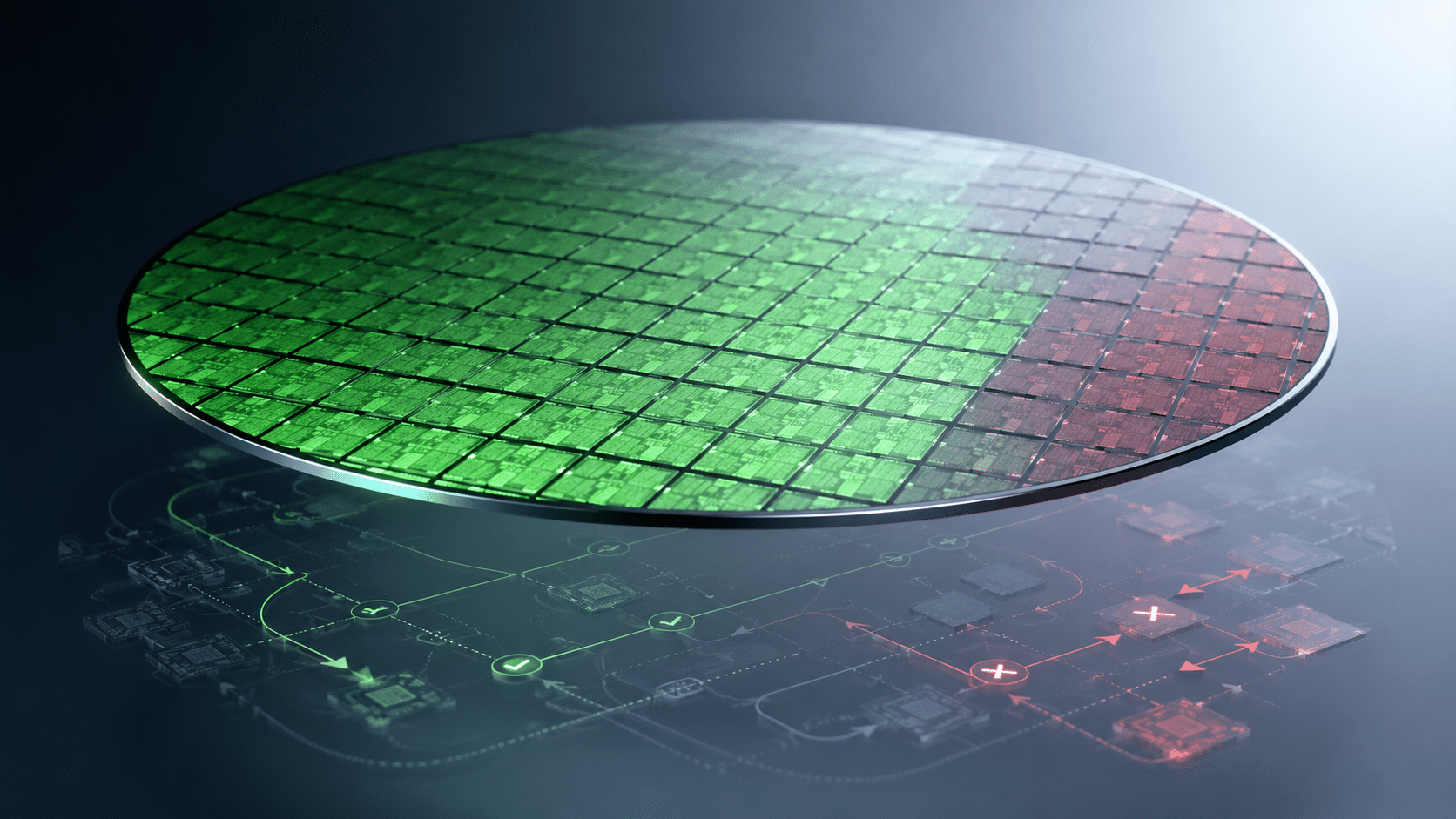
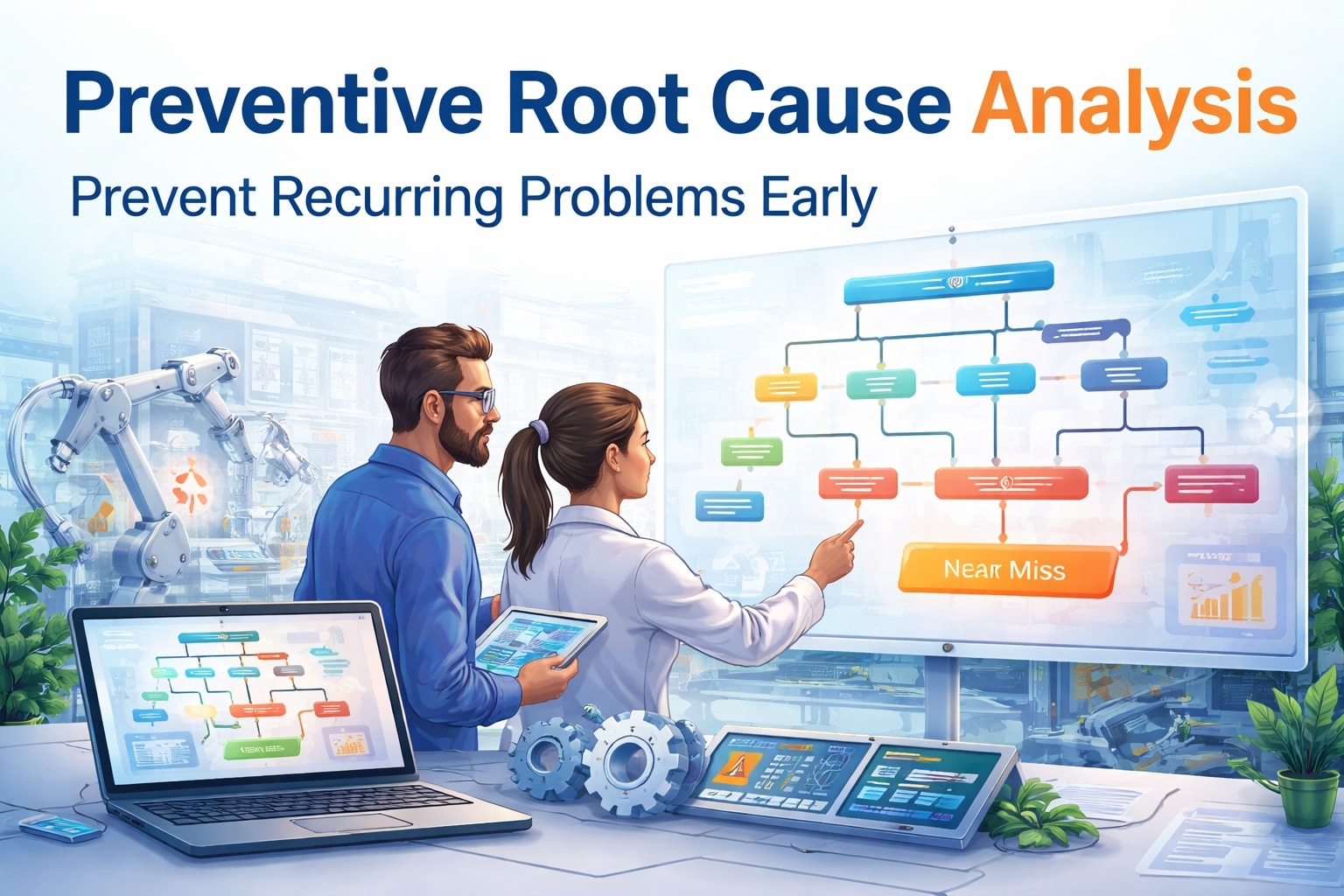
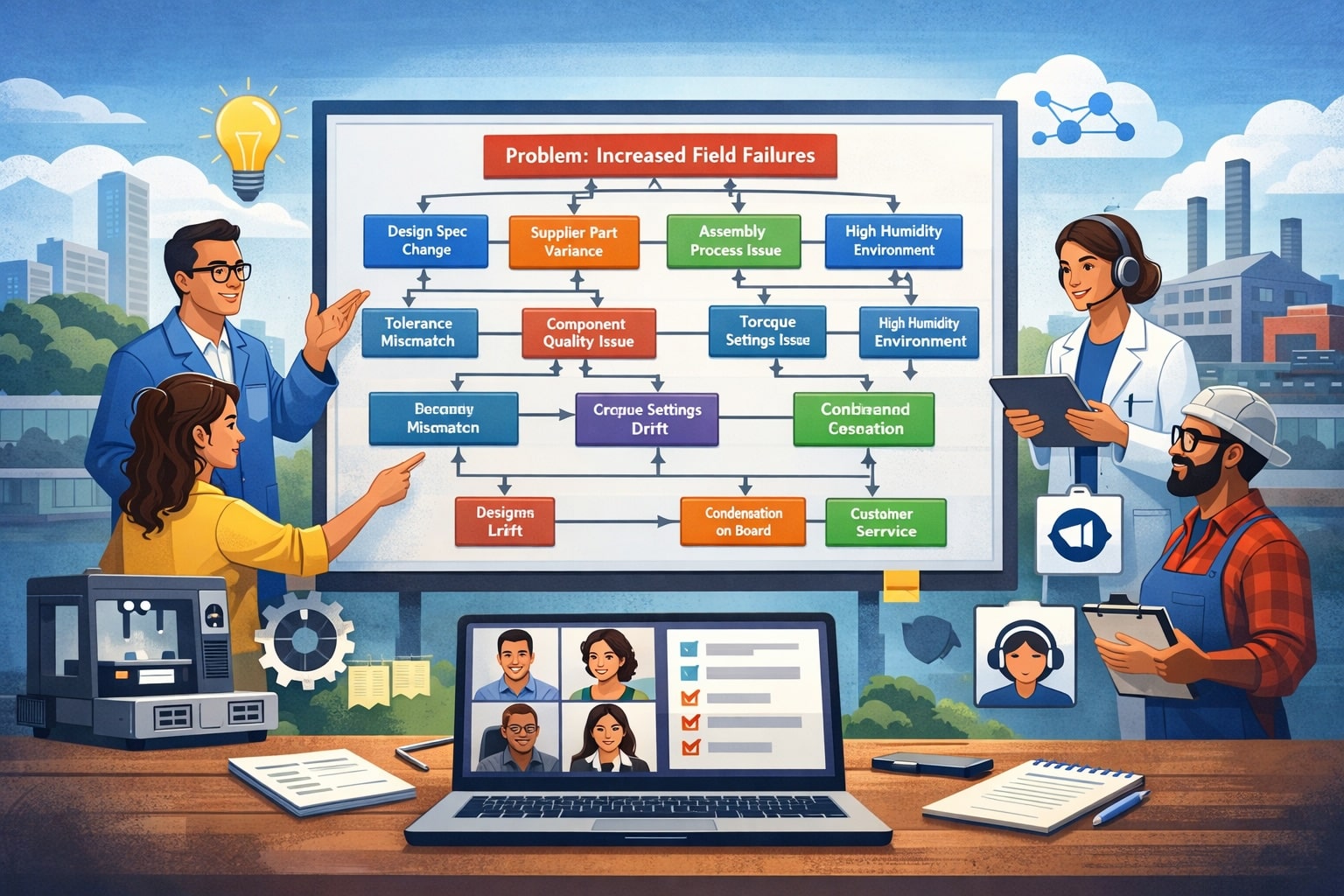
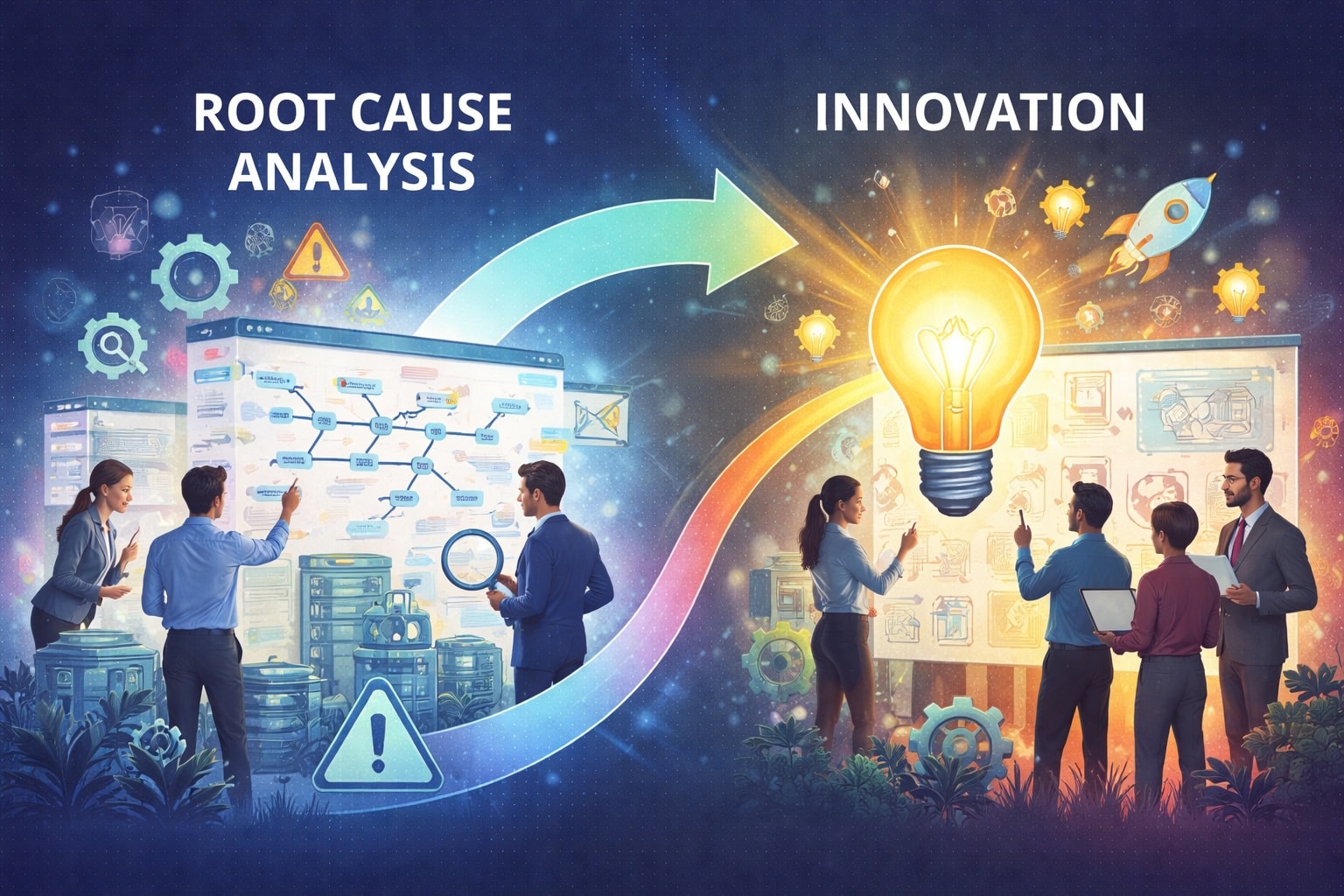
Semiconductor fabs rarely suffer because they have no data. They suffer because, during an excursion, data arrives from different systems, at different times, in different formats, with different levels of context. Yield analysis software can show that something changed. The hard part is proving why it changed, what to contain, what to fix, and how to prevent the same mechanism from returning.
That is exactly where many excursion investigations slow down.
The strongest semiconductor excursion yield analysis software is not only the system that detects the drop. It is the combination of analytics, genealogy, structured root cause analysis, corrective action, and reusable learning that helps teams move from signal to verified cause.
Dashboards detect pain, structured RCA diagnoses disease.
Fabs struggle with semiconductor excursion yield analysis software because excursions expose more than a reporting problem. They expose gaps in data integration, genealogy, detection timing, process-sequence awareness, cross-functional root cause analysis, and corrective-action closure. The best systems combine yield analytics with structured problem analysis so teams can move from detection to containment, verified root cause, preventive action, and reusable learning.
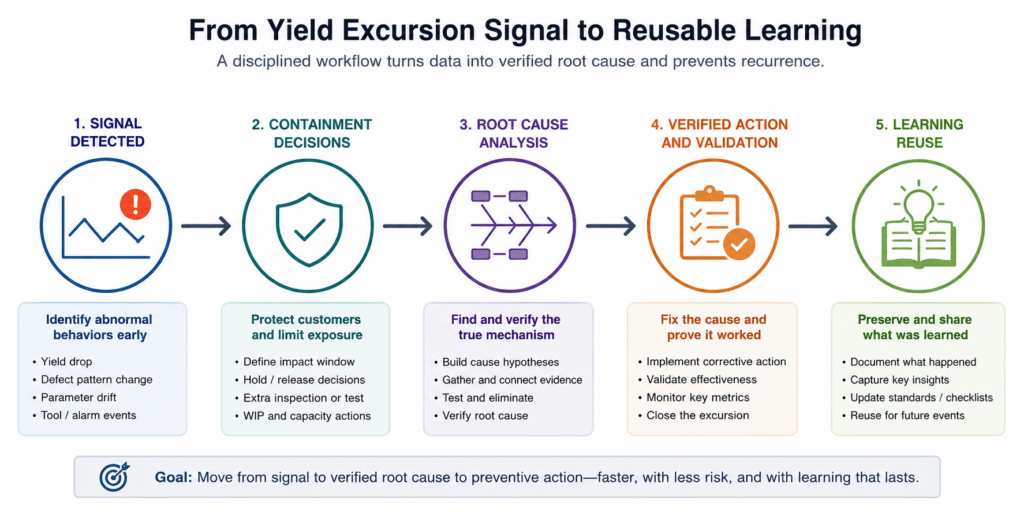
Normal yield analysis has time to breathe. An excursion does not.
When yield suddenly drops, the fab has to decide what to hold, what to release, what to inspect, what to retest, and which process window may have shifted. The cost is not limited to bad die. The bigger cost is uncertainty: exposed WIP, engineering time, tool availability, customer commitments, and management attention.
Modern yield-management vendors already recognize parts of this challenge. Siemens emphasizes MES interoperability, device-level genealogy, sensor-to-product traceability, and reusable workflows for semiconductor manufacturing. KLA highlights real-time excursion identification, spatial signature analysis, decision-flow analysis, and the ability to capture and share yield learning across fabs. Onto Innovation describes Discover Yield as a platform for reducing time to root cause, analyzing wafer processing sequence problems, using multivariate methods, and supporting genealogy across the value chain.
That tells us something important. The serious vendors are not selling “more charts.” They are selling context, traceability, faster narrowing of suspects, and learning.
Still, a tool can identify a likely suspect without creating a verified engineering conclusion. That final mile is where many excursion investigations remain human.
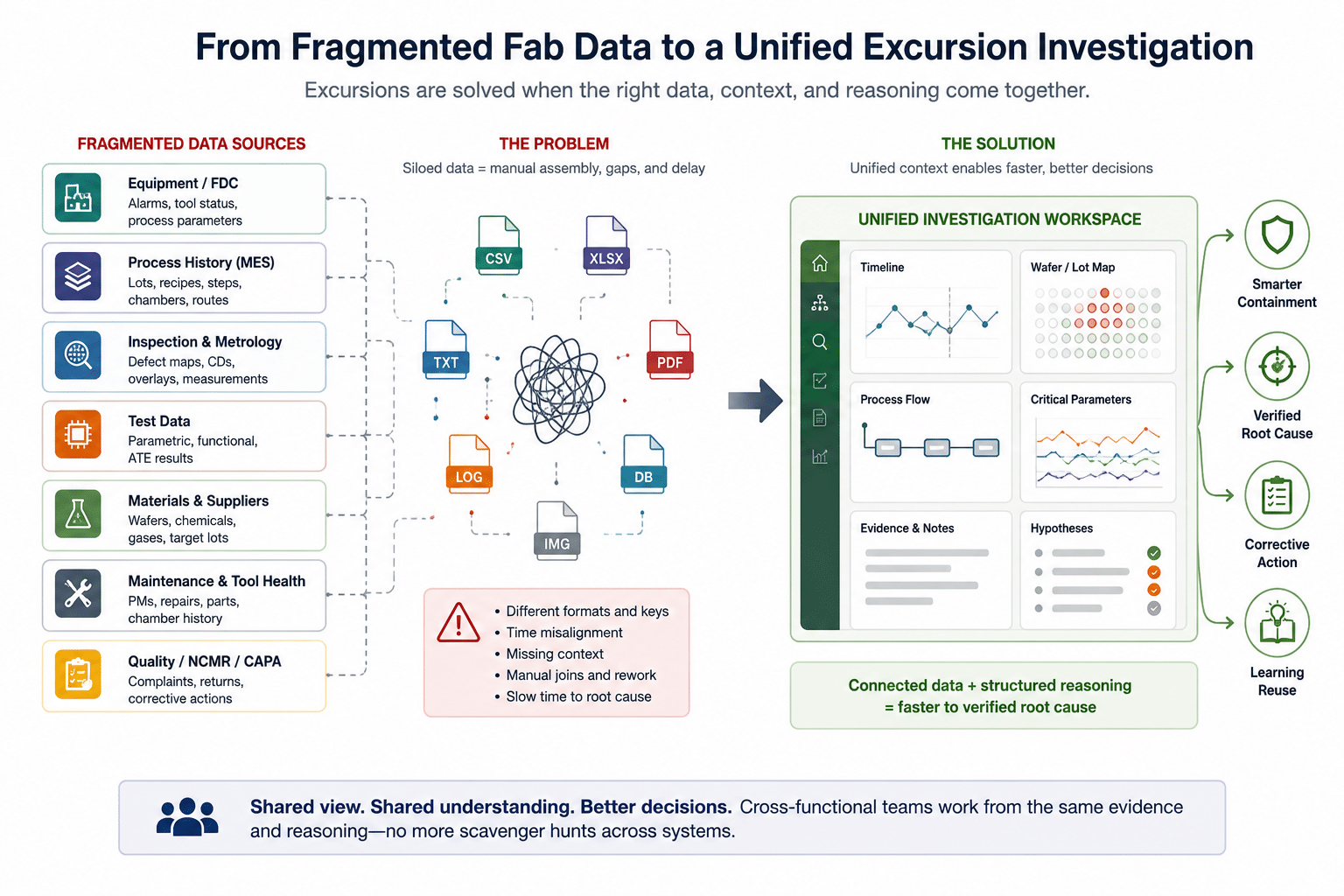
Excursion analysis often starts with a scattered evidence trail. One system has process history. Another has inspection results. Another has test fallout. Maintenance records, recipe changes, and quality records may sit elsewhere.
That fragmentation matters because root cause rarely lives in one database. A defect map may point to a pattern, but the explanation may require tool state, chamber history, and material genealogy. PDF Solutions describes this problem directly: manufacturing data can be fragmented across sites, fabs, and equipment systems, and without a centralized view connecting defects, inline process data, and electrical test results, RCA becomes a manual exercise.
What better software needs: It should reduce the time spent assembling evidence before the investigation can even begin.
What better workflow needs: A shared problem-analysis space where teams can connect data, assumptions, decisions, and actions in one traceable investigation.
A yield chart is able to show that yield moved. A dashboard can show which lot, tool, chamber, or product family changed. That is useful, but not proof.
The danger is that teams begin treating correlation as explanation. A tool appears in the suspicious window, so the tool becomes the cause. A parameter drifted, so the parameter becomes the cause. A recipe changed, so the recipe becomes the cause. Sometimes that is correct. Sometimes it is just the loudest clue in the room.
Research on semiconductor yield excursions has long focused on the difficulty of detecting true process root causes from high-dimensional manufacturing data, especially during ramp-up when processes and machine configurations are unstable.
What better software needs: It should help narrow the search space without pretending that suspect ranking equals root cause.
What better workflow needs: Cause hypotheses, evidence checks, and verification steps that separate symptoms from mechanisms.
During an excursion, the fab needs to trace what happened across lots, wafers, tools, chambers, recipes, and materials. A shallow genealogy view forces broad containment. Broad containment protects customers, but it also ties up WIP and creates business pain.
Siemens’ semiconductor MES messaging puts genealogy at the center: device-level tracking, information gathering from equipment sensors, and traceability from incoming materials through the supply chain. Onto also describes genealogy as part of the database architecture behind value-chain predictive analytics.
What better software needs: It should preserve the manufacturing context needed to trace the problem back to the point of occurrence.
What better workflow needs: A disciplined way to ask, “Which products were exposed, which were not, and what changed between them?”
Some excursions become visible only after significant WIP has already moved downstream. By the time wafer sort or final test reveals the issue, the suspect window may include many lots, multiple tools, and several process events.
That is why real-time and near-real-time detection matter. KLA describes Klarity Defect as supporting faster yield learning through real-time excursion identification, with spatial signature analysis for detecting defect patterns that indicate process issues.
What better software needs: It should move detection upstream and reduce the exposed population before the excursion becomes a large business event.
What better workflow needs: Clear containment logic, ownership, and escalation paths once the signal appears.
Dashboards are excellent for visibility. They are weaker as a substitute for reasoning.
A dashboard tells the team what changed. It does not force the team to define the problem precisely, challenge assumptions, validate cause-and-effect logic, or document why one hypothesis survived and another failed. That matters because excursions often trigger fast meetings, political pressure, and “do something now” energy.
ASQ’s 8D guidance is useful here because it makes verification explicit. D4 requires teams to identify and verify root causes, including why the problem went unnoticed, and it warns against causes chosen by fuzzy brainstorming. D5, D6, and D7 then move through permanent correction, validation, and recurrence prevention.
What better software needs: It should support detection and analysis.
What better workflow needs: It should force disciplined thinking after detection, especially when the room is full of smart people under pressure.
A semiconductor fab is not a spreadsheet with independent columns. It is a long sequence of interdependent steps.
A variable in an earlier process can influence a later result. A weak signal may only become visible after another process amplifies it. Treating all variables as flat, independent candidates can and will produce plausible but shallow answers.
A paper on root cause analysis for semiconductor yield enhancement states that hundreds of ordered unit processes are interdependent and that variables from previous processes influence subsequent processes. The authors argue that root-cause models should consider process order. Onto’s product page also lists wafer processing sequence problems among the domain-specific issues Discover Yield analyzes.
What better software needs: It should understand process sequence, not just variable correlation.
What better workflow needs: A causal model that respects how the product actually moved through the fab.
Excursions are often created by interactions rather than one dramatic failure. A chamber condition changes. A recipe margin narrows. A metrology skip delays visibility. Each factor alone looks survivable. Together, they create yield loss.
Modern semiconductor data makes this even harder. A 2026 review of statistical methods in semiconductor manufacturing notes that traditional SPC assumptions often break down because data can be high-dimensional, strongly correlated, hierarchical, incomplete, asynchronous, and non-stationary.
What better software needs: It should support multivariate and time-aware analysis.
What better workflow needs: A way to reason through interacting causes without turning the investigation into a monster spreadsheet.
Even with strong analytics, a lot of real RCA still happens in expert memory, hallway conversations, meeting notes, screenshots, and old slide decks.
This is not because fab engineers are careless. It is because complex manufacturing knowledge is difficult to preserve. Experts know which tool has a history, which recipe is fragile, which shift saw something strange, and which “minor” change was actually not minor at all. When that knowledge stays informal, the next team has to rediscover it.
A 2023 paper on semiconductor low-yield diagnosis describes a sensor data mining process that helps engineers narrow excursion time and critical sensors from massive equipment data, with results that were interpretable and easy to visualize. The paper also notes that the model identified excursion time and critical sensors previously found through costly manual examination.
What better software needs: It should make expert reasoning more visible, reusable, and testable.
What better workflow needs: A shared investigation record that captures what the team considered, what it rejected, what it proved, and what it changed.
This is the biggest failure mode.
Finding a likely suspect is progress, not closure. Closure requires verified cause, containment, permanent corrective action, validation, and recurrence prevention. Otherwise the fab has only moved from “we do not know” to “we think we know.”
ASQ’s 8D model is clear: containment, root cause verification, permanent correction, validation, and preventive measures are separate disciplines, not one generic “RCA complete” checkbox.
What better software needs: It should connect analysis to action closure.
What better workflow needs: A verified path from signal to mechanism to preventive action.
Good excursion analysis is a stack, a single magic screen is not enough.
At the foundation, fabs need unified data access and strong genealogy. Without that, the investigation starts from partial truth.
Above that, they need early detection and multivariate analysis to reduce the suspect space while the excursion is still containable.
And above that, they need structured root cause analysis that respects process order, physical hierarchy, and cross-functional evidence.
Then comes the part many tools underplay: closure.
A strong system should help the team answer five questions:
- What exactly changed?
- Which material was exposed?
- Which mechanism explains the effect?
- How was the cause verified?
- What action prevents recurrence?
That is the difference between excursion detection and excursion resolution.
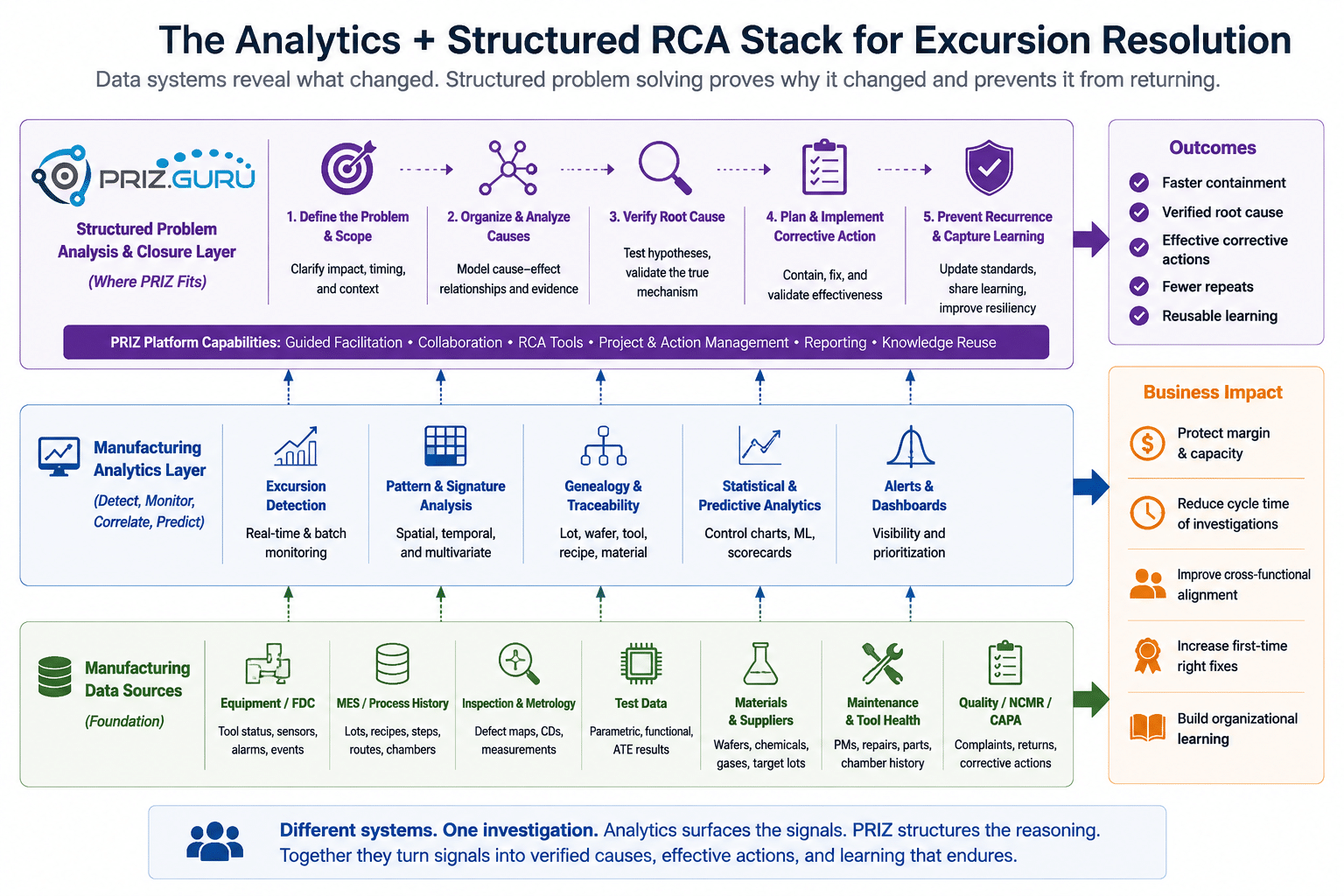
PRIZ should not be positioned as a replacement for MES, FDC, SPC, inspection, metrology, test analytics, yield management, or manufacturing analytics. Those systems reveal signals, patterns, genealogy, tool behavior, and process evidence.
PRIZ fits after and around those systems.
PRIZ is the structured problem-analysis and engineering-thinking layer that helps teams move from signal to mechanism to preventive action. It supports guided facilitation, shared causal modeling, collaboration, project management, idea management, and automatic reporting.
Analytics systems help reveal deviations and context; PRIZ helps teams reason through those signals, verify causes, choose actions, document decisions, and preserve learning.
At PRIZ, we implemented guided facilitation as a method-first way to lead teams through structured problem solving, with AI optional rather than central. Our collaborative RCA consist of shared Cause-and-Effect Chain diagrams, guided facilitation, idea capture, task tracking, and one workspace for cross-functional RCA.
Yield analytics tells you where to look.
Structured RCA helps you decide what it means.
Action closure makes sure the problem does not quietly come back.
When evaluating semiconductor excursion yield analysis software, do not ask only, “Does it detect excursions?”
Ask:
The best system is not the one with the prettiest dashboard. It is the one that helps your team shorten the path from confusion to verified understanding.
During an excursion, that path is money.