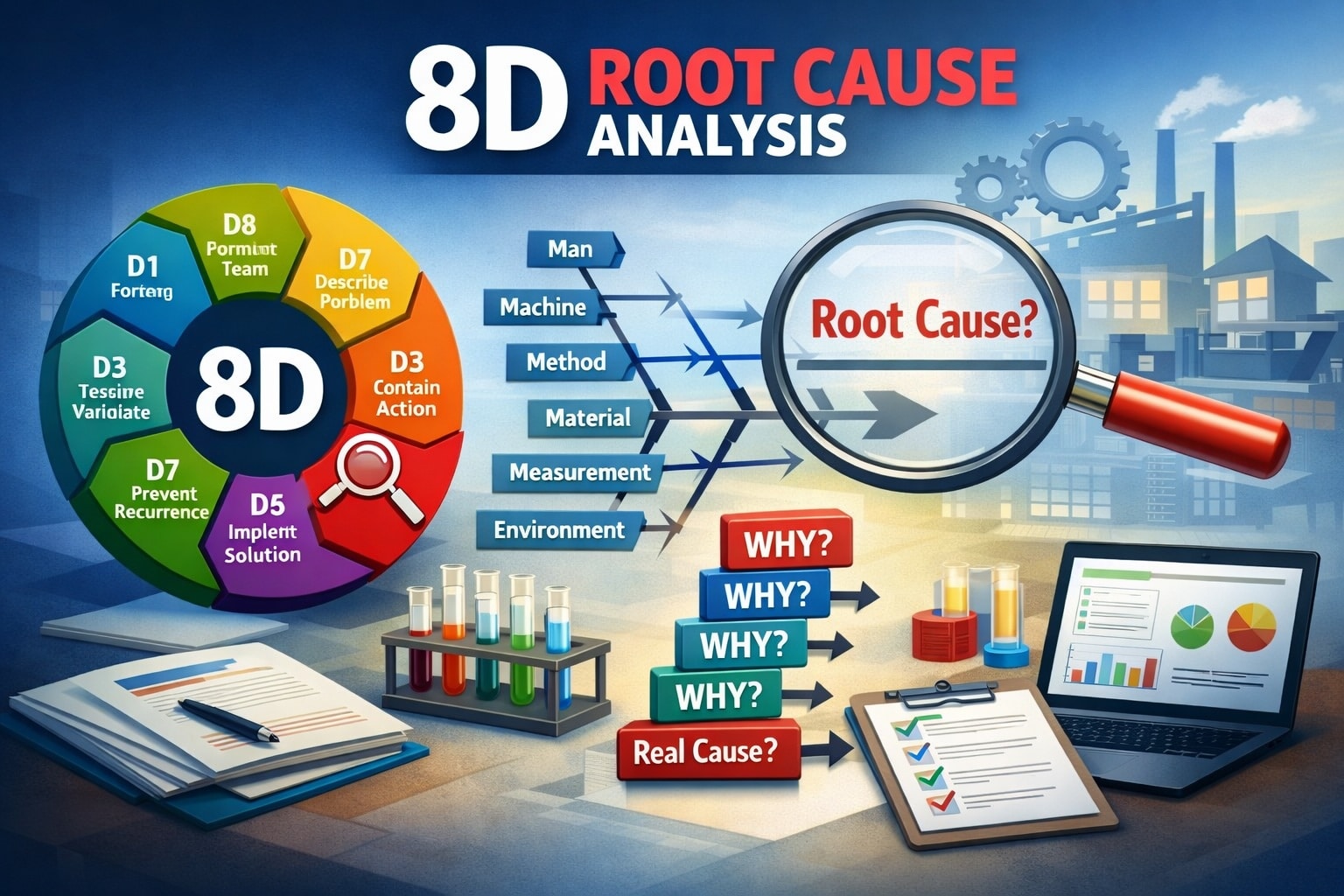
Root cause analysis earns its value when a team identifies a cause that deserves permanent elimination through process improvement. ASQ defines a root cause as the factor behind a nonconformance that warrants permanent elimination, and frames RCA as a set of tools and techniques to uncover that cause.
That definition quietly contains an innovation engine.
A verified cause gives a team a lever. The lever lives inside a mechanism: an interaction, a transfer of energy, a sequence step, a control loop, a material behavior, a human decision point. Once the mechanism becomes clear, the team gains the ability to redesign the system around it. The conversation shifts from containment to capability: “What system shape delivers this outcome reliably?”
This shift changes the quality of ideas. Teams transition from addressing symptoms with patches to implementing concepts that transform the system.
CAPA offers a familiar frame for many industries. The FDA describes the purpose of a CAPA subsystem as collecting and analyzing information, identifying and investigating quality problems, and taking corrective and preventive action to prevent recurrence.
RCA supplies the causal truth that makes those actions precise. Innovation supplies the design moves that make prevention scalable.
When these activities live in separate tools, a common failure mode appears: the causal model fades during solution generation, and actions drift toward the easiest visible change. When the causal model stays present, every idea can tie back to a specific causal link, and the team can see which mechanisms the solution actually changes.
Root causes frequently reveal a tradeoff that teams previously managed through habit. Speed competes with stability. Sensitivity competes with false alarms. Cleaning power competes with surface damage. Tight tolerances compete with cost.
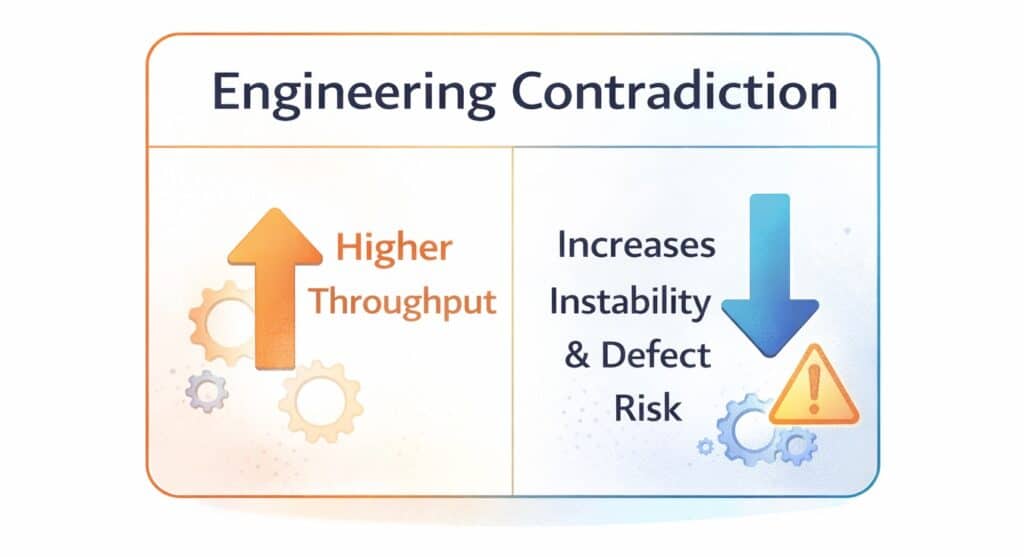
TRIZ exists for exactly this zone: problems where improving one parameter degrades another. The TRIZ 40 principles of inventive are used alongside contradiction thinking to generate solutions for hard technical problems.
PRIZ operationalizes this bridge with a guided 40 Inventive Principles tool designed for creative thinking and idea generation.
A clean contradiction turns brainstorming into targeted concept generation. It gives ideation a compass.
Start with a clear gap: yield loss, downtime, defect density, complaint rate, scrap cost, safety risk. Add scope boundaries and impact. This anchors later choices in outcomes.
Fishbone diagrams help teams structure cause exploration by sorting ideas into useful categories and supporting structured brainstorming.
Teams often pair fishbone work with five-whys questioning to reach deeper understanding of causes. A CMS fishbone guide explicitly calls out frequent five-whys use alongside fishbone to keep asking “why” until reaching a root cause.
PRIZ’s Cause & Effect Chain tool is designed to organize possible causes in increasing detail while expressing causal relationships in a tree-like structure.
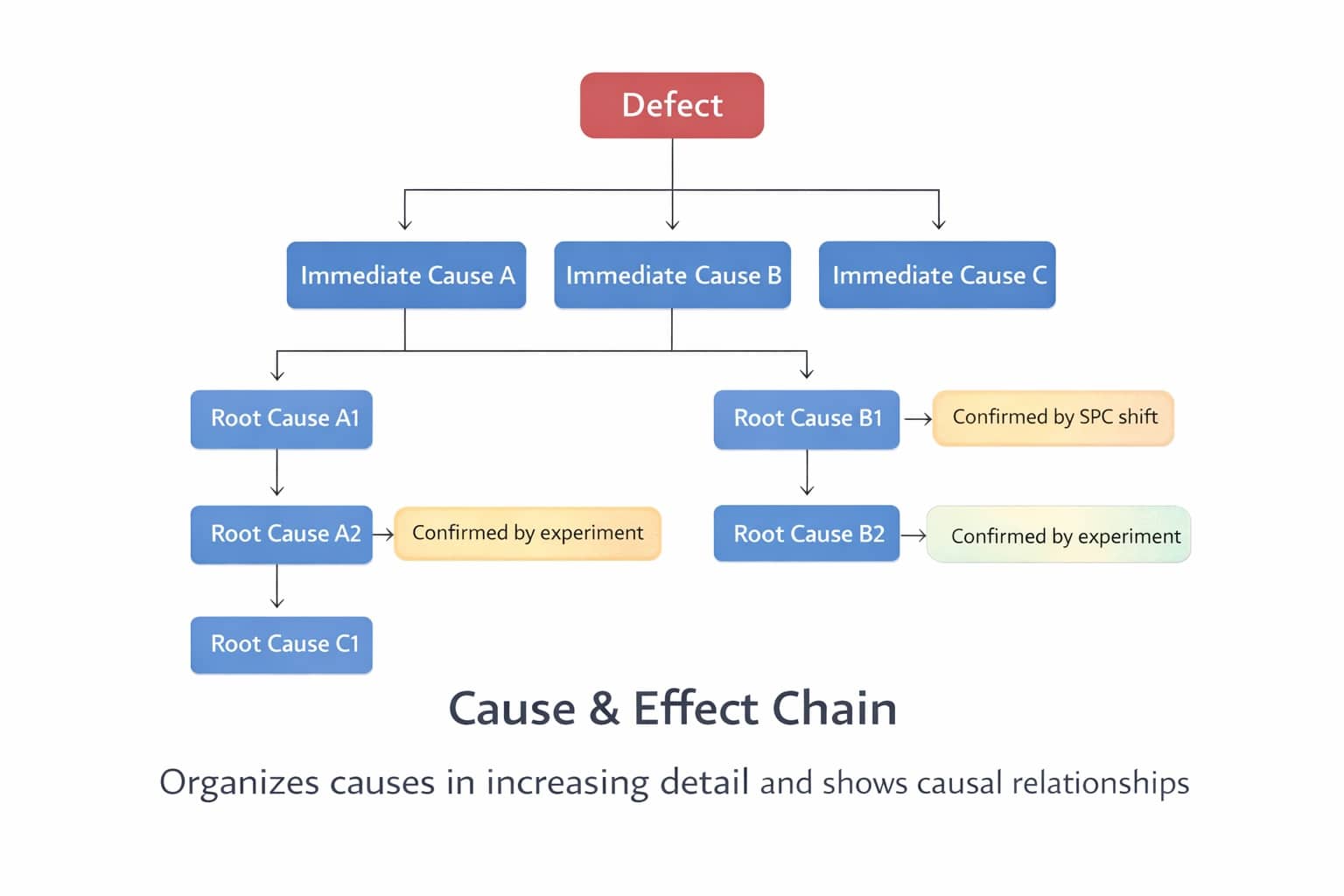
This becomes the living backbone that connects investigation to solution design.
PRIZ’s 5+ Whys technique builds on classic “5 Whys” thinking and provides a structured approach for exploring cause-and-effect relationships while aiming for a true root cause and its mechanism.
Teams use this when one dominant pathway explains most of the impact.
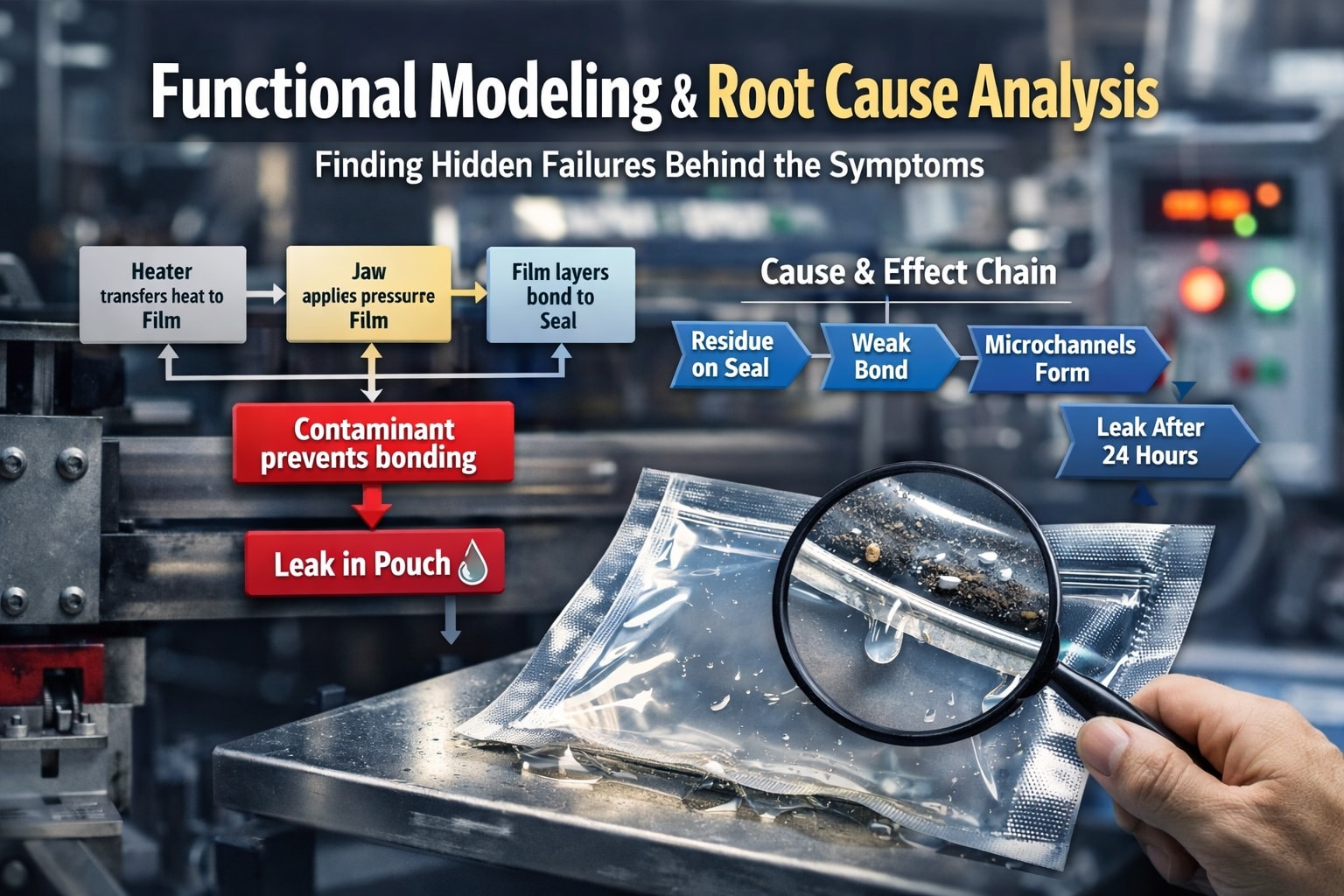
Functional Modeling frames the system in functional language and helps identify which components create harmful interactions and which components provide helpful ones. PRIZ’s Functional Modeling guide describes this approach as a way to identify problematic and functional components and clarify responsibility for the mechanism.
From here, contradictions become explicit and ideation becomes focused.
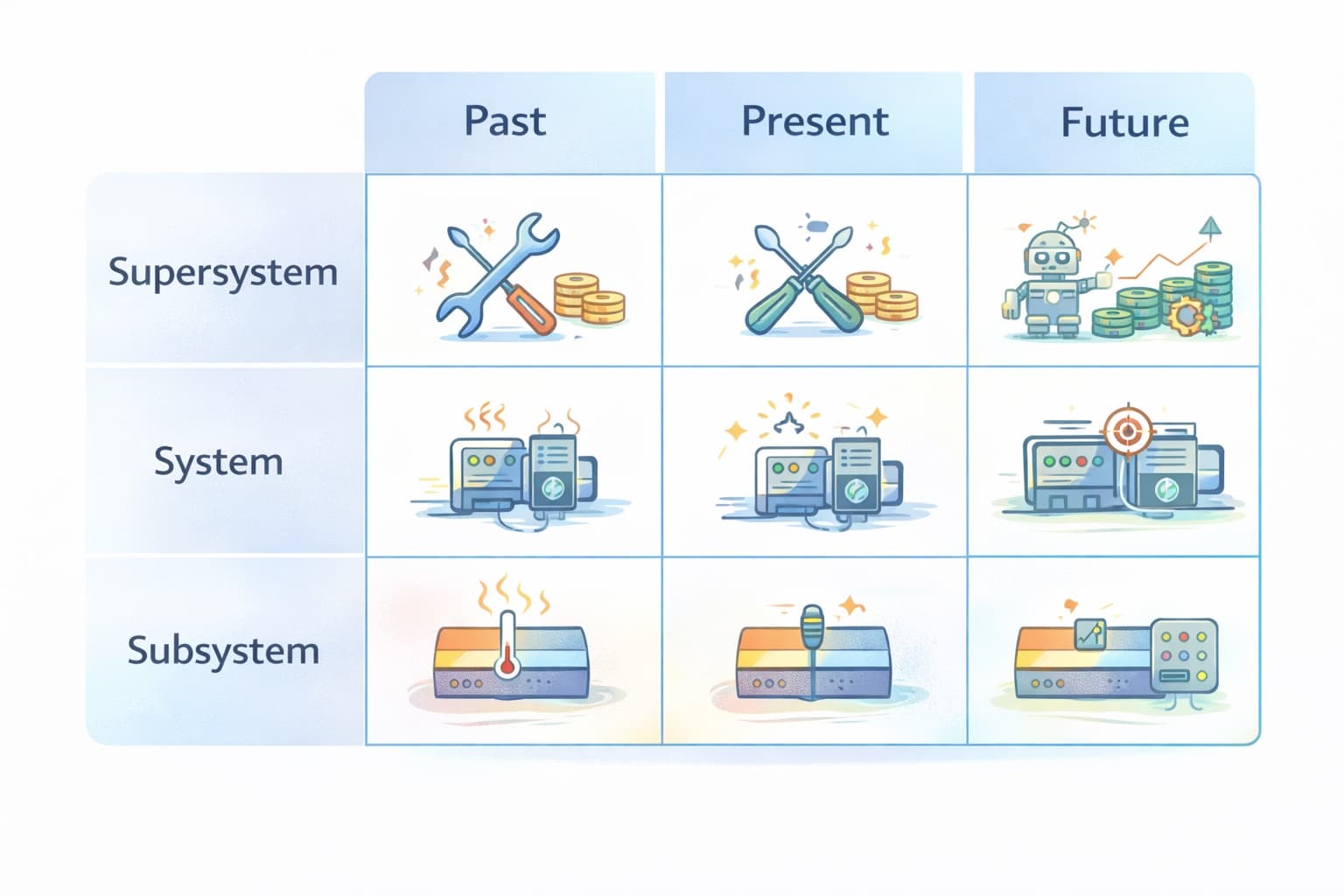
PRIZ’s 9 Windows tool supports inventive thinking across time and system levels to generate new ideas.
PRIZ’s 40 Inventive Principles tool supports contradiction-driven ideation.
The team selects concepts that break the highest-impact causal links, validates them through mechanism-aligned tests, then records the learning as a reusable asset.
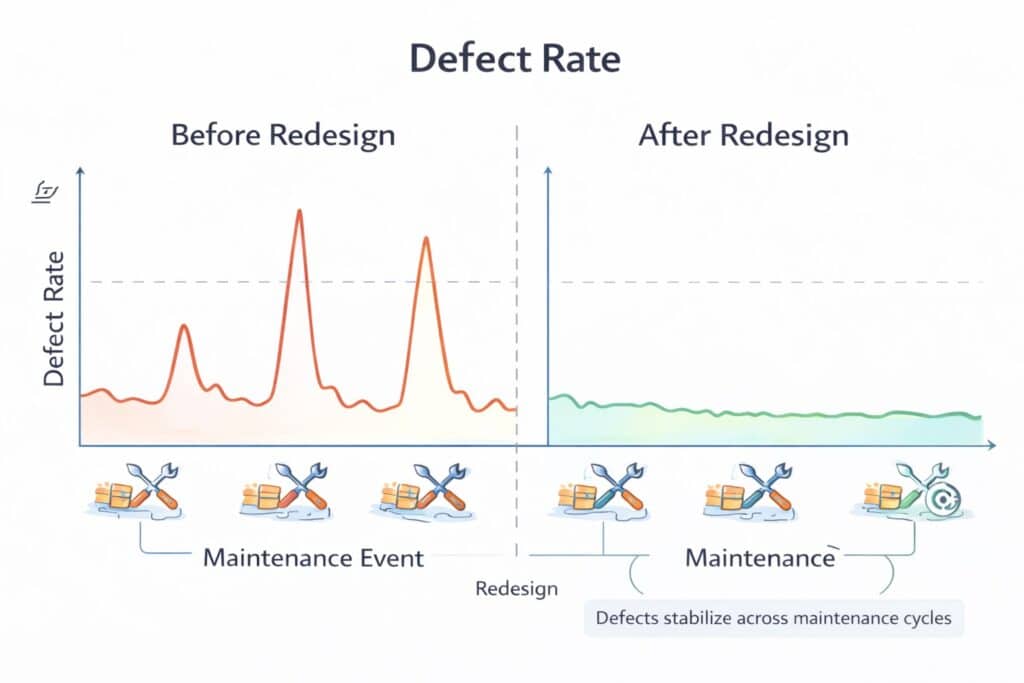
Imagine a production line that sees a recurring defect spike after maintenance. Containment helps shipments. The spike returns.
A cross-functional team maps the cause landscape, then builds a Cause & Effect Chain. Evidence testing separates plausible theories from true mechanisms. The chain reveals a central mechanism: a warm-up sequence creates transient conditions that amplify sensitivity to alignment drift. The defect appears when these factors coincide.
This diagnosis yields a contradiction: rapid restart supports throughput, and rapid restart amplifies the transient mechanism that drives defects.
Now ideation becomes high leverage. The team explores concepts that preserve restart speed while stabilizing the transient mechanism: pre-conditioning, localized sensing, adaptive control, sequence restructuring, interface redesign, and process changes that reduce sensitivity.
PRIZ recently published a narrative manufacturing defect RCA example that shows how a team combined a Cause & Effect Chain with 5 Whys to reach a root cause they could prove, fix, and prevent from returning.
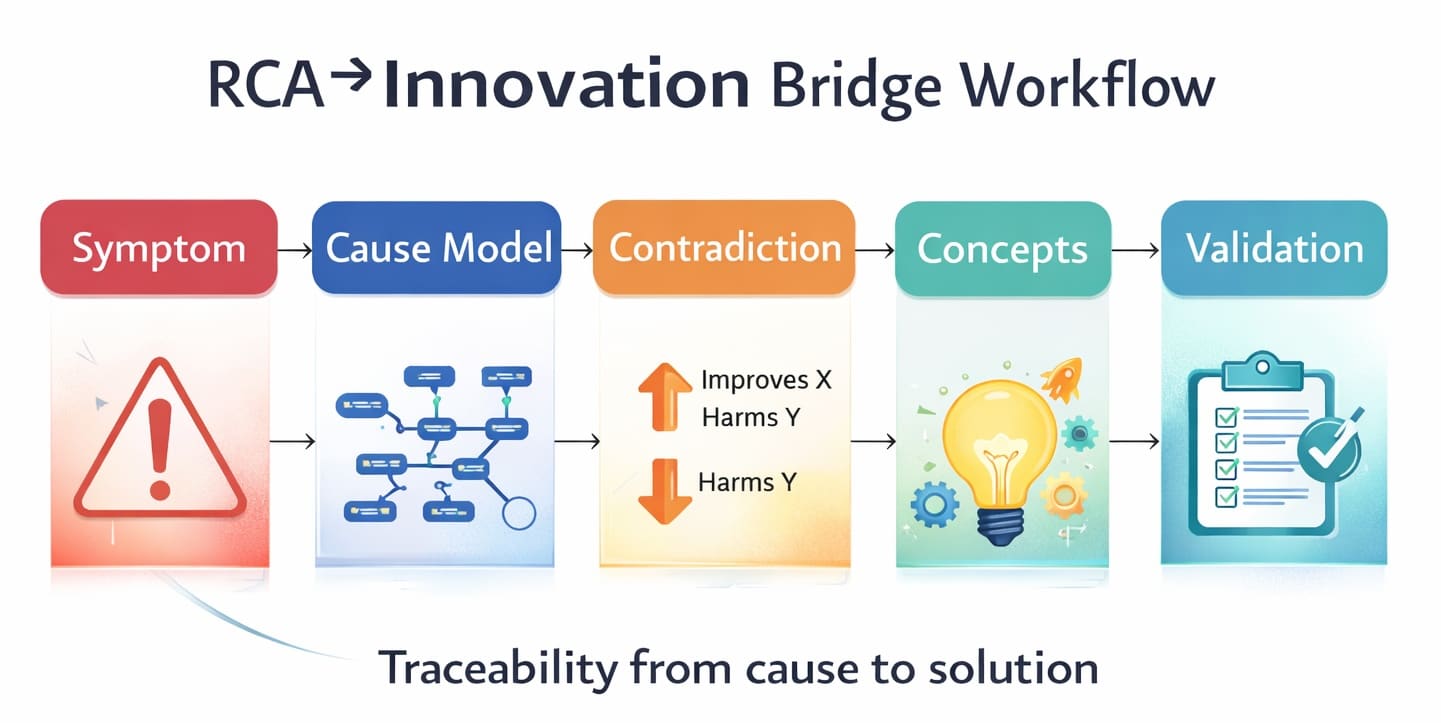
The value in this pattern comes from continuity: investigation logic stays connected to solution logic, and solutions stay connected to measurable outcomes.
PRIZ acts as a bridge by keeping analysis and invention inside one structured workflow and one shared project space, so teams carry causal truth directly into solution design.
The Cause & Effect Chain in PRIZ provides a structured way to build increasing detail while preserving causal relationships, which supports shared understanding and future reuse.
This backbone becomes the reference model for corrective actions, preventive actions, and system redesign concepts.
PRIZ’s 5+ Whys approach aims to move teams past shallow causal labels and toward mechanisms that a team can measure and control.
PRIZ’s Functional Modeling helps teams see interactions and responsibilities within complex systems and processes, which often surfaces the real levers for durable change.
Once a team articulates a contradiction, PRIZ supports ideation through TRIZ-aligned tools such as 40 Inventive Principles and system-level thinking via 9 Windows.
These tools focus creativity on mechanisms and tradeoffs that matter.
PRIZ’s platform help pages describe capabilities spanning guided facilitation, collaboration, idea management, and automatic reporting.
This structure helps teams keep decisions, assumptions, evidence, and actions visible, searchable, and transferable across people and time.
Teams gain more than fewer repeats. They gain a repeatable way to turn operational pain into design advantage.
They build a habit of transforming verified mechanisms into new process capability. They raise the quality of ideas by grounding them in causal structure. They accelerate learning by capturing reasoning and outcomes in a reusable format. They create a library of solved challenges that compounds across products, lines, and sites.
That compounding effect becomes a competitive asset.
Root causes deliver more than explanations. They deliver design leverage. When teams carry causal truth into contradiction-driven ideation and system-level redesign, they solve the current issue and upgrade the system that produced it.
PRIZ supports that full path in a single workflow: capture the causal chain, deepen the mechanism, model the system functions, generate inventive concepts, and keep traceability from cause to action to measurable outcome.