Recurring problems rarely begin as major failures. They begin as weak signals: a brief excursion, a small deviation, a “good catch,” a short stop, or a complaint that resolves quickly. Each signal carries information about how the system behaves under real variation. Preventive root cause analysis (preventive RCA) turns those early signals into prevention that scales.
Preventive RCA aligns naturally with Quality 4.0. Quality 4.0 frames quality and organizational excellence within Industry 4.0 performance expectations, connecting proven quality disciplines with digital technologies and data-driven execution.
This article shows how preventive RCA works in practice and how PRIZ Guru supports it as a continuous, reusable workflow.
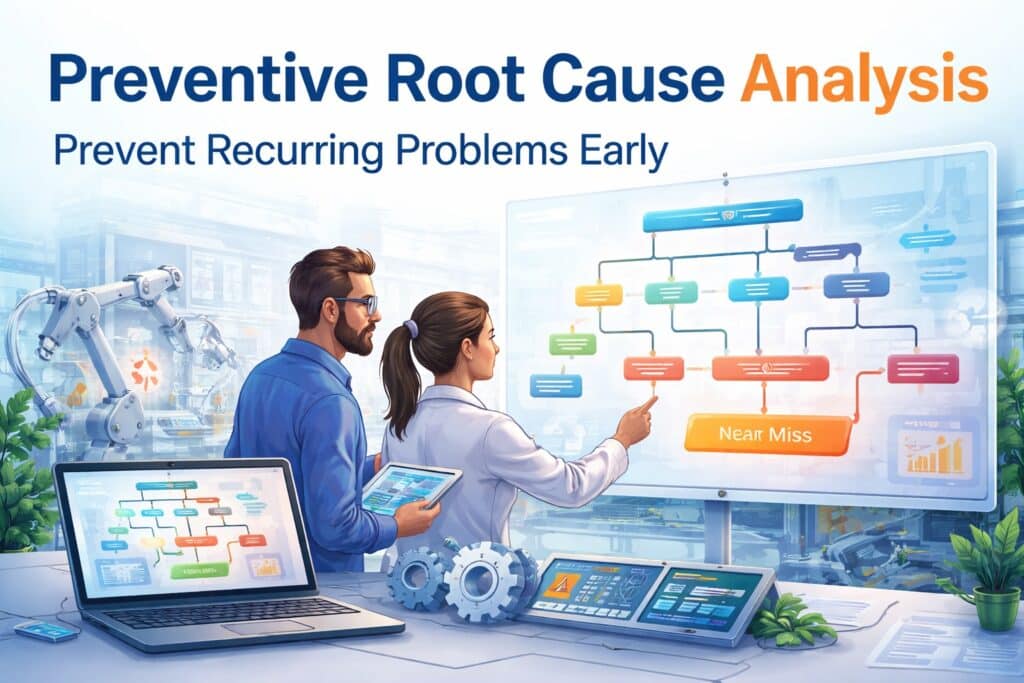
Preventive RCA applies root cause analysis to events with real potential, even when impact stayed low. Safety literature describes a near miss as an unsafe situation that matches a preventable adverse event except for the outcome: exposure to a hazardous situation occurs, and harm does not occur due to luck or early detection.
In engineering and manufacturing, the same concept shows up as contained defects, corrected excursions, fast recoveries, and early field signals. Preventive RCA treats these events as evidence of causal structure. The goal stays simple: reduce recurrence by shaping the conditions that create the pattern, then track leading indicators that reflect that causal model.
A practical set of candidates for preventive RCA includes:
Recurring issues persist when learning stays local and implicit. Preventive RCA breaks the cycle through three reinforcing mechanisms.
Causal knowledge becomes explicit.
Logs and dashboards answer what changed and where it changed. A shared causal model explains why the change occurred and which conditions enable it. This shift turns institutional memory into a durable engineering artifact.
Actions become system controls.
A quick adjustment can stabilize one run. Prevention changes the system through control points, constraints, detection rules, and capability building that travel across shifts and time.
Monitoring and reasoning connect.
Quality 4.0 emphasizes the integration of quality discipline with digital technologies. That pairing becomes most powerful when monitoring produces fast signals and RCA produces targeted interventions tied to mechanisms.
Risk-based thinking in ISO 9001:2015 belongs in planning and operation from the beginning and throughout the system, making prevention inherent to the management system. This creates the cultural expectation for preventive RCA: teams look for patterns and address risk pathways early.
In regulated environments, CAPA language describes a similar intent. U.S. Food and Drug Administration explains that the purpose of the CAPA subsystem includes collecting and analyzing information, investigating product and quality problems, and taking corrective or preventive action to prevent recurrence. Preventive RCA supplies the causal engine that makes preventive action precise and measurable.
Preventive RCA works best as a short cycle that runs continuously, plus deeper cycles that activate when risk rises.
Start from an observable effect and a clear context: what happened, when and where it occurred, what containment succeeded, and which performance boundary it approached. Add impact potential, because potential sets priority.
A strong model includes parallel contributors, enabling conditions, and interfaces. It describes triggers and preconditions, plus the pathway that links conditions to the observed effect.
Validation anchors the model in reality: data trends, mechanism plausibility, comparisons across runs, targeted tests when feasible, and cross-functional review.
Prevention takes durable form as process controls, alarms, interlocks, recipe limits, poka-yoke, maintenance triggers, supplier checks, and training linked to the mechanism.
Each leading indicator connects to a branch of the causal model. The dashboard becomes meaningful because it mirrors cause, not only symptoms.
Preventive RCA needs continuity: capture signals, model cause, validate, implement controls, and reuse learning. PRIZ Guru supports that loop with structured causal tools and engineering-thinking tools that help teams model “what could go wrong” and convert insights into preventive controls.
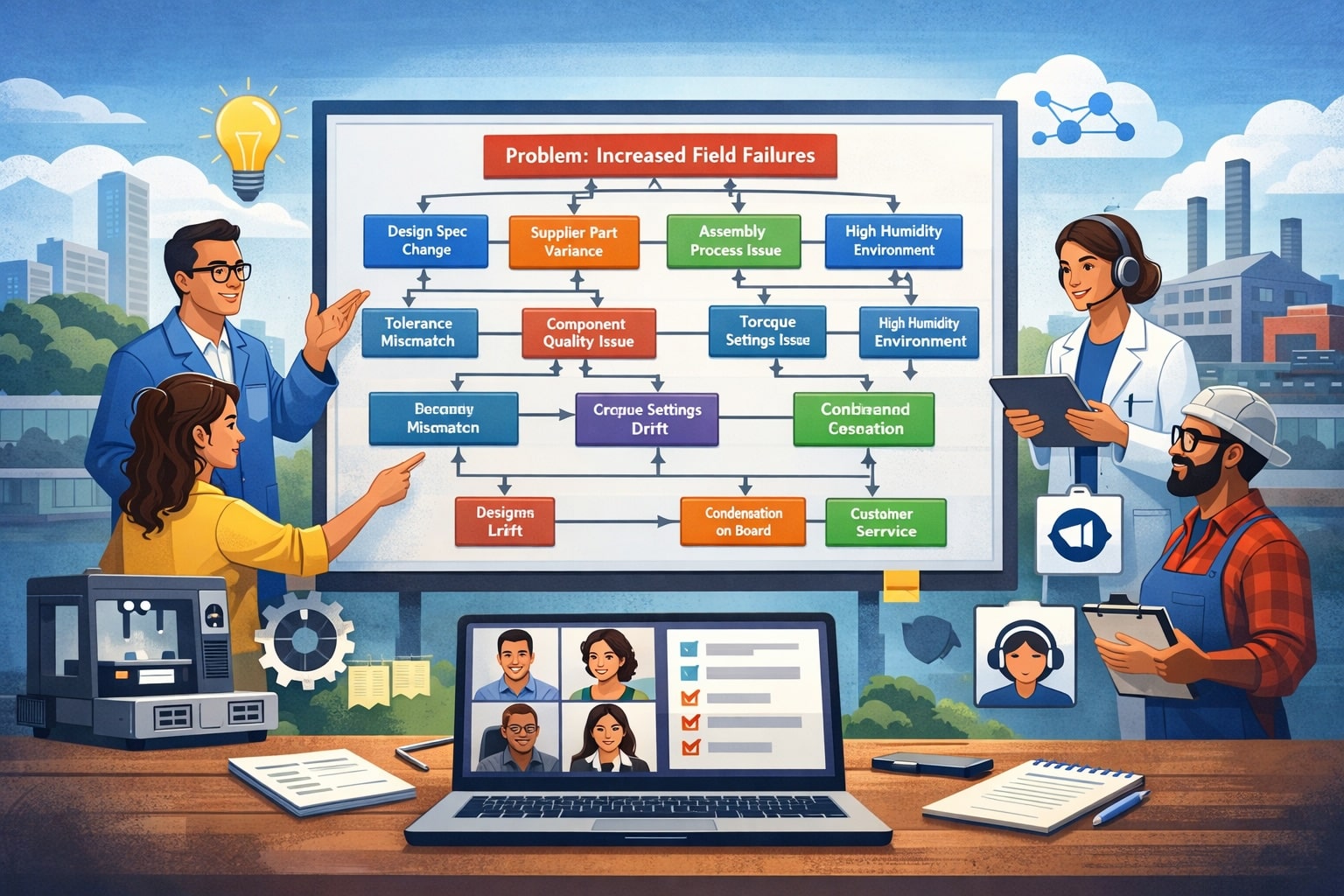
PRIZ Guru provides a tool and step-by-step guidance for building a Cause and Effect Chain tree diagram to logically organize causes for an effect and display causal relationships in increasing detail.
In preventive RCA, teams use this tool in two productive modes:
Signal-driven mode begins with a near miss or minor deviation and expands causal branches until mechanisms and enabling conditions become clear.
Scenario-driven mode begins with a credible future failure effect and maps the pathways that could produce it. This mode pairs well with continuous monitoring because it creates a library of risk pathways. When a weak signal appears, teams match it to an existing pathway quickly and act with confidence.
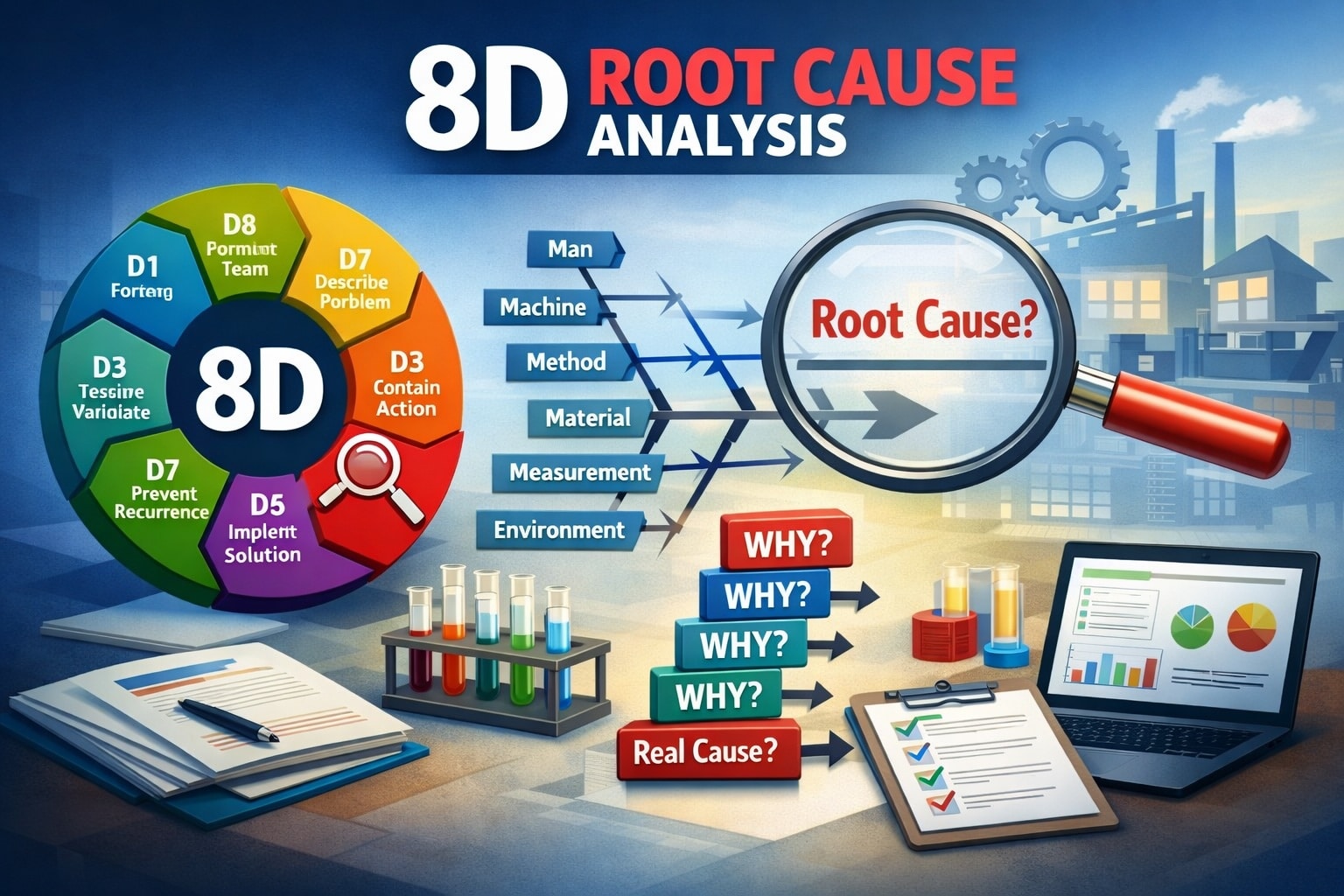
PRIZ Guru’s 5+ Whys approach emphasizes deeper chains when the situation requires it and highlights the distinction between auxiliary reasons and fundamental reasons, connecting analysis to decisions.
Preventive RCA gains leverage from this structure:
That separation helps teams design prevention that stays effective across time and across people.
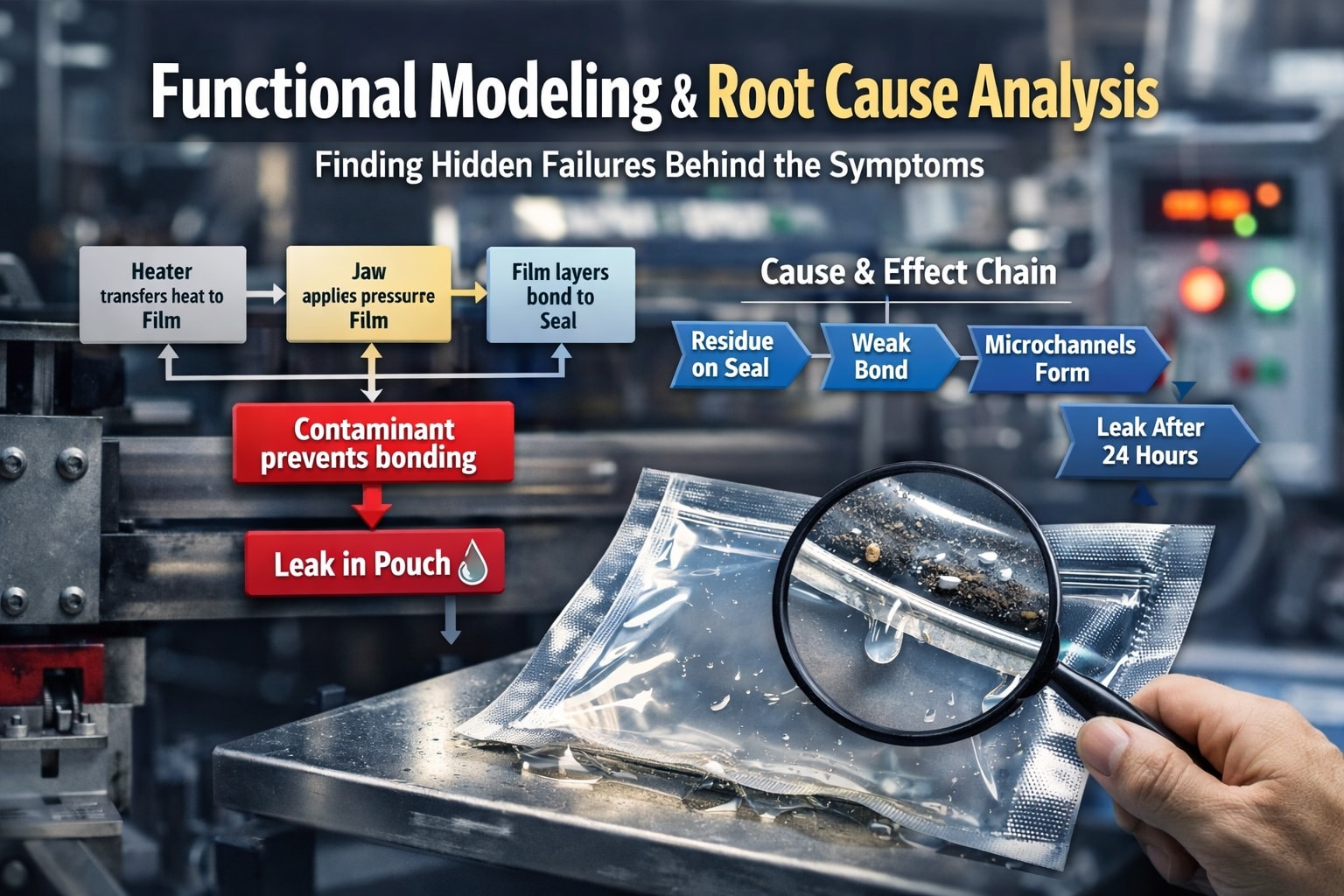
PRIZ Guru’s functional modeling is a way to dissect systems and processes, surface hidden inefficiencies, and lift overall system quality through complementary approaches.
Preventive RCA benefits from functional modeling when the weak signal emerges from interactions: thermal behavior, contamination pathways, interface mismatches, software states, wear, alignment, or human-machine coupling. Functional modeling gives teams a structured way to describe how the system produces value and where harmful interactions arise.
PRIZ Guru’s 9 Windows tool supports thinking in time and space, dividing analysis across subsystem, system, and supersystem across past, present, and future.
This view strengthens preventive RCA by revealing upstream drivers and downstream consequences. It helps teams connect a minor deviation today to a plausible escalation path tomorrow, then choose prevention points that sit in the right place in the system.
A line stays within spec while a defect rate drifts upward over several lots. Automated inspection catches the outliers. Operators tune parameters and production continues. The signal stays small, and recurrence risk rises quietly.
A preventive RCA cycle begins with the trend as the effect. The team builds a Cause & Effect Chain across material, equipment, environment, process window, and measurement sensitivity. They validate the strongest branches using humidity logs, material batch history, maintenance records, and a small designed experiment on key parameters.
Prevention becomes a set of controls tied to mechanisms: a humidity guardband linked to defect trend slope, a material incoming check tied to viscosity behavior, a stencil wear trigger tied to print transfer physics, and a fast verification run triggered by specific combinations of environment and material lot. Leading indicators reflect the same branches, so monitoring stays causal and actionable.
The outcome is stable learning: one near miss produces a reusable model and a prevention pattern the team applies across lines and products.
A strong rollout begins with a lightweight cadence and a clear intake. Choose three signal sources, run a weekly preventive review, store causal models as reusable assets, and link prevention actions to leading indicators that reflect causal branches. Risk-based thinking in ISO 9001:2015 supports this approach by embedding prevention into planning and operation across the system.