Intelligence Amplification (IA), also known as cognitive augmentation, machine augmented intelligence, or enhanced intelligence, refers to technology that augments human intellect rather than replacing it. In practice, most IA platforms at their core integrate AI into existing workflows and tools to empower human capabilities. The goal is to create a symbiotic human-AI partnership: AI’s speed, scale, and precision complement human judgment, creativity, and expertise.
Enterprise-grade IA solutions are typically designed for teams, embedding AI assistance into collaborative processes, decision-making, and knowledge work across organizations. In this article, we survey leading IA software platforms and frameworks built for enterprise deployment outlining their providers, core functionality, key cognitive augmentation features, and typical use cases, and then compare these platforms to the offerings of PRIZ Guru (an innovation platform for engineering teams).
As of November 2025, the IA landscape continues to evolve with advancements in generative and predictive AI, emphasizing ethical deployment and operational scalability. For instance, IBM’s recent updates focus on helping enterprises operationalize AI through enhanced software and infrastructure, while Microsoft has introduced features like image reasoning and workflow automation in Copilot. These developments highlight IA’s shift toward more integrated, trustworthy systems that prioritize human-in-the-loop designs to mitigate risks like bias and over-automation.
IBM Watson is a broad AI platform offering cloud-based cognitive computing services and tools. It can understand natural language, analyze vast datasets (structured and unstructured), and answer complex questions with evidence-based responses. Originally famous for beating humans at Jeopardy!, Watson is now geared toward assisting professionals in various domains rather than operating autonomously. As of October 2025, IBM has unveiled new advancements in Watson, including enhanced capabilities for operationalizing AI across software and infrastructure, enabling enterprises to build, deploy, and manage AI models more efficiently. This includes improved integration for hybrid cloud environments and tools for AI governance.
Watson’s architecture (DeepQA) uses natural language processing, hypothesis generation, and machine learning to support human decision-making. It can parse users’ questions, sift through millions of documents (e.g., medical literature or financial reports) in seconds, and return a ranked list of answers or recommendations with confidence scores. Rather than making decisions itself, Watson provides evidence-backed insights and explanations, effectively serving as an AI research assistant.
IBM often refers to Watson’s approach as augmented intelligence, emphasizing that it supplements human experts to make them faster and more accurate. Watson includes specialized modules like Watson Assistant (for building chatbots and virtual agents), Watson Discovery (for intelligent document search and insight extraction), and domain-trained systems (e.g., Watson for Oncology in healthcare), all aimed at amplifying human analysis.
IBM Watson is used across healthcare, finance, customer service, education, and more.
Across these use cases, Watson’s value lies in handling the heavy data crunching and information retrieval, so that human professionals can focus on judgment and decision-making. With 2025 updates, Watson’s infrastructure enhancements support faster AI adoption in regulated industries, improving scalability for large enterprises.
Microsoft provides a suite of IA capabilities through its Copilot family and Azure AI services. Microsoft 365 Copilot is an AI assistant embedded in Office 365 and Teams that leverages large language models (LLMs) to help users with everyday work, e.g. drafting documents or emails, generating summaries, answering queries, and creating presentations. Similarly, GitHub Copilot assists software developers by autocompleting code and suggesting solutions, thereby amplifying programming productivity.
On the cloud side, Microsoft’s Azure AI Platform (including Azure Cognitive Services and Azure OpenAI Service) offers building blocks like language understanding, vision recognition, and machine learning tools that enterprises can integrate into their own applications for cognitive augmentation. As of October 2025, new features include file summaries in Teams chats and the ability to build apps and workflows directly with Copilot, expanding its enterprise utility.
Microsoft’s Copilot systems act as “AI co-pilots” alongside users in various tasks. For example, in Office apps, Copilot can turn a user’s natural language prompt into a first draft of a Word document or summarize a lengthy report in seconds. In Microsoft Teams, Copilot can recap meeting discussions and action items. These features amplify productivity by handling tedious or time-consuming portions of knowledge work (drafting, editing, and extracting key points) so the human can review and refine the output.
Underlying these are Azure’s cognitive APIs, such as Azure Cognitive Search for enterprise knowledge retrieval, and Azure Form Recognizer for extracting information from documents, which organizations use to build custom IA solutions. Microsoft also introduced domain-specific copilots (e.g., Security Copilot for cybersecurity analysts, Viva Copilot for HR insights) that leverage organizational data to provide intelligent suggestions.
All these tools emphasize amplifying human creativity and decision-making rather than replacing it, with humans remaining in control of the final outputs.
Microsoft’s IA capabilities are broad-based across industries due to the ubiquity of Office and Azure.
Essentially, any scenario involving large amounts of text or data that needs to be synthesized is a candidate for Microsoft’s IA solutions, with the common aim of boosting team productivity and insight. Recent expansions allow for app building and workflow automation, enhancing its role in enterprise productivity.
Salesforce Einstein by Salesforce is an IA layer built into the Salesforce Customer 360 platform. Einstein is a collection of AI features and models integrated in Salesforce’s CRM software to augment the intelligence of sales, marketing, and support teams. It analyzes enterprise customer data and communications to provide predictions, recommendations, and automation within the CRM workflow.
Rather than a single product, Einstein encompasses numerous capabilities, from classic predictive analytics (like lead scoring) to the newer Einstein GPT and Einstein Copilot, which embed generative AI into the CRM. In 2025, advancements include an enhanced AI Trust Layer for secure, customizable experiences and deeper integration with predictive and generative AI for business needs.
In Sales, Einstein provides AI-driven lead and opportunity scoring to prioritize the most promising prospects, and can automatically generate personalized email drafts or sales call summaries based on CRM data.
In Customer Service, Einstein Bots and Copilot suggest relevant knowledge base articles and next-best actions to agents, auto-classify and route cases, and even draft responses to customers.
For Marketing, Einstein offers segmentation intelligence and predictive recommendations, e.g. predicting which customers are likely to churn or which product a segment might be interested in, allowing marketers to tailor campaigns.
A notable feature is Einstein GPT, which combines Salesforce’s proprietary AI models with OpenAI’s models to generate content (like writing a recommended reply to a customer or a product description) directly within the CRM interface. All these features serve to amplify the user’s efficiency and effectiveness: routine tasks (data entry, basic analysis) are automated, and complex data patterns are surfaced as actionable insights.
Because Salesforce is widely used across industries for customer relationships, Einstein’s augmented intelligence finds application in retail and e-commerce (e.g., recommending products to customers based on their browsing history and similar buyers’ behavior), financial services (helping advisors prioritize client outreach by predicting customer life events or product needs), manufacturing (predictive forecasting of sales demand), and public sector/nonprofits (optimizing outreach and improving service response times).
Overall, Einstein’s IA features help different roles – sales reps, service agents, marketers – make better data-driven decisions and spend more time on high-value work, rather than on clerical tasks. Recent guides highlight 10 benefits for business growth, including enhanced trust and automation in 2025.
Palantir provides an enterprise analytics platform that is often cited as an example of intelligence augmentation for data analysts. Palantir’s software integrates massive amounts of disparate data (databases, documents, sensor feeds, etc.) into a unified environment where human analysts can query and visualize connections that would be otherwise hidden. The platform doesn’t autonomously “conclude” answers; instead, it amplifies human analytical capabilities by making large-scale data manageable and interpretable.
Key features include advanced link analysis and knowledge graph visualization (to discover non-obvious relationships between entities, such as linking people, places, and events in investigative data). There are tools for real-time alerting and hypothesis testing; for example, Palantir can flag patterns like unusual communications between persons of interest and let an analyst drill down into those patterns. The platform supports collaborative analysis, where multiple experts can build and share intelligence workflows.
By providing a high-level, interactive view of data, Palantir enables analysts to apply their intuition and domain expertise more effectively. Notably, Palantir’s philosophy explicitly favors “intelligence augmentation” (IA) over full automation; the software is designed to keep a human in the loop at critical decision points. As Palantir’s own materials suggest, human analysts are adaptive in ways AI alone is not; Palantir’s role is to present the AI-assisted insights in a form that humans can validate and act upon.
Palantir is heavily used in government intelligence, defense, and law enforcement.
A common theme is that Palantir enables organizations to draw insights from data at unprecedented scale, amplifying what teams of analysts can achieve. For instance, during the COVID-19 pandemic, Palantir Foundry was used by several governments for live dashboards and resource planning, augmenting officials’ ability to make data-driven policy decisions quickly. Across all use cases, Palantir’s platform serves as an “AI-enhanced analyst’s workbench”, accelerating data-driven discovery while relying on human judgment for final interpretations.
Squirro’s platform specializes in turning an enterprise’s data (from CRM records to documents and news feeds) into AI-driven insights and recommendations for employees. It combines cognitive search, machine learning, and predictive analytics to continuously monitor data and surface contextually relevant information to users at the right time. In essence, Squirro works as a cognitive assistant for knowledge workers, automating the discovery of important signals in big data.
Squirro marries AI technologies (NLP, ML) to provide features like 360° context dashboards, “next best action” recommendations, and intelligent search.
In a banking context, Squirro can automatically gather all relevant news, financial reports, and internal data about a client into a real-time dashboard for a relationship manager, giving a comprehensive view without manual research. It also has pre-built trigger detection models: the system reads through streams of unstructured data (earnings calls, news articles, meeting notes) to flag early indicators of opportunities or risks that a human might miss due to sheer volume. These triggers could be signals like a company mentioning expansion (sales opportunity) or a client complaining on social media (service issue), prompting the team to act.
Squirro’s augmented analytics capabilities allow users to query data in natural language and get AI-curated answers. The platform integrates into existing tools (e.g., CRM systems, ITSM platforms), delivering insights in context. By automating data analysis and providing proactive recommendations, it augments human decision-making, “combining the power of AI with human imagination”, as Squirro’s CEO puts it.
Squirro is used in industries like financial services, insurance, manufacturing, and telecom.
Across these use cases, organizations report that Squirro enables their teams to work smarter; for instance, sales teams using Squirro have automated lead sourcing and gained a personalized “news feed” about each customer, leading to improved client engagement.
Moveworks provides an enterprise AI assistant platform that automates support and business workflows for employees. It is an example of an IA platform built to serve every team in an enterprise, from IT and HR support to sales and finance, by handling routine requests and providing instant answers. The Moveworks AI assistant acts as a conversational agent employees can interact with, and behind the scenes, it integrates with hundreds of enterprise systems (ServiceNow, Workday, Jira, etc.) to fulfill requests.
Moveworks is often described as an “agentic AI” platform, meaning it not only understands questions but can take actions on behalf of users. Key features include Natural Language Understanding to comprehend employees’ messages, Enterprise Search that uses generative AI and retrieval-augmented generation (RAG) to return precise answers from company knowledge bases, and workflow automation to complete tasks end-to-end.
For example, if an employee types a common IT issue, Moveworks can automatically reset a password or create a helpdesk ticket and then later inform the user of the resolution without human intervention. It comes with an AI integration layer featuring pre-built plugins for business applications, so it can perform actions like provisioning software, updating a record in Salesforce, or scheduling a meeting. All of this is delivered via a simple conversational interface, so from the user’s perspective, they are chatting with a single intelligent assistant that handles myriad requests.
Moveworks also provides an Agent Builder/Studio for developers to create custom AI “agents” or skills on the platform, and an analytics dashboard to give insights into what employees are asking and how processes can be improved. By automating repetitive tasks and providing immediate answers, Moveworks augments the capacity of support teams and improves overall workforce productivity.
Moveworks initially gained traction in IT service desk automation, for instance, resolving IT tickets (password resets, software access requests) through AI, which can deflect a large portion of tickets from human IT staff. It’s now also used for HR support (answering questions about policies, helping onboard new hires by guiding them through setup steps), Finance and procurement (e.g., employees ask “What’s the status of my reimbursement?” and the bot retrieves the answer), and Sales enablement (retrieving facts from enablement content or CRM for reps). Enterprises in technology, finance, retail, and other sectors have deployed Moveworks as an AI helpdesk assistant available 24/7 to their workforce.
A real-world example: at Autodesk (a Moveworks customer), employees can ask the AI assistant to install software or troubleshoot common errors; the result was a significant reduction in mean time to resolution for support issues and higher employee satisfaction. Overall, Moveworks’ platform demonstrates intelligence amplification by acting as a tireless support agent that allows human teams to focus on more complex, high-value problems while routine issues are handled automatically.
Unlike other platforms that focus on human-AI collaboration in data or task automation, Unanimous AI focuses on amplifying the collective intelligence of groups. Its platforms enable networked teams or crowds to converge on decisions, predictions, or ideas in real time, using AI algorithms to leverage the “wisdom of the crowd” more effectively than traditional votes or surveys. In essence, Unanimous AI provides a human-in-the-loop swarm intelligence system: people contribute their knowledge and preferences, and the platform’s AI mediates the interaction to produce an optimized group output (such as a decision or forecast).
Swarm is a graphical decision-making platform where participants simultaneously manipulate a pointer (like a magnet) toward options on the screen; an AI engine observes their behaviors and rapidly reaches a group consensus that reflects the collective confidence. This method is inspired by how bees swarm to make decisions, and studies have shown it can be more accurate than simple majority votes.
Thinkscape, on the other hand, is a newer conversational platform for large-scale deliberation (up to 400 people). It combines real-time discussion prompts with AI analysis to help groups brainstorm, debate, and prioritize ideas. Thinkscape uses Unanimous AI’s “HyperChat” AI and swarm algorithms to guide these discussions and highlight the most supported insights.
The key feature is that these tools harness each participant’s knowledge and intuition, then amplify the group’s overall intelligence by finding the optimal combination of their inputs. This often leads to decisions or predictions that outperform even the best individual in the group. For example, swarms have been used to predict sports and award show outcomes with high accuracy.
Unanimous AI’s platforms are used in settings where group decision quality matters.
Unanimous AI cites customers ranging from global companies (e.g., Deloitte, Airbus) to the U.S. Air Force and United Nations, showing its versatility. One documented use was by financial traders: an Oxford study found that a swarm of traders had >20% more accurate forecasts than individuals.
Medical teams have also used swarm AI to diagnose cases with fewer errors. In summary, Unanimous AI’s platforms exemplify intelligence amplification at the group level: the technology boosts the collective decision-making power of teams, which can be transformative for strategic planning, prediction markets, and collaborative problem-solving.
PRIZ Engineering Thinking Platform (by PRIZ Guru) takes a distinct approach to intelligence amplification, targeting engineering problem-solving and innovation processes specifically. Unlike the broad AI-driven automation seen in many platforms above, PRIZ Guru is methodology-first. It provides a structured framework (partially inspired by TRIZ and other inventive problem-solving methods) to guide human teams through complex technical challenges. Key differences and similarities between PRIZ Guru and the leading IA platforms are outlined below:
Most of the IA platforms surveyed (IBM Watson, Microsoft Copilot, Squirro, etc.) focus on AI-driven analysis or task automation to augment human work; for example, parsing big data to find insights, automating support tasks, or using machine learning to make predictions. The emphasis is on the AI processing information and presenting results to humans, aligning with a data-centric augmentation strategy.
In contrast, PRIZ Guru emphasizes human-centric problem-solving methodologies, with AI as an optional assistant. PRIZ is a “methodology-first innovation platform” that systematizes how teams solve problems, using structured techniques to boost creative thinking. Its built-in AI (as an optional add-on) acts in a support role, e.g., speeding up research or providing feedback during research and analysis, rather than driving the process. This means PRIZ keeps the human creative process at the core, whereas other IA platforms often center the AI’s computational power at the core of augmentation. As per recent reviews in 2025, PRIZ Guru is praised for its transformative role in enhancing problem-solving capabilities for engineering teams, with a focus on systematic and systemic approaches.
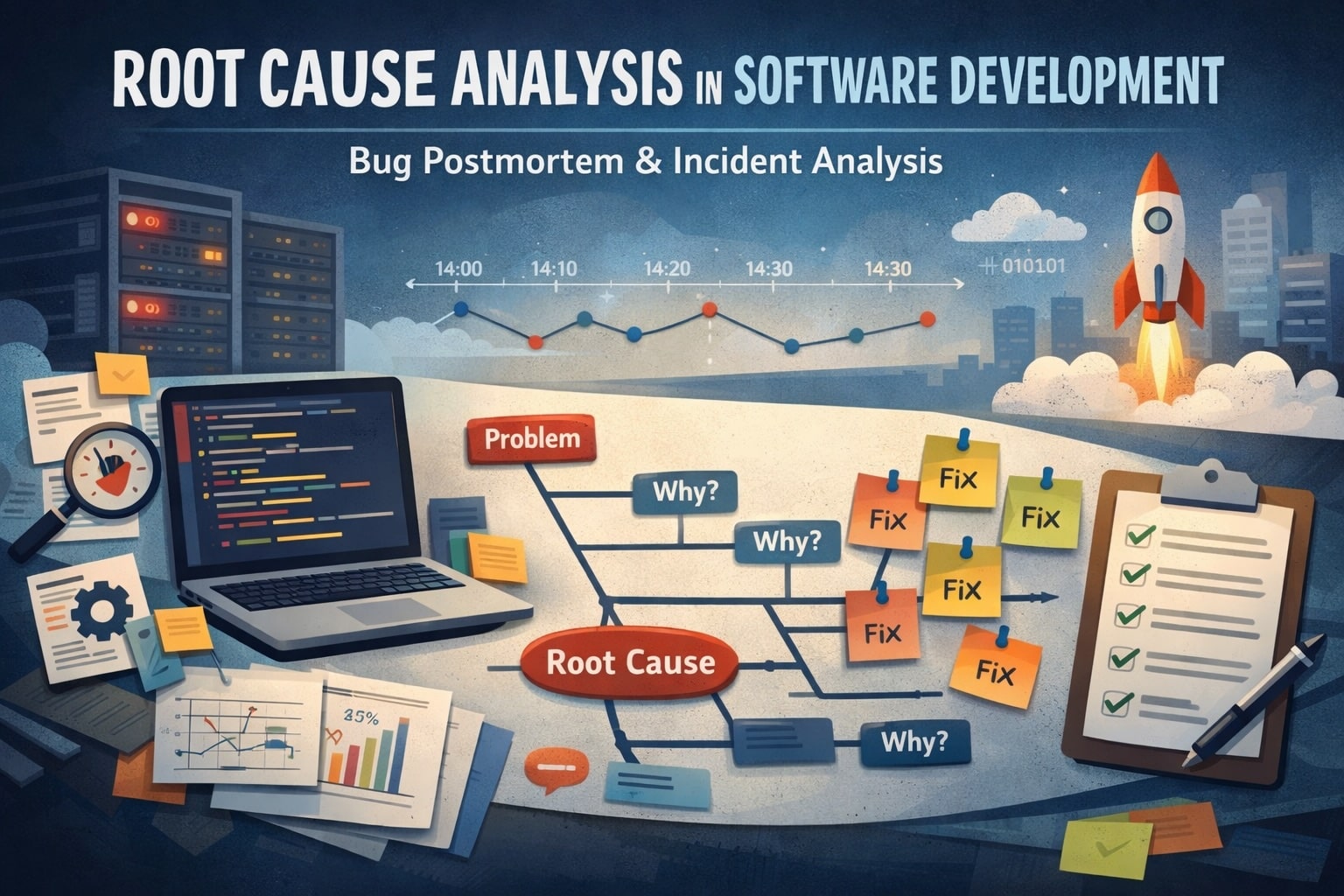
PRIZ Guru provides a unified toolkit of problem-solving tools and methods (such as Functional Modeling, 5 Whys, 40 Inventive Principles, etc.) and facilitates workshops where teams collaboratively analyze problems and develop innovative solutions. It has features like guided facilitation (step-by-step guidance through a problem-solving workflow), idea management (capturing and tracking ideas), and automatic reporting (generating reports of the session outcomes).
In comparison, the other IA platforms’ core functionalities are more about information processing and automation: for example, Watson answering questions from large text corpora, Moveworks automating IT tickets, or Einstein predicting customer behavior. These platforms typically do not provide structured problem-solving methodologies; instead, they augment by delivering insights, answers, or actions within existing processes.
In short, PRIZ Guru is like an “innovation workflow” platform enhanced with AI, whereas others are often “AI engines” embedded in workflows. Both approaches augment intelligence, but one by standardizing and enhancing human processes (PRIZ), and others by speeding up or automating data handling. Recent updates, such as the July 2025 launch of the Change Flow Thinking tool, further enhance PRIZ’s ability to turn challenges into breakthroughs by mapping changes and evolutions.
PRIZ Guru represents a specialized entry in the field of intelligence amplification (IA) platforms, particularly tailored for engineering and R&D teams facing complex technical challenges. Unlike the broader, AI-heavy tools surveyed, PRIZ Guru adopts a methodology-first philosophy. This approach, heavily inspired by TRIZ (Theory of Inventive Problem Solving), emphasizes practical application over theoretical depth, replacing TRIZ’s “T” for theory with “P” for practice to make inventive tools for the day-to-day work. The platform systematizes problem-solving to enhance creative thinking, promote collaboration, and generate innovative solutions that drive competitive advantage. By integrating structured processes with optional AI support, it augments human intellect in a way that keeps problem solvers at the center, reducing biases and fostering repeatable success.
At its core, PRIZ Guru functions as an “innovation workflow” platform, guiding teams through end-to-end problem resolution. Users begin by defining problems not as symptoms (e.g., what is observed or felt) but as required actions, complete with success criteria to measure completion. This initial step is critical, as it sets the foundation for focused innovation.
The platform then employs a range of creative thinking tools to direct ideation, ensuring ideas are generated systematically rather than sporadically. For collaborative work, especially in remote settings, PRIZ Guru offers workspaces where teams can invite members, share projects, and manage tasks in real time. This supports distributed engineering groups, allowing seamless access and collective ownership without geographical constraints.
Key features further amplify its IA capabilities. Guided facilitation walks users through workflows, providing step-by-step prompts to examine issues from multiple angles and avoid oversight.
Idea management captures, prioritizes, and tracks concepts, offering full transparency of decisions for accountability.
Automatic reporting eliminates manual documentation, generating stakeholder-ready summaries that include all process details. The platform also integrates project and task management directly with problem-solving, enabling users to create initial task lists that evolve as insights emerge. For intelligence augmentation, an optional AI assistant acts as a supportive tool, fetching relevant information, providing feedback during brainstorming, or accelerating research, without overshadowing human judgment. This aligns with IA principles by complementing human expertise with computational aid, much like how Palantir provides data visualization for analysts but on a more methodology-driven scale.
PRIZ Guru’s toolkit partially draws from TRIZ-inspired methods, offering specific instruments for dissecting and resolving problems. Some examples include:
These and other tools collectively enhance creative thinking by structuring thought processes, making innovation more accessible and less reliant on individual genius. The platform’s Ideas Manager further refines this by collecting and prioritizing ideas, aiding decision-making.
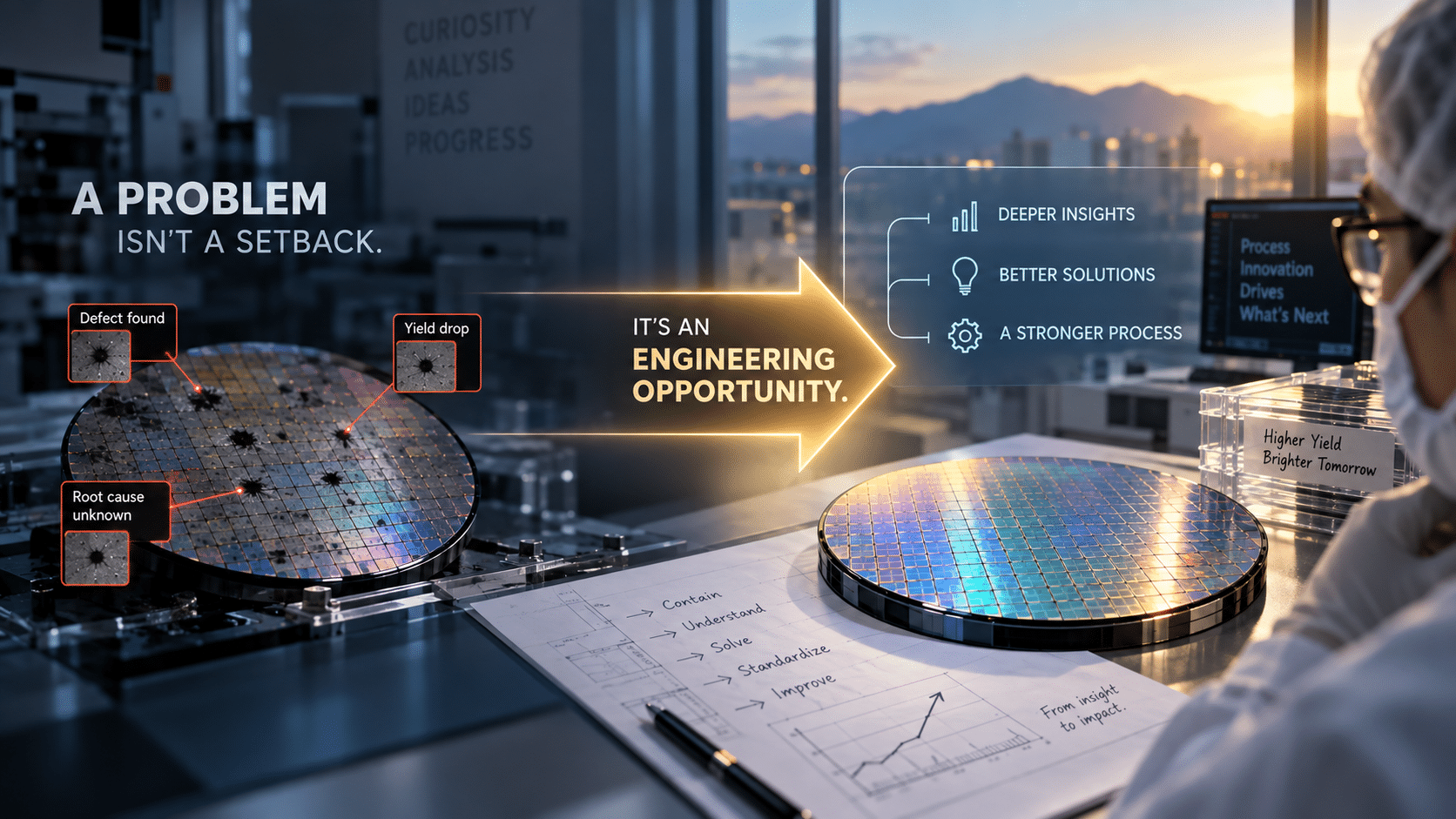
PRIZ Platform excels in vertical applications for technical teams. Documented projects include addressing wafer cleaning defects in single-wafer equipment, where new chemistry loading caused issues; using functional modeling to simulate and resolve failures.
Another case involved functional thinking in manufacturing plants, emphasizing investment in process engineers for operational success. These examples span microelectronics, mechanics, and management, demonstrating measurable outcomes like reduced defects, optimized processes, and accelerated product development.
For R&D, the platform supports on-the-job learning through courses with video lessons, hands-on exercises, and instructor guidance, building skills in problem-solving and engineering thinking – the most in-demand qualifications in the field.
Overall, PRIZ Guru differentiates by embedding systematic innovation into engineering workflows, leveraging TRIZ for practical gains. It augments intelligence by guiding users in inventive thinking, supporting remote collaboration, and automating documentation, ultimately transforming challenges into opportunities. While it lacks the broad automation of competitors, its domain-specific strength makes it a valuable addition for technical teams seeking sustainable creativity.
Many leading IA solutions highlight features like natural language interfaces, predictive analytics, and real-time data handling. PRIZ Guru’s key features, on the other hand, are tailored to augment creative and analytical thinking, and the optional AI assistant in PRIZ might help by fetching relevant information or offering suggestions during the problem-solving process, acting as a cognitive aid. Both PRIZ and other IA platforms leverage AI, but PRIZ’s AI is more of a silent partner in a human-driven exercise, whereas others often have AI actively generating outputs (answers, automations) that humans then validate.
Enterprise IA platforms like Watson, Einstein, Palantir, etc., are often horizontal in nature – they are deployed across various industries and by multiple departments (IT, marketing, ops, etc.). They tend to serve knowledge workers broadly: e.g., any employee needing an answer (Moveworks), any analyst sifting data (Palantir), or any salesperson managing leads (Einstein). Some platforms do target specific domains (e.g., Eudia for legal teams, or Brainspace for e-discovery), but generally their scope is enterprise-wide augmentation of intelligence and productivity.
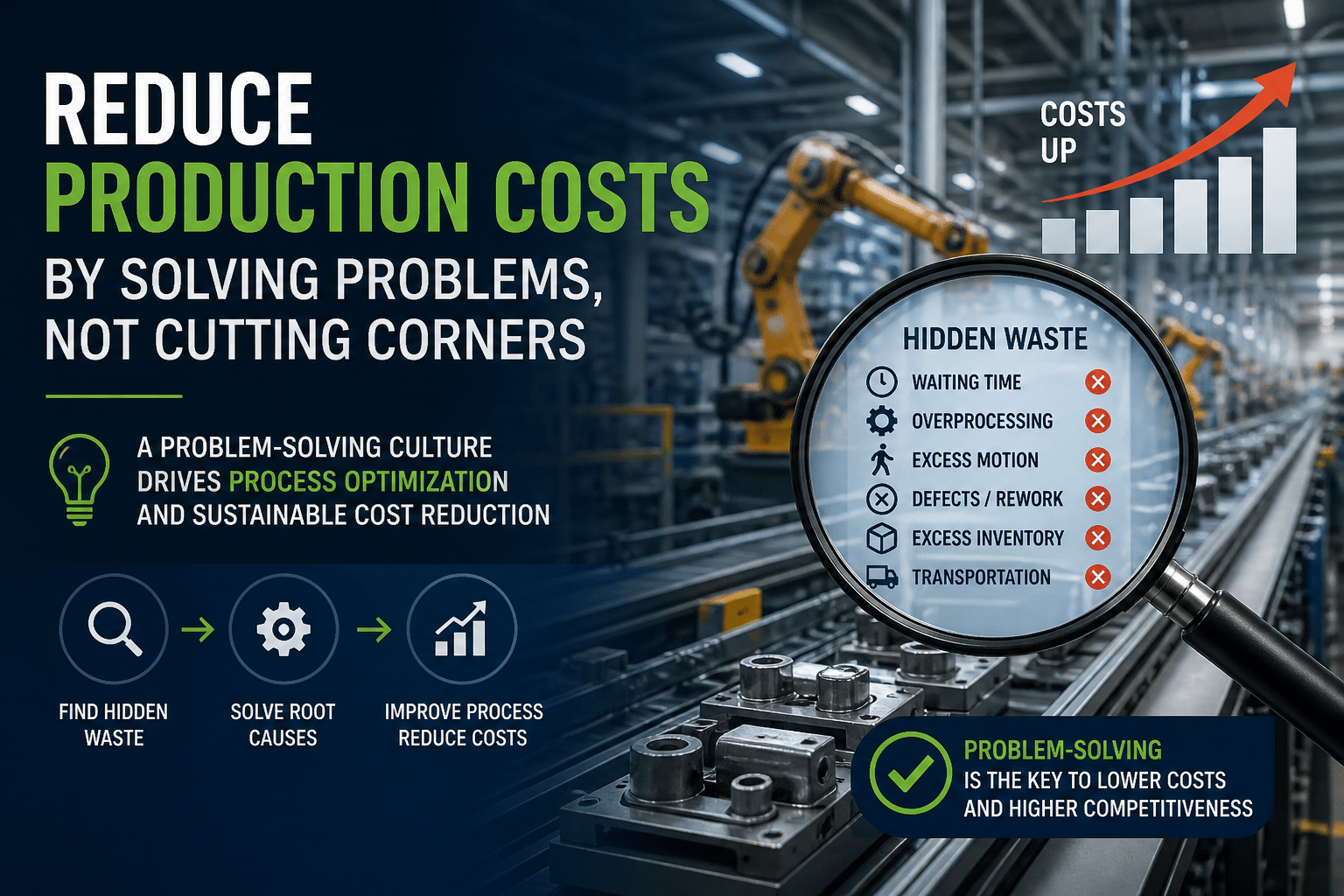
PRIZ Guru is more vertical in its focus; it is explicitly marketed to engineering and R&D teams in organizations. Its use cases revolve around product development, quality engineering, process improvement, and innovation management. For example, an automotive engineering team might use PRIZ to systematically solve a design problem or find the root cause of a manufacturing defect, thereby accelerating innovation.
PRIZ is the “only tool that lets teams enhance their engineering thinking”. Thus, while traditional IA platforms aim to augment day-to-day knowledge work or decision-making across the enterprise, PRIZ Guru aims to amplify the inventive and problem-solving capacity of technical teams. There is some overlap; both seek to improve how humans solve problems, but the problems and contexts differ (technical engineering challenges vs. general business or data challenges).
Despite different focuses, there are a few similarities. Both PRIZ Guru and many IA platforms support collaboration and knowledge sharing. For instance, PRIZ includes collaboration features to ensure stakeholders communicate and contribute in problem-solving sessions, and it documents all ideas and decisions for transparency. Likewise, several IA platforms facilitate collaboration: Unanimous AI literally has groups solving together in real time; Palantir allows analysts to collaborate on the same data; and Microsoft Copilot in Teams can summarize group chats for everyone.
Another similarity is the emphasis on human-in-the-loop. PRIZ’s philosophy clearly keeps humans at the center (the AI is optional and supportive), and even the enterprise IA platforms often stress that they augment rather than replace humans. IBM Watson and Palantir, for example, explicitly frame their tools as decision support for professionals, not autonomous decision-makers. In that sense, PRIZ Guru and the others share a common vision of AI as an enhancer of human capability, aligning with the core principle of intelligence amplification.
In summary, PRIZ Guru differentiates itself by providing a structured, domain-specific approach to cognitive augmentation, essentially teaching and guiding teams how to think better (with some AI help), whereas the leading IA platforms generally provide advanced AI technologies embedded in software to make decisions, information retrieval, and routine work faster and smarter.
PRIZ targets engineering innovation, offering an end-to-end solution (tools, process, training) to systematically tackle problems, which is quite different from, say, an AI assistant that answers FAQs or an analytics engine finding data patterns.
Ultimately, both PRIZ Guru and the compared platforms aim at the same ultimate goal: leveraging technology to amplify human intelligence – be it in generating an innovative design or quickly resolving a customer issue – but they operate at different layers of that human endeavor (the creative reasoning process vs. information processing and automation).