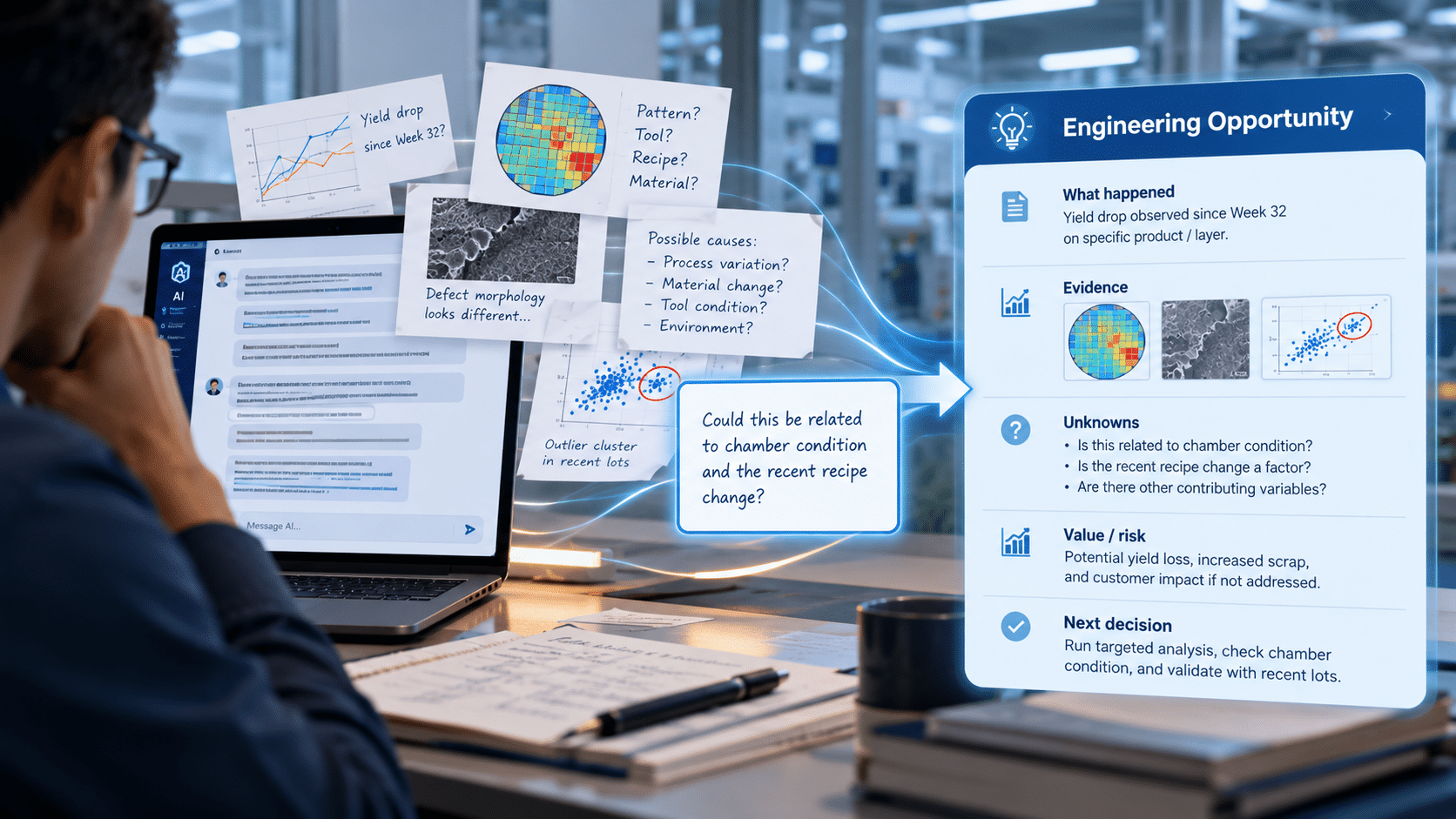
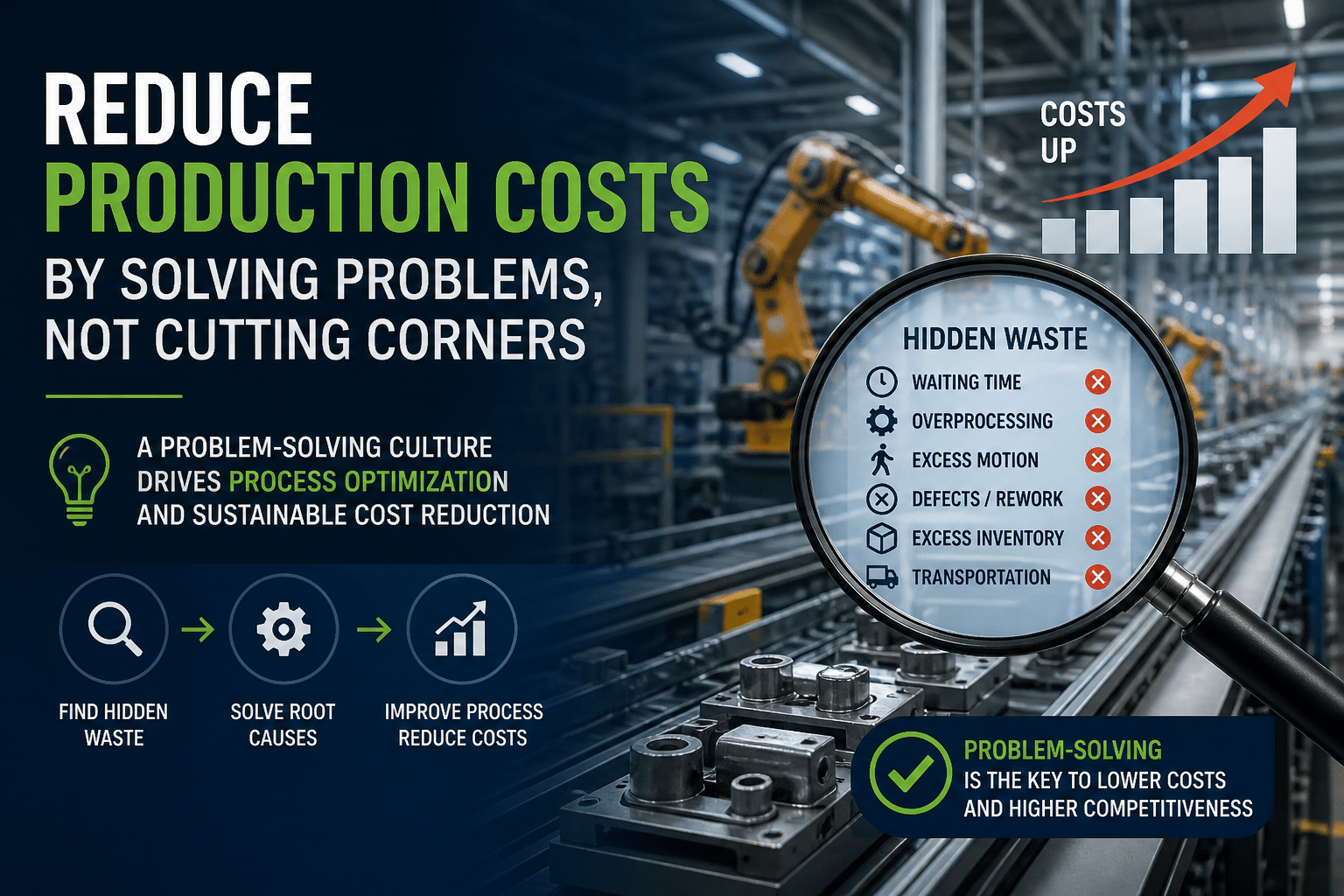
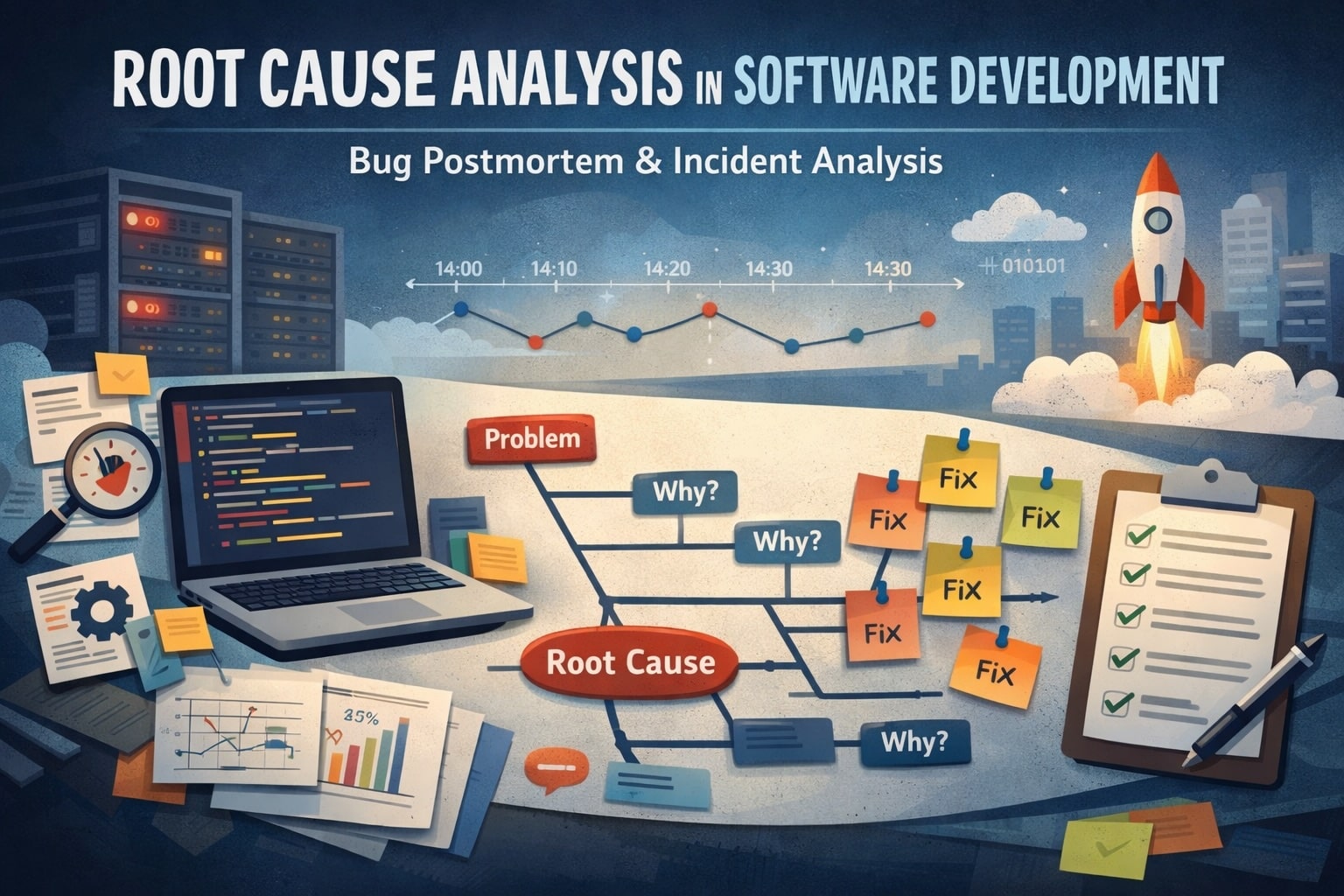
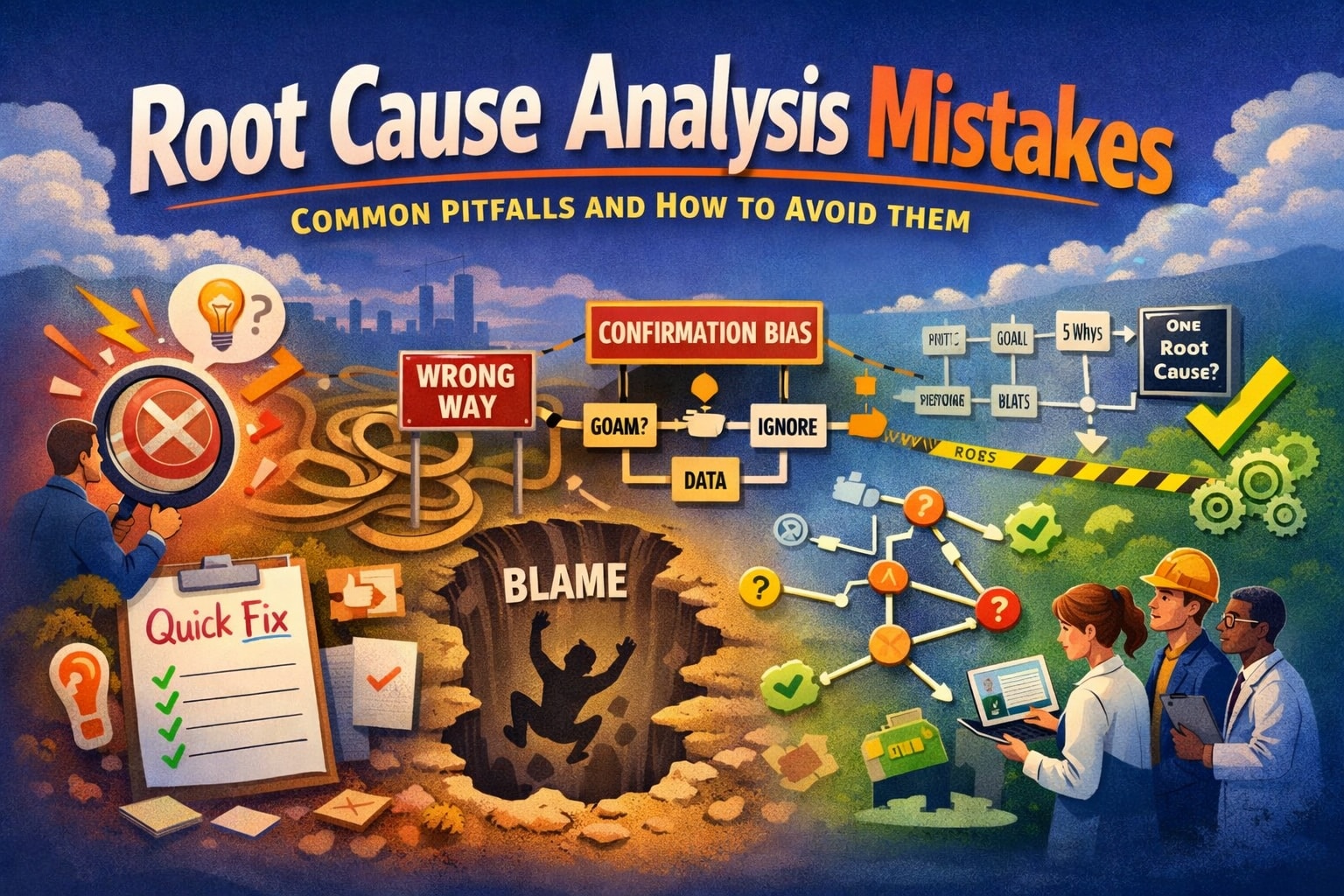
Root Cause Analysis (RCA) pays off when teams eliminate the cause that drives recurring defects, escapes, downtime, and customer pain. ASQ defines a root cause as a factor that caused a nonconformance and merits permanent elimination through process improvement.
That standard sets a high bar, and teams reach it through skill.
A trained team consistently does four things well:
Healthcare safety leaders made the same point in a different vocabulary: the IHI’s RCA2 guidance puts the emphasis on actions that prevent future harm and provides best practices to standardize event reviews.
RCA training gives your organization a shared language for causality and a shared definition of good enough.
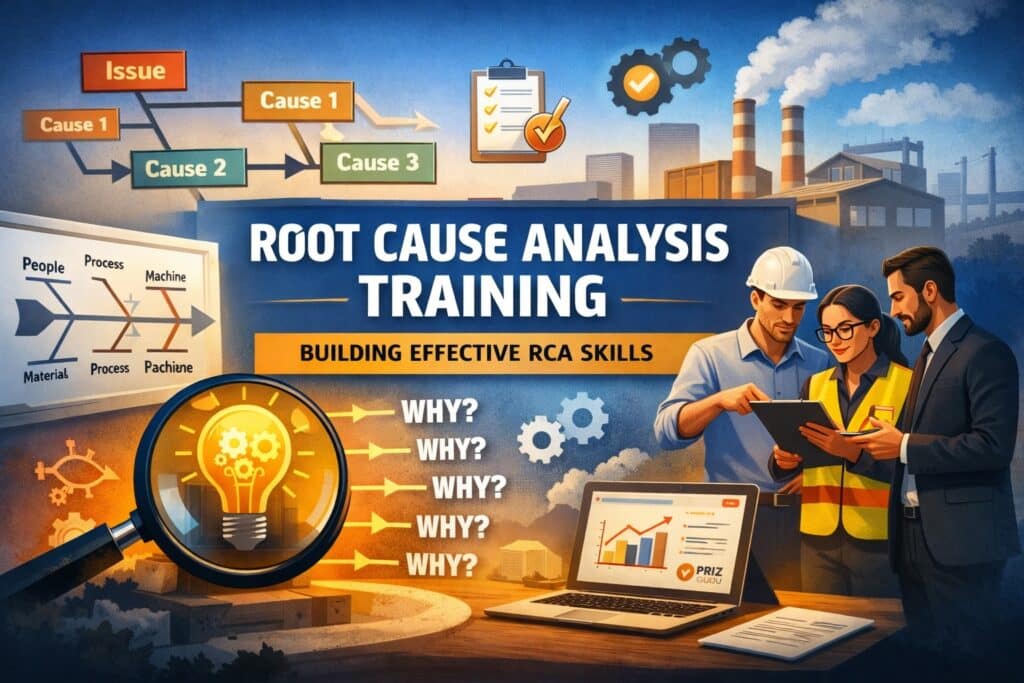
RCA training works best as skill-building in three layers.
Teams learn to describe cause-and-effect like engineers:
A condition + a mechanism + a context → an outcome.
This moves conversations from persuasion to explanation.
Common RCA tools stay popular for a reason:
Tool fluency includes knowing which tool fits the shape of the problem: a branched system failure wants a branched model; a tight linear failure wants a linear drill-down.
Strong RCA includes how you collect facts. The IHI’s PS 201 course highlights practical investigation moves like selecting an RCA team, conducting interviews, building a high-level flowchart of what happened, and developing causal statements.
This layer is where many teams improve fastest, because it replaces meeting memory with observable reality.
You can build RCA capability through a rhythm that feels like normal work.
Pick one recent incident, customer complaint, yield drop, or rework spike. The goal stays consistent: practice causal modeling.
A strong format looks like this:
Over time, the meeting becomes a quality standard for thinking.
Your archive is a free training set.
Run RCA drills where the team receives only the initial symptom and early evidence. Ask them to:
These drills teach investigation discipline and reduce the urge to jump straight to fixes.
A practical standard is: Condition + mechanism + context → outcome.
Example: “Coolant flow dropped below spec during the shift because the hose material degraded under chemical exposure, raising temperature beyond the thermal limit and triggering shutdown.”
This pushes the team toward mechanisms and away from labels like “operator error” or “bad part”
An RCA that ends with training reminders and awareness posters rarely changes outcomes in technical systems. Stronger actions change the system: design, process windows, automation, interlocks, poka-yoke, monitoring, validation gates, supplier controls.
Your coaching question:
Which action removes the cause’s ability to create the effect?
This is a lightweight “RCA training guide” a manager can run with a cross-functional group.
Use one recent case. Build a symptom statement that includes where, when, magnitude, and evidence source. Decide what data to pull next time automatically.
Use a tool that supports multiple branches (systems rarely fail in a single straight line). Force at least two branches early so the team learns to avoid single-story causality.
Take one branch and run a “why” chain until it reaches a cause you can verify. Treat verification as part of the method, not a bonus step.
Translate verified causes into actions. Review actions with a prevention lens, then define leading indicators that show the cause has lost leverage.
This four-week cycle repeats with new cases. That repetition is the training.
RCA training succeeds when the method is easy to execute, easy to review, and easy to repeat. PRIZ Guru was built for that.
PRIZ’s Root Cause Analysis is RCA mastery as a skill that benefits from training and proficiency, and it explicitly teaches Cause & Effect Chains and the “5 Whys” technique.
That pairing matters: teams learn a branched tool and a linear drill-down tool.
PRIZ’s RCA guide describes the Cause & Effect Chain as a tree-like model built by repeatedly asking “Why?”, with multiple branches to capture interconnected causes and reveal how systems work.
For training, this is powerful because it:
Our guide explains 5+ Whys as an evolution of the classic Toyota method that removes the five-question limit and supports deeper dives.
In training terms, that means the tool adapts to reality. Some causes resolve in three whys; others require nine.
PRIZ introduces a practical distinction:
This becomes a training accelerator for managers: teams learn to deliver quick wins while also building a prevention roadmap.
PRIZ’s approach makes the work reviewable: the symptom, the chain, the evidence notes, and the chosen actions live together. That supports the weekly review ritual that builds skill.
PRIZ’s RCA masterclass describes demonstrations of the Cause & Effect Chain, 5+ Whys, and additional AI tools available on the platform.
Used well, AI functions like a coach that suggests next questions, highlights missing branches, and prompts for evidence, especially useful for newer facilitators.
A simple operating model:
Each completed project becomes a training asset. New engineers learn faster because the organization’s causal reasoning is documented as a model, not a memory.