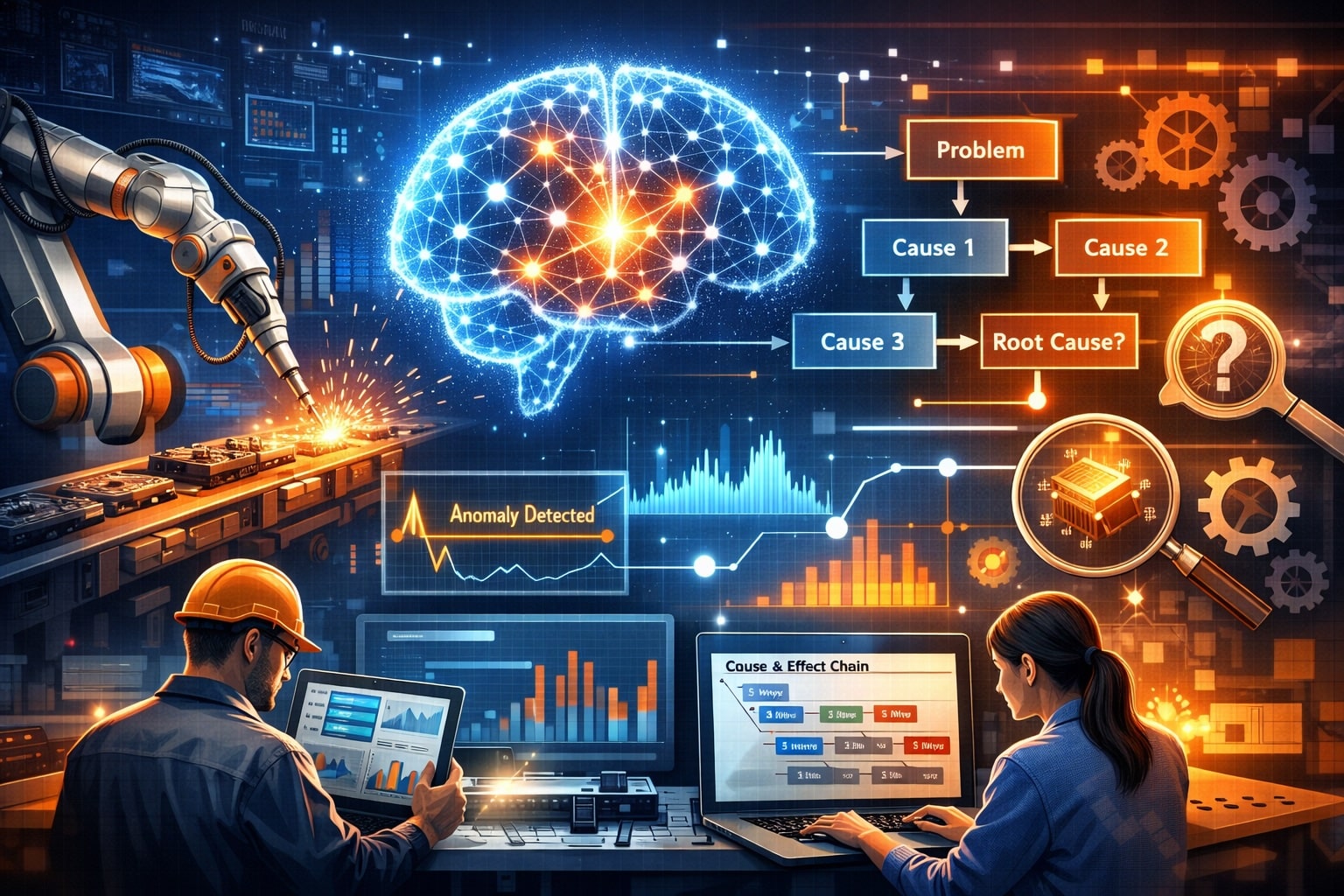
A production line drifts out of spec at 2:10 a.m. Scrap piles up. The dashboard shows a temperature excursion, a vibration spike, and a quality alarm. The team has data, yet the data sits in separate silos: sensor historians, MES, maintenance notes, and shift handovers. Engineers can still solve this the classic way: pull charts, interview operators, sketch a fishbone, run 5 Whys. Yet every hour adds cost and pressure. AI root cause analysis changes the tempo. Machine learning can scan thousands of signals, detect subtle precursors, group related anomalies across systems, and propose a short list of probable causes…