

In the PRIZ Innovation Platform, everything we do is organized as a project. That applies to complex, long-running investigations and to smaller decision-making tasks. A project is the place where you set context, define the problem, use creative tools, and track ideas.
In this document, we’ll walk through the current project creation process, including Ask Assistant to Help. After you launch, you land on Project Overview and continue from there.
Sign Up & Login
This document assumes you have already registered and logged in. If you need help with registration or authentication, please refer to our Sign Up & Login Instructions.
Starting the process
You can start a project from several places. If you don’t have any projects or tools yet, Projects & Tools shows: You have no projects or tools. Add your first one.
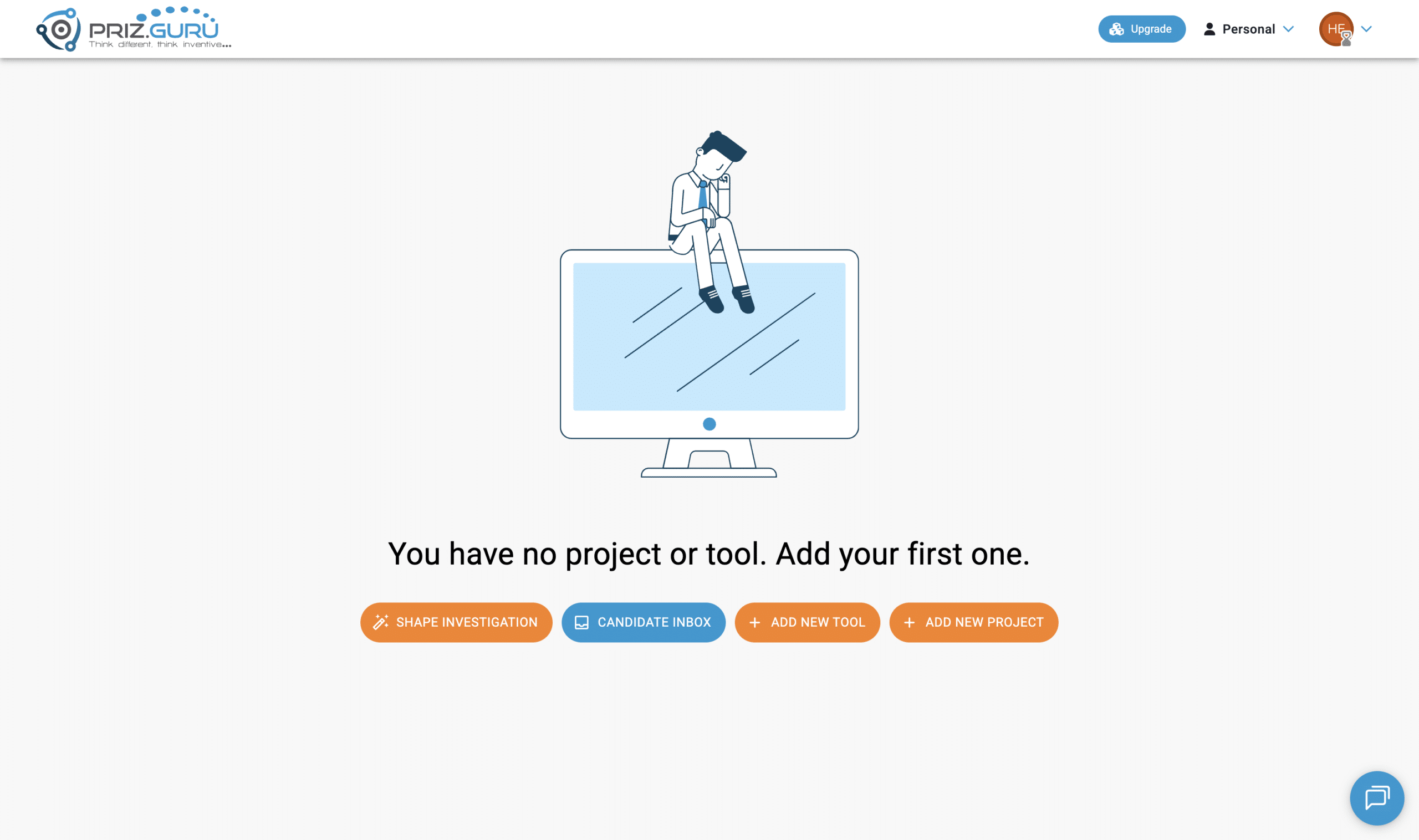
From this empty page you can also:
- Click Add New Tool to start a standalone tool without a full project.
- Click Shape Investigation if you already have messy notes and want a Problem Candidate first. See Shape Investigation.
- Click Candidate Inbox to review candidates. See Problem Candidate Inbox.
When you already have at least one project or tool, Add New Project sits at the top of Projects & Tools. Open the arrow next to it for the other create options.
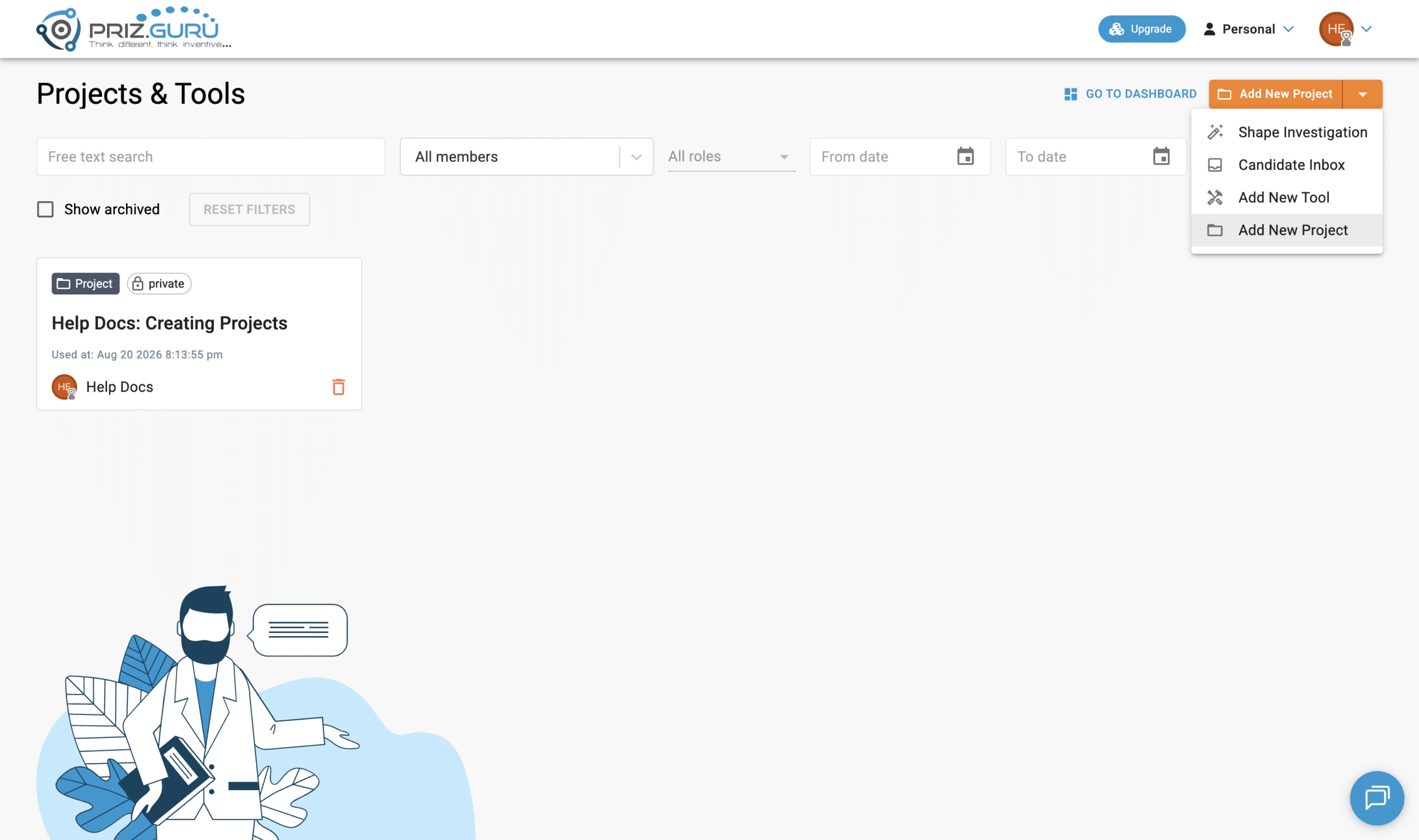
Click Add New Project. PRIZ opens a guided wizard titled Let’s Start Project. If you start from the first-time welcome screen instead, the title is Let’s Start Your First Project. The steps are the same.
The wizard has four steps:
- Industry
- Department
- Goal
- Launch
There is no Challenge step in this wizard. You describe the situation later on Project Overview and in the problem statement.
This information does two jobs:
- It focuses you on the right problem space before you start the investigation.
- PRIZ Assistant uses it later in the project, so the more accurate it is, the more useful the help becomes.
There is no Skip inside the wizard. Next stays inactive until the current step has a value. You can go back to a completed step from the stepper. Close the wizard with the X if you are not ready.
Industry
The first step asks: What is the industry you are working in?
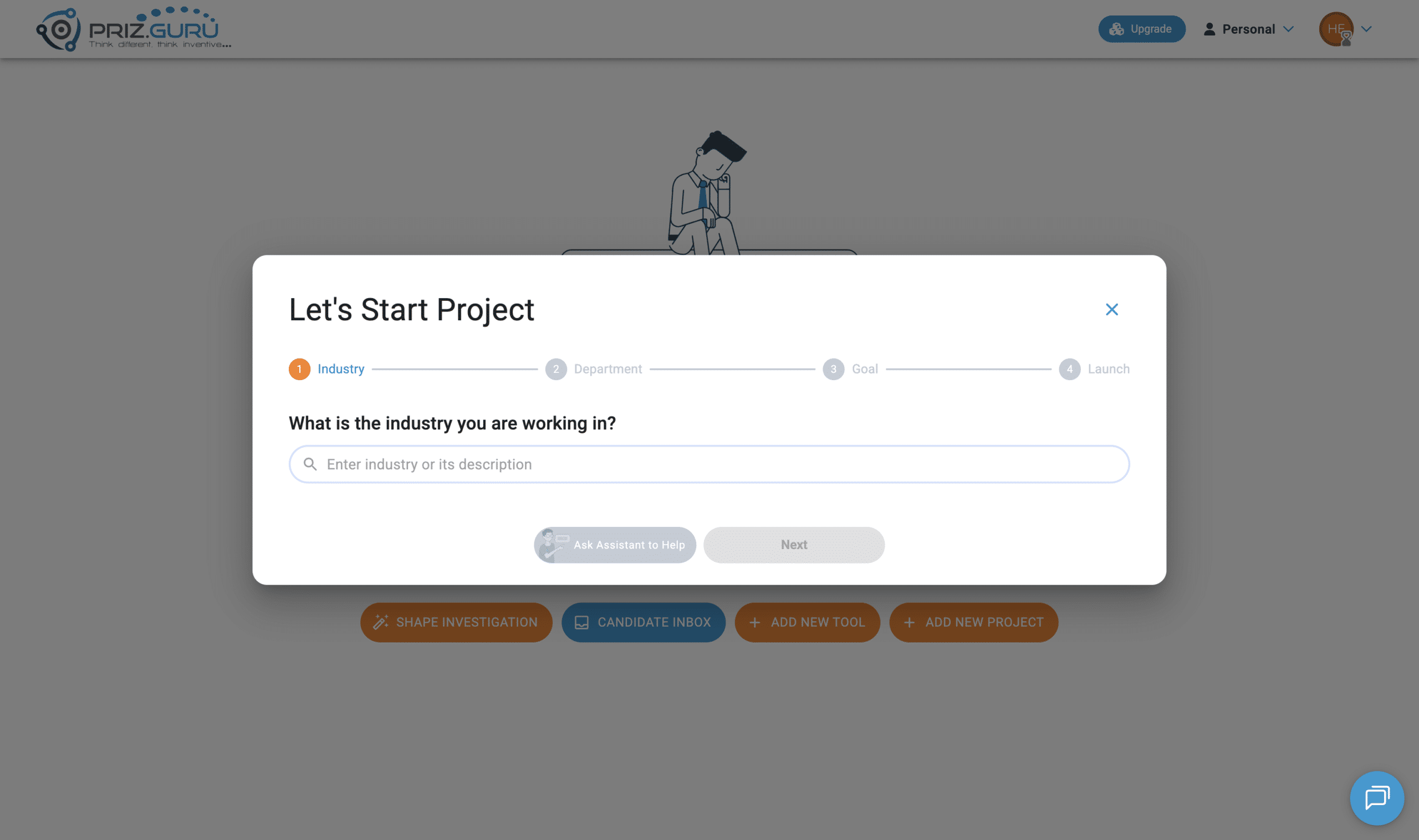
You can complete this step in three ways:
- Type the industry name or a short description. As soon as you type, PRIZ treats that text as the selected value.
- Keep typing to filter the common list, then click a matching option.
- If the list does not have a good match, click Ask Assistant to Help.
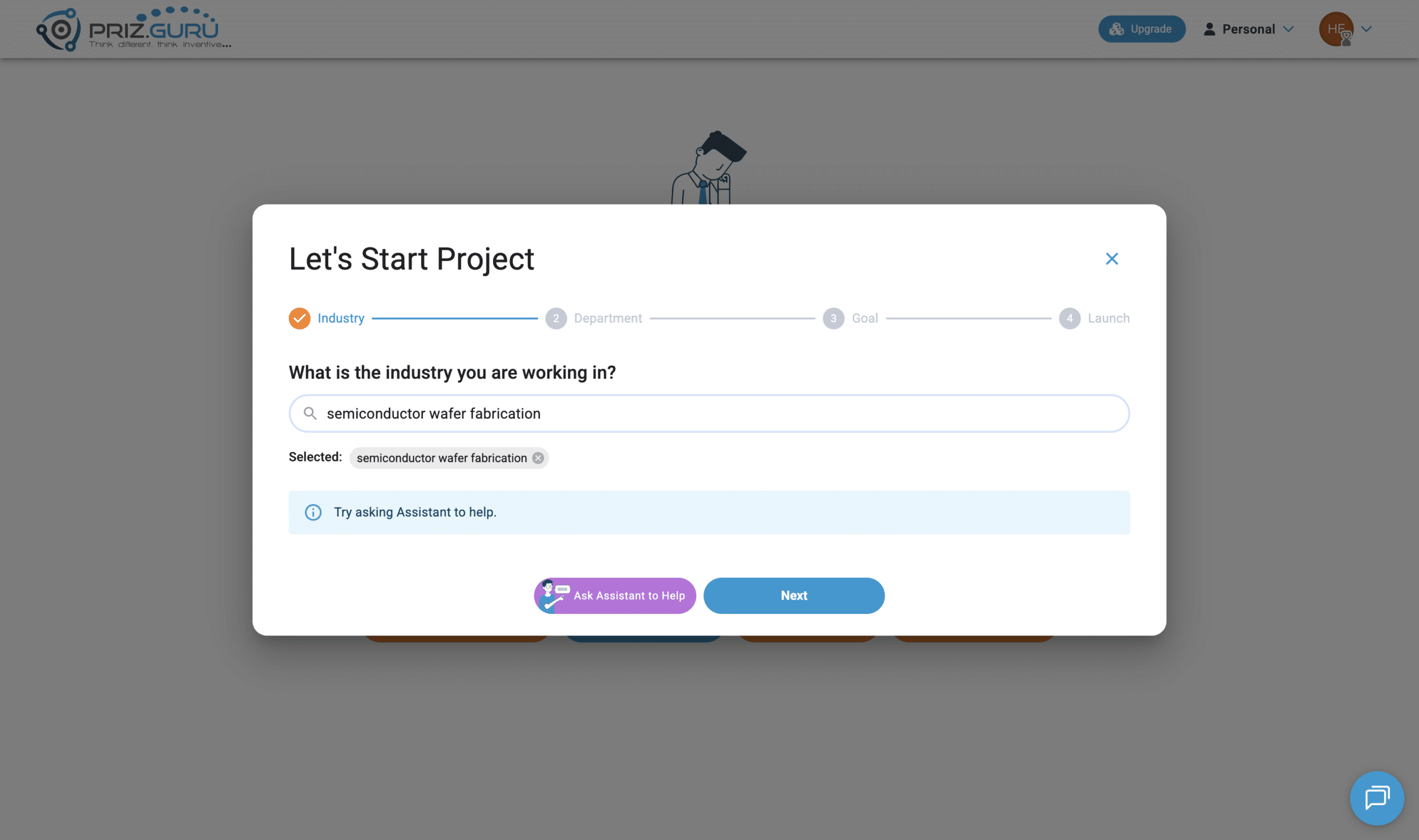
Assistant reads your description and offers a short list under Here are the most suitable options for you. Click the option that fits. Selected updates to that value. You can still keep your own wording if you prefer it.
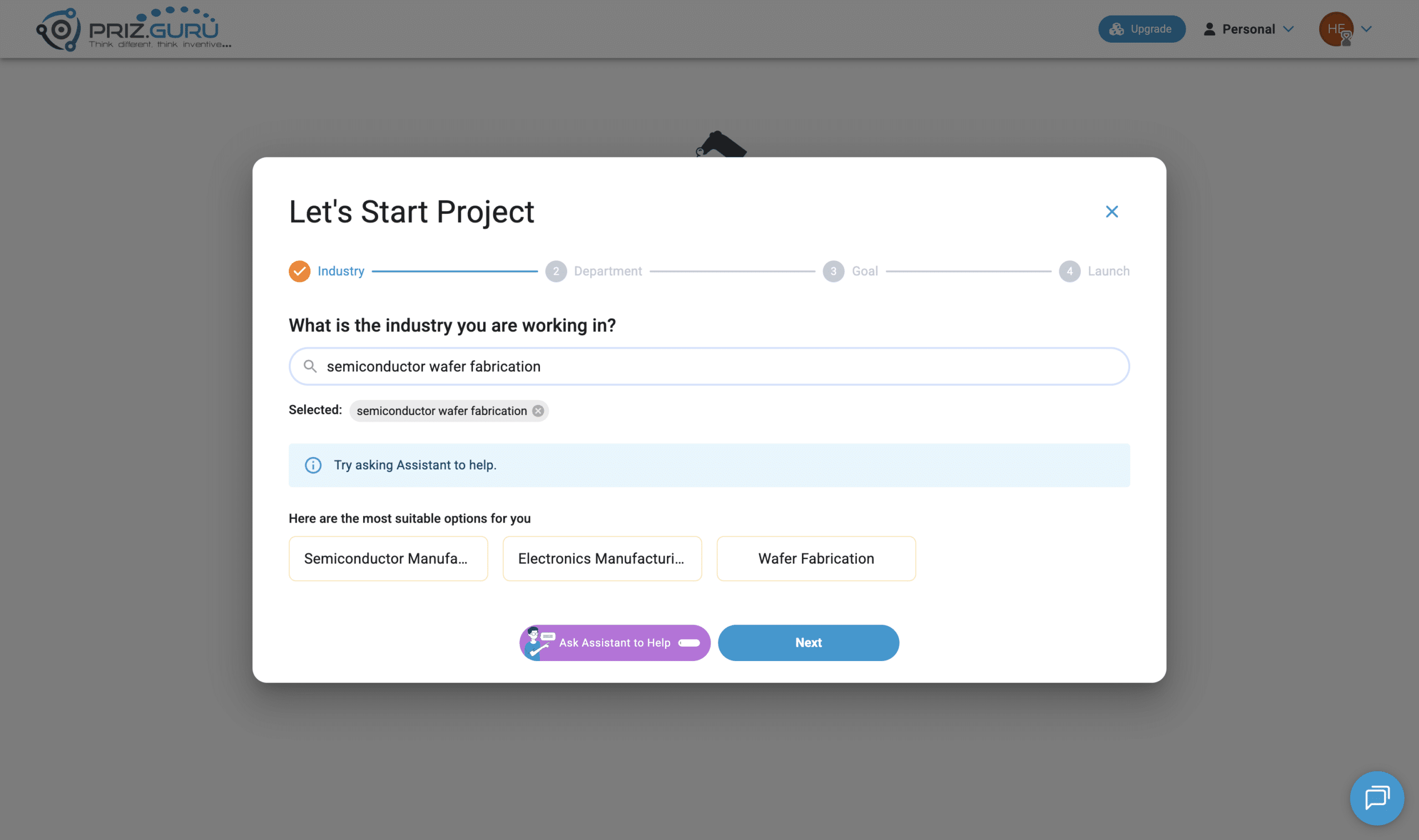
Assistant is available on free accounts with a usage limit. If you hit the limit, PRIZ tells you. You can still type your own industry and continue.
When the industry looks right, click Next.
Department
The second step asks: What is your area of responsibility or the department you are part of?
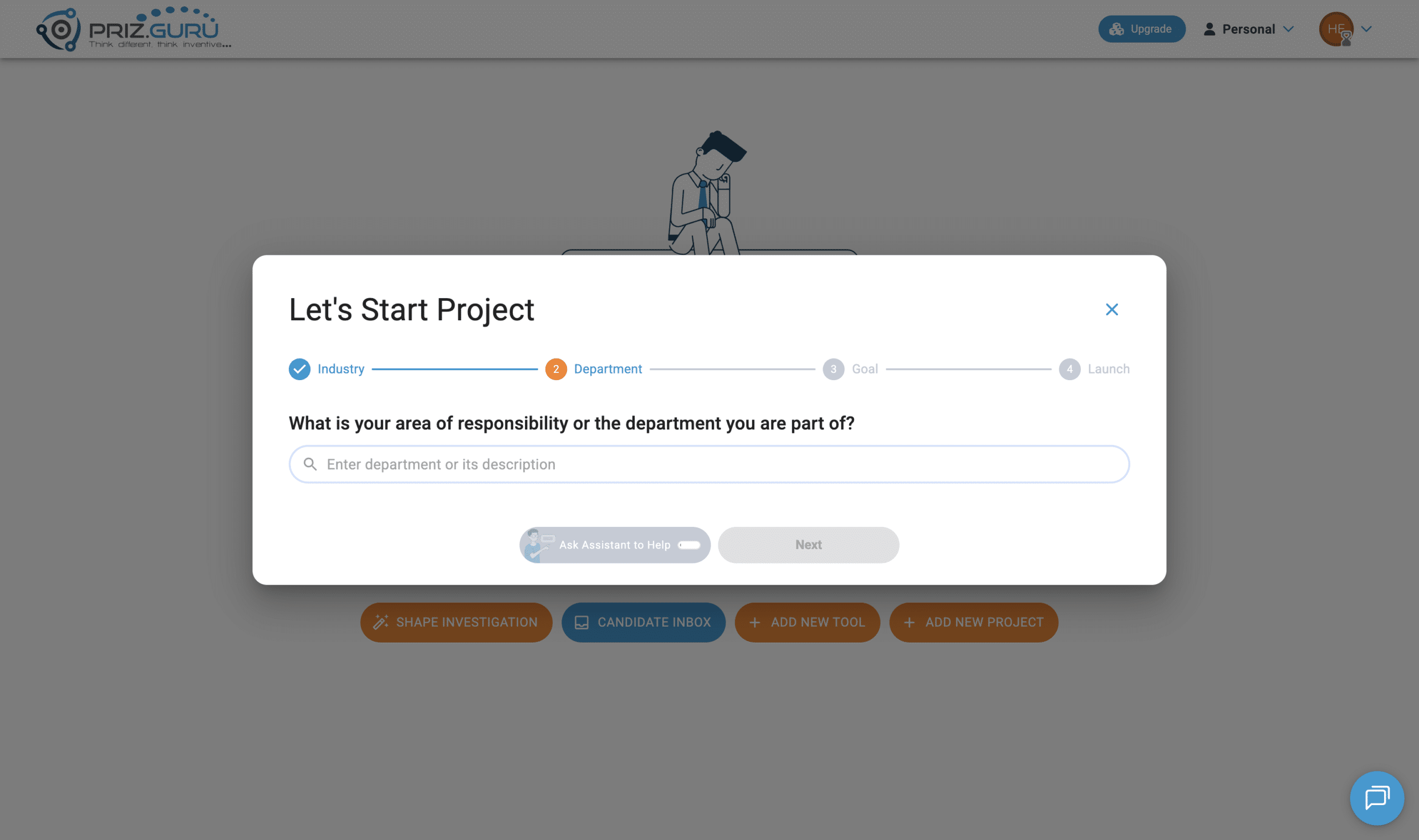
This works the same way as Industry. Type a name or description, pick a matching option from the list, or ask Assistant. Assistant uses the industry you already chose, so the suggestions stay in context.
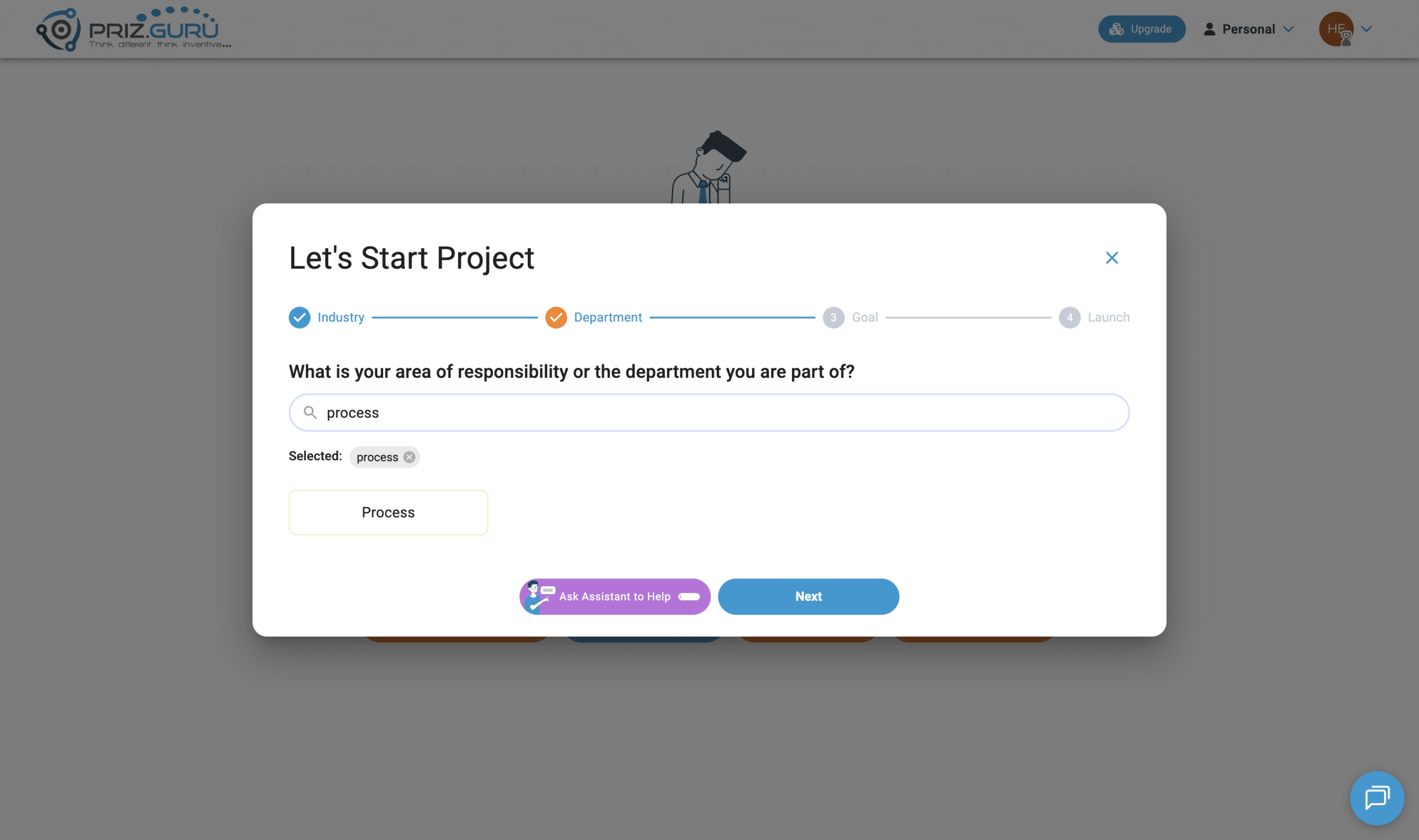
Choose the option that fits, then click Next.
Goal
The third step asks: What is the high-level goal of this project?
The goal is not the problem statement, and it is not a detailed challenge description. It is the high-level outcome you currently understand, for example, reducing defects, improving reliability, or cutting costs. Managers and teams often set this kind of goal before the investigation starts. You can refine the actual problem later.
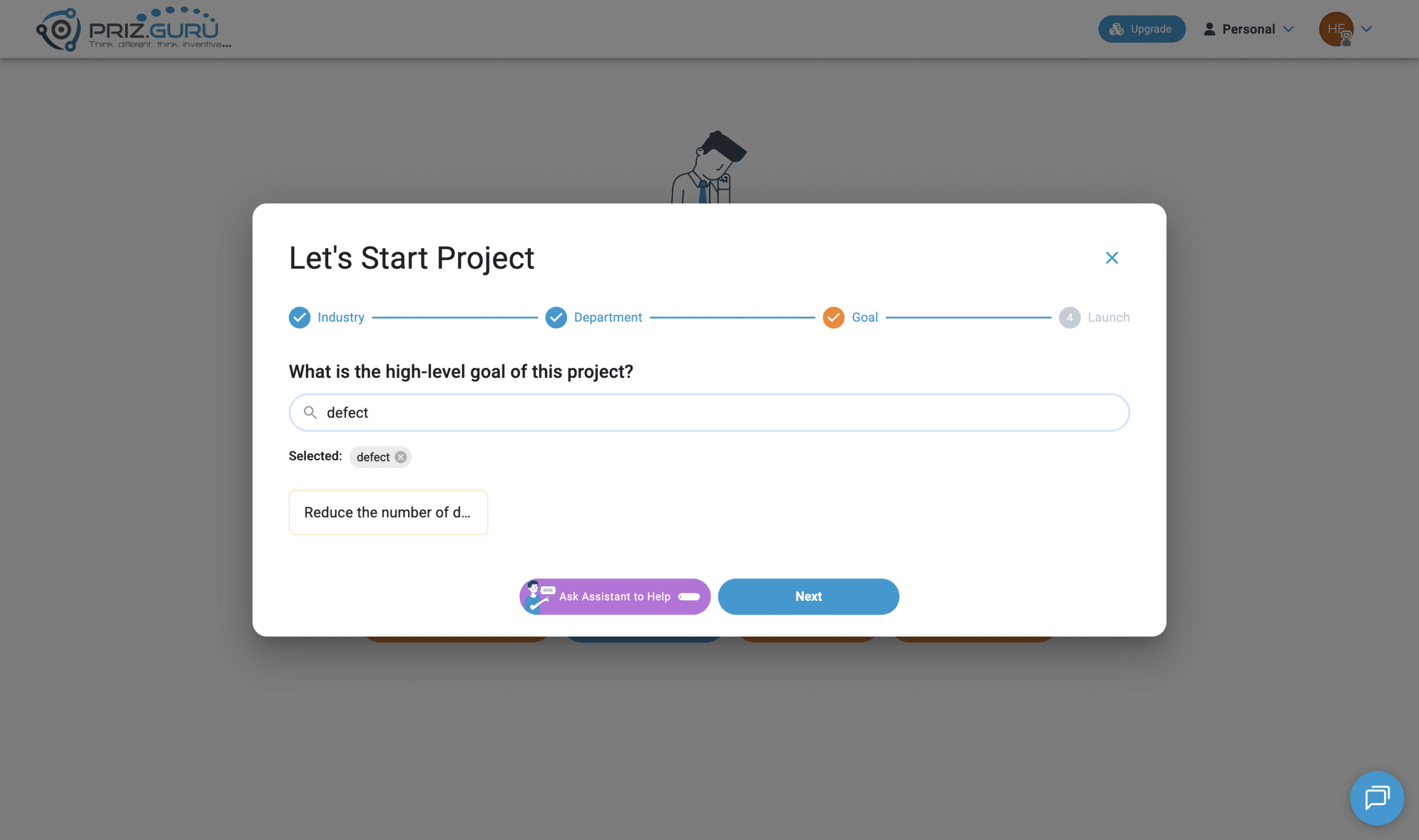
Choose the option that fits, then click Next.
Launch
The last step says: The final step to get started is to name your project.
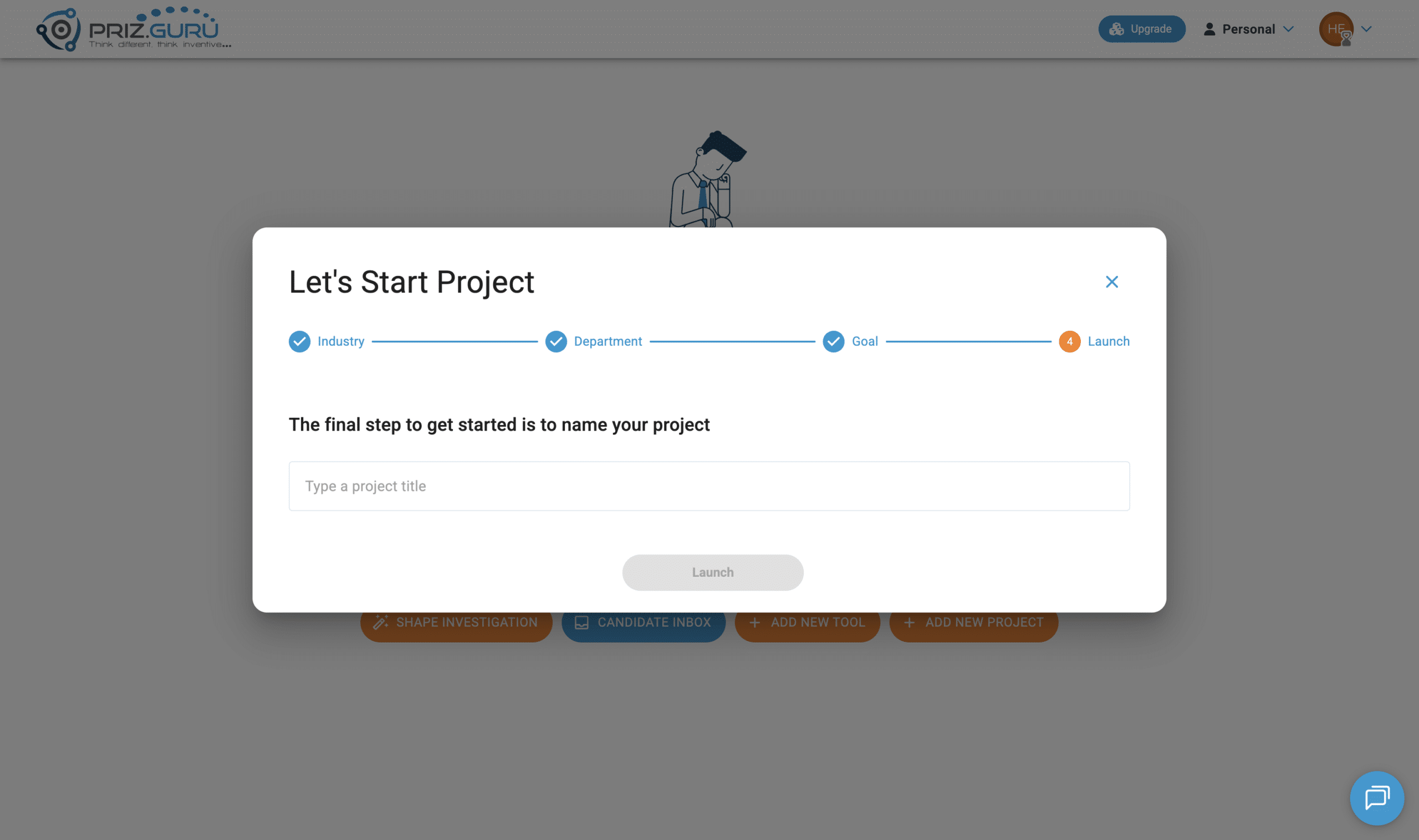
Use any title that will help you find this work later in the list. Type it in, then click Launch.
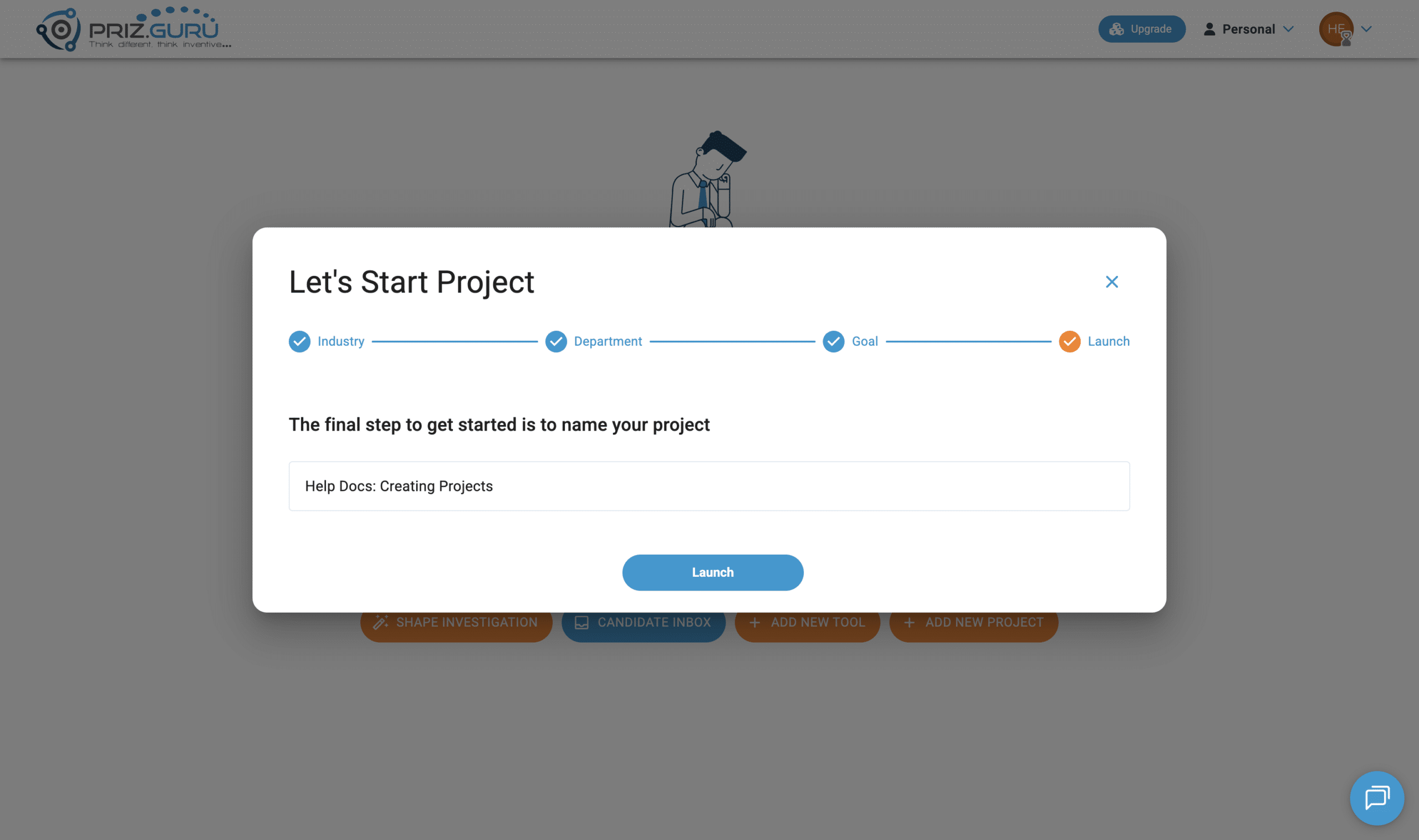
PRIZ creates the project and takes you to Project Overview. You may see a short loading overlay while that happens.
After you launch
The new project opens on Overview. The title is editable. Industry, department, and goal from the wizard appear under Additional details. You can click Edit if you need to change them.
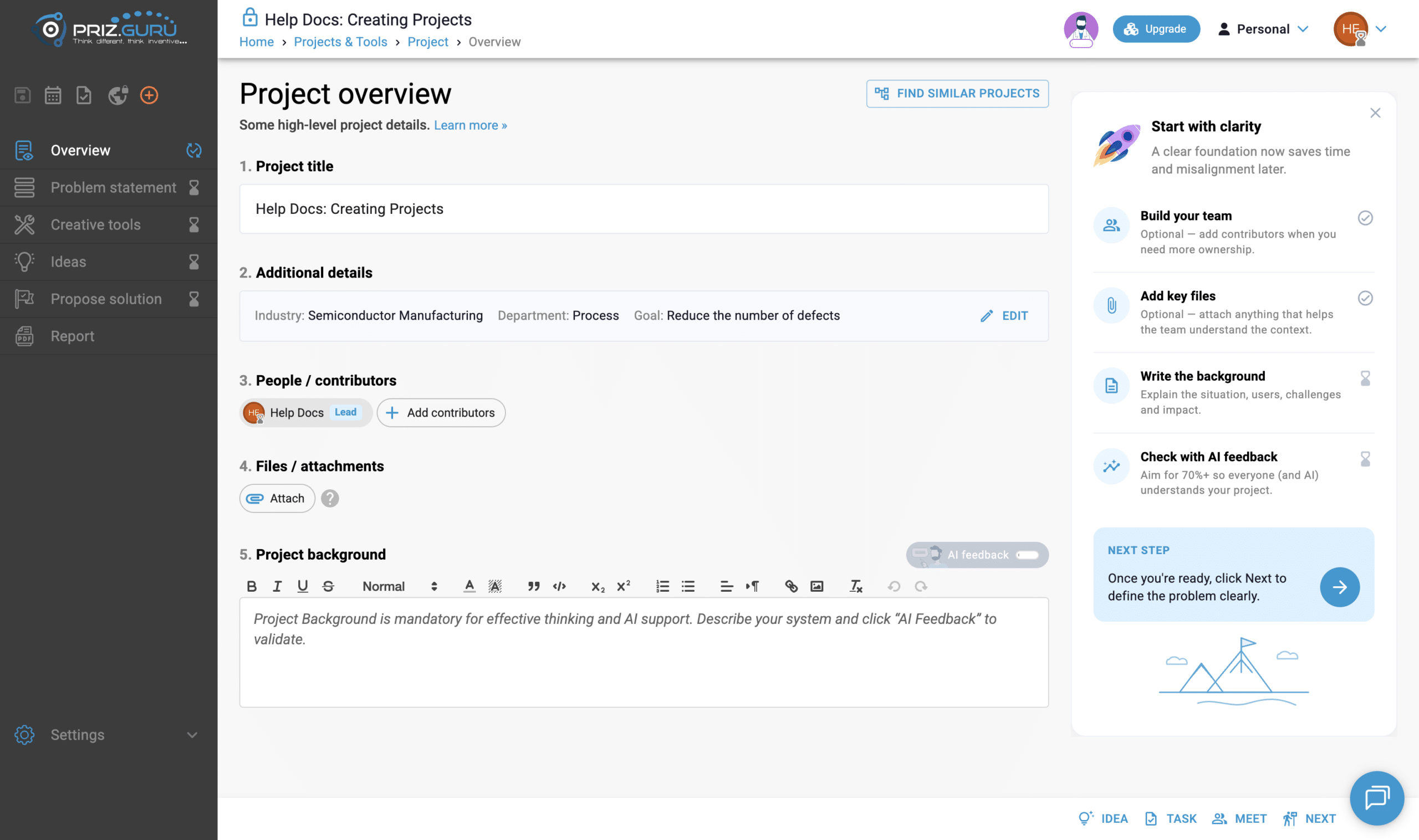
From here you typically:
- Write the Project background. This is the place for the situation, users, challenges, and impact.
- Optionally add contributors and files.
- Use AI feedback on the background when you want a check.
- Click Find similar projects if you want to see whether related work already exists.
- When you are ready, continue to the Problem statement.
The right-hand panel is titled Start with clarity. It is a checklist, not a blocker. Team and files are optional. The next step is defining the problem clearly.
No creative tools are added automatically. You add those later from Creative tools in the project.
Tips
- If you already have messy notes, start with Shape Investigation instead of a blank project. You can convert a reviewed candidate into a project later.
- Type your own wording when the preset list is close but not right. The selected chip is what PRIZ stores.
- Use Assistant when you are not sure how to name the industry, department, or goal. A short description is enough.
- Keep the goal high-level. Save the detailed challenge for Overview and the problem statement.
- You can close the wizard and come back later with Add New Project. Nothing is created until you click Launch.
That’s it. I hope it’s clear and easy.
P.S. Please let us know if you require any assistance.