Research and innovation live in a world where things rarely work the first time. Prototypes misbehave, simulations diverge from real-world tests, and scale-up reveals weaknesses that were invisible on the bench. In that environment, teams have a choice. They can patch symptoms just enough to move forward, or they can treat every failure as a chance to learn something fundamental about their product and their system.
Root cause analysis is the discipline that turns those failures into assets. In production, RCA is usually framed as a way to reduce defects and avoid recalls. In R&D and innovation, it plays a different and even more strategic role: it shapes architectures, influences design rules, and guides the evolution of entirely new solutions. When it is done well, root cause analysis in product development becomes one of the core engines of innovation.
In manufacturing, the system is supposed to be stable. Inputs, conditions, and processes are tightly controlled. A problem is usually a deviation from a well-defined baseline. In R&D, the baseline itself is moving. Prototypes change week to week, requirements evolve, and sometimes the team does not yet know what “normal” should look like.
That creates a unique set of challenges. Symptoms in early development are often ambiguous: a noisy signal might be caused by sensor physics, mechanical coupling, firmware filters, the test setup, or all of them together. Causality is layered; a visible defect might originate in a small implementation detail, but the true reason sits deeper, in the system architecture or in a wrong assumption about the physics.
Time pressure makes this worse. When a demo, customer trial, or investor meeting is approaching, teams are naturally tempted to “just tweak the parameter,” change a component, or insert an extra fix in software. The issue appears to disappear, but the underlying reason is never fully understood. The product moves forward, shadowed by uncertainty. The price for that shortcut often shows up much later, when the system is hard to change.
A systematic approach to root cause analysis is how R&D teams avoid that trap. Instead of treating failures as embarrassments to be hidden, they treat them as experiments, deliberately designed to reveal how the system truly behaves.
Every organization uses its own labels and templates, but effective RCA in R&D tends to follow a common logic. The structure below is not a rigid method; it is a way of thinking that can be adapted to electronics, mechanics, materials, software, or any hybrid system.
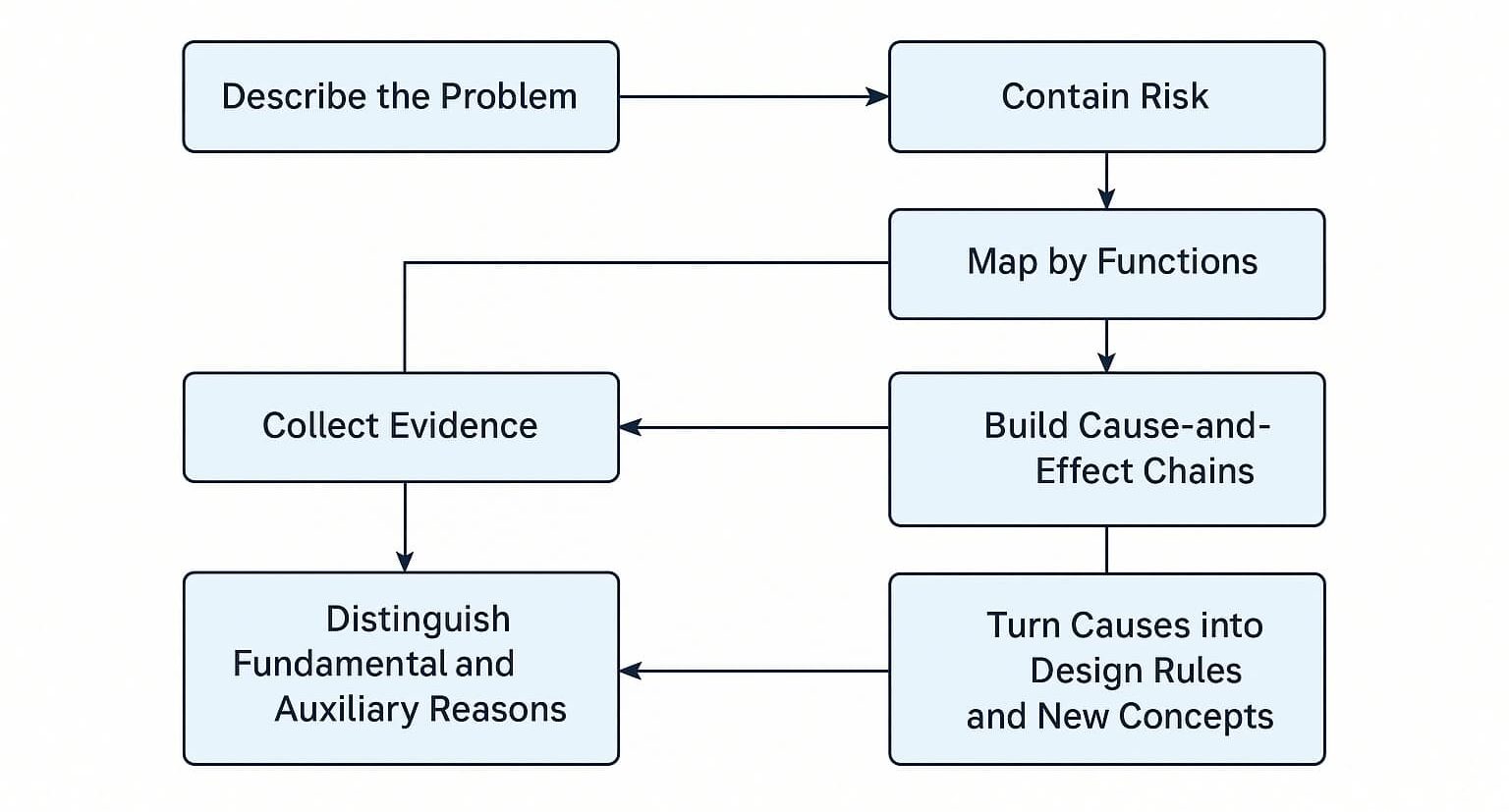
The starting point is an accurate description of the problem. Vague phrases like “the device is unstable” are not enough. An R&D-ready description grounds the issue in observable behavior, boundary conditions, and context. For example, a team developing a sensor module might say that a particular prototype shows a three-to-five-fold increase in noise within a specific frequency band after an hour of operation at high humidity. That level of precision already suggests what to test, what to compare, and where to look.
Once the problem is defined, the second concern is containment. In production, containment is about protecting customers and stopping the bleeding. In R&D, you also need to protect your ability to learn. The team must be able to reproduce and explore the failure without introducing unacceptable risk to schedules or to people. That usually means isolating a safe-to-fail environment where you can run focused experiments without corrupting the rest of the project.
From there, attention shifts to understanding the system through functions rather than through parts. Instead of jumping straight to blaming a PCB, a sensor, or a particular supplier, the team asks what each element is supposed to do. It may need to capture a physical quantity, convert it to an electrical signal, filter unwanted components, reject environmental interference, transfer heat, or protect a sensitive area from moisture. Mapping these functions and the interactions between them leads to a very different picture of the system than a simple parts list. It also tends to reveal subtle couplings, such as a protective feature that unintentionally changes thermal behavior or mechanical strain.
With that functional view in mind, the team can design experiments that discriminate between possible causes. The key here is not to collect as much data as possible, but to collect the particular data that is capable of ruling explanations in or out. Comparing different prototype versions, stressing individual subsystems in isolation, varying a single factor at a time, or challenging the measurement setup itself are all ways of narrowing the field of candidates. Each test is a small hypothesis: if the cause lies here, I should see this change when I modify that variable.
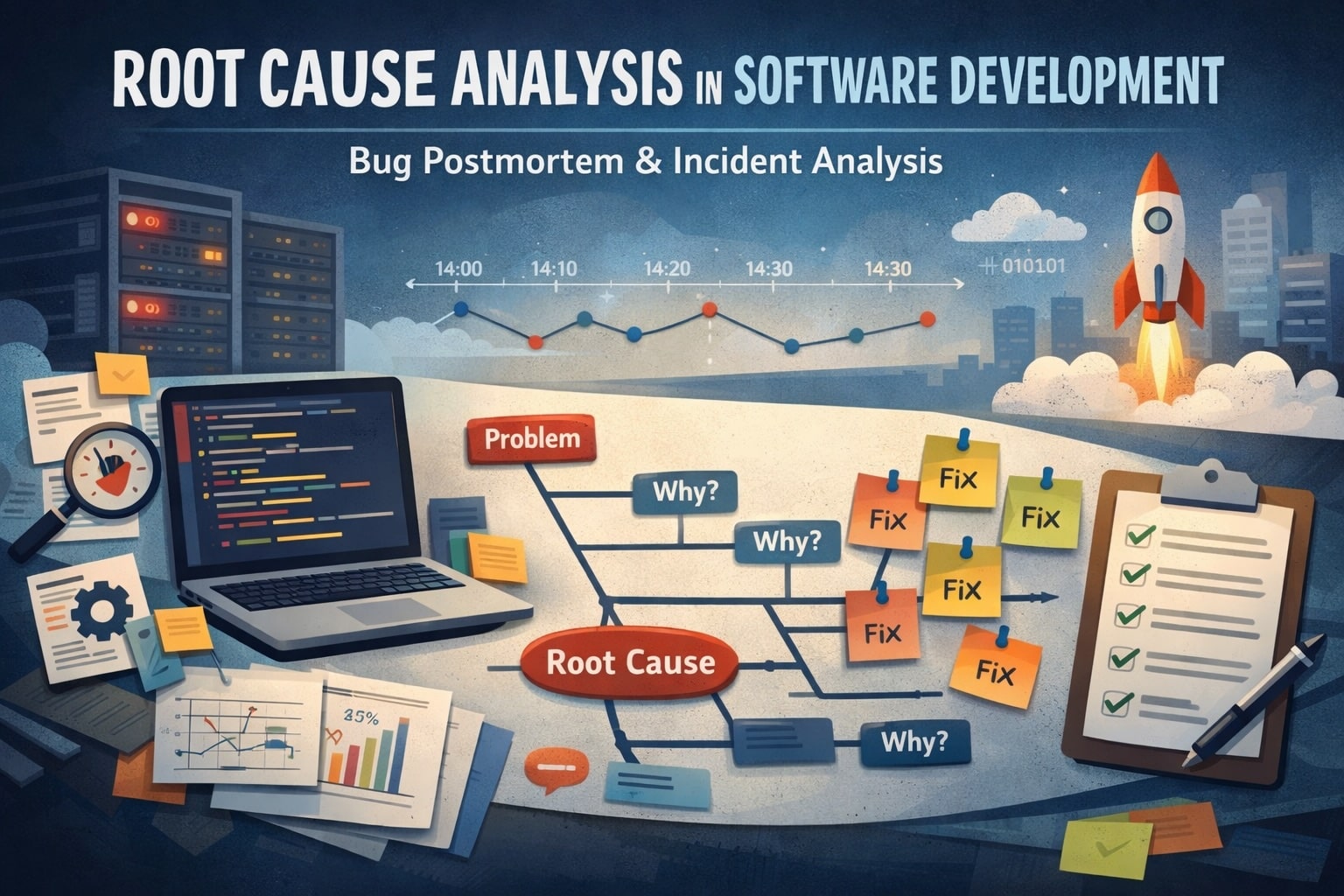
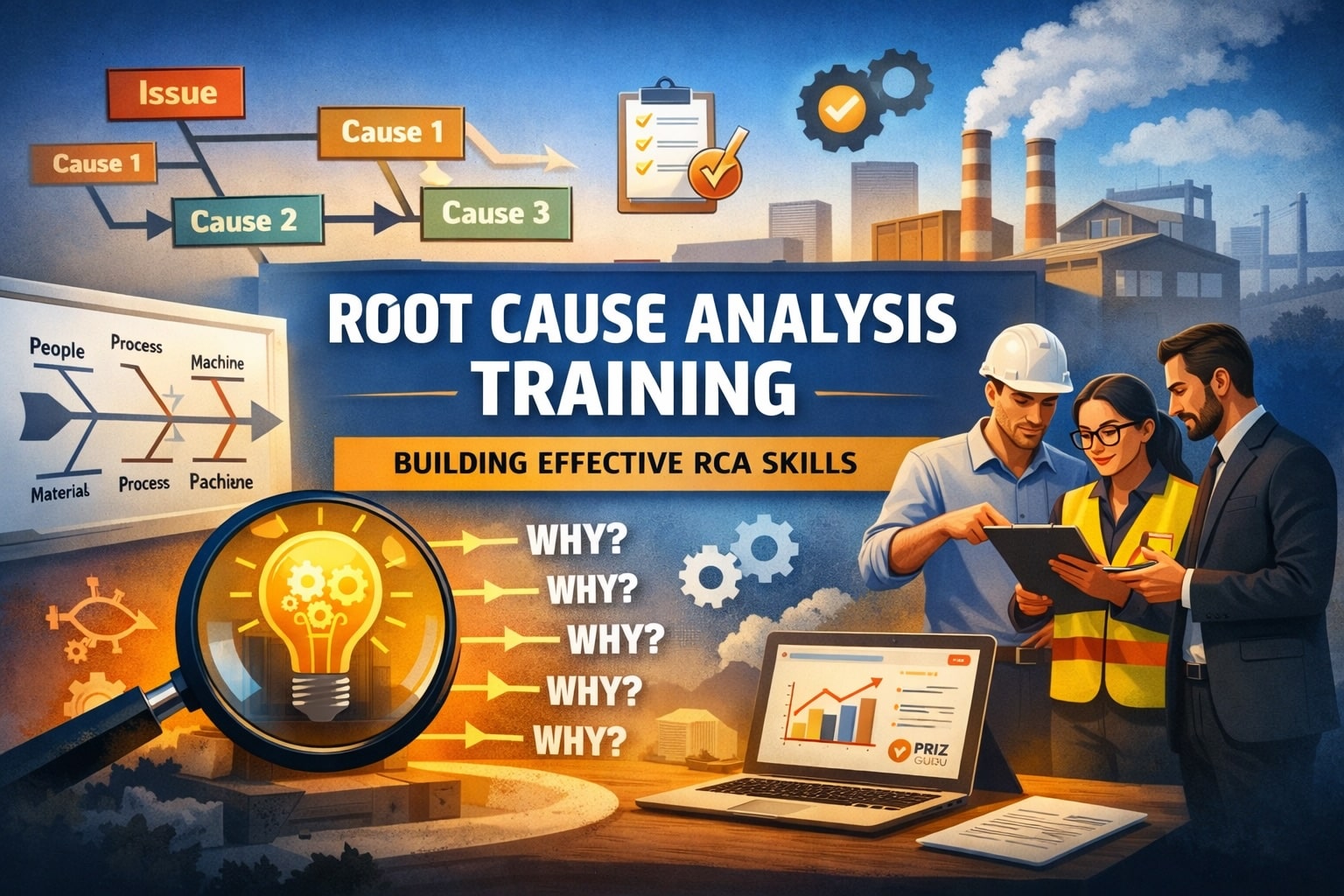
As evidence accumulates, cause-and-effect chains emerge. The familiar “5 Whys” approach is useful, but in complex R&D problems, there is rarely a single straight chain from symptom to cause. Multiple branches exist. One branch might explore how an environmental stress affects a material, another how that material change affects signal integrity, and a third how firmware responds. Instead of a linear ladder, the team is effectively building a tree. Capturing this branching structure explicitly prevents them from locking in too early on the first plausible narrative.
At this stage, it is often helpful to distinguish between different levels of causes. PRIZ Guru, for example, draws a line between fundamental and auxiliary reasons. A fundamental reason is a deep, structural issue: a flawed architecture, a wrong assumption, or an inherent sensitivity built into the concept. An auxiliary reason is a contributing factor that makes the failure more likely or more severe, such as a particular material choice, a tolerance stack-up, or a narrow test plan. Both matter, but they are not equal. Fixing auxiliary reasons may stop the symptom for now; addressing the fundamental reason is what usually leads to better, more robust designs.
Finally, root cause analysis in product development should not end at the moment the failure disappears. In R&D, the real payoff arrives when the team translates what they learned into design rules, reusable patterns, and updated test strategies. A single investigation can lead to new constraints for future designs, architectural principles for similar products, and standard stress tests that every new concept must pass. Over time, this transforms RCA from a reactive activity into a source of institutional memory and competitive advantage.
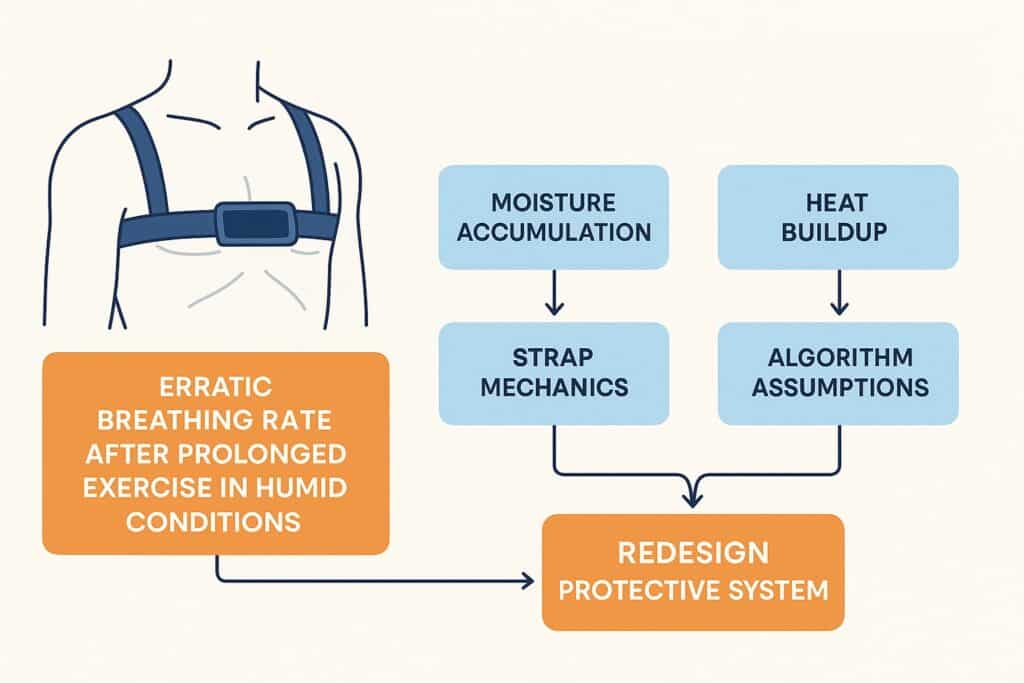
Consider a development team working on a next-generation wearable respiratory monitor for athletes. In the lab, early prototypes perform well. Signals are clean, algorithms track breathing rate accurately, and the device passes short standard tests. Problems begin when athletes wear the device for long outdoor training sessions. After thirty to sixty minutes of intense exercise, the monitor starts reporting erratic breathing rates. The effect is most pronounced in humid conditions. A quick fix in the filtering algorithm improves the numbers slightly, but the instability refuses to go away.
At this point, the team decides to treat the issue as a serious root cause analysis exercise and uses PRIZ tools to structure the work.
The first step is to describe the problem precisely. They document that under prolonged high-humidity, high-sweat conditions, the measured breathing rate becomes unstable and that the instability grows over time. They also note that the effect does not appear during short lab tests with lower humidity and temperature.
Next, they build a functional model inside the PRIZ platform. Instead of thinking in terms of a strap, a sensor, and a housing, they describe how the system is supposed to work. The device must sense chest expansion, convert mechanical strain into an electrical signal, condition and digitize that signal, filter motion artefacts, protect sensitive elements from sweat and weather, and transfer heat away from electronics. By concentrating on functions, they notice potential conflicts that were not obvious from the mechanical drawings alone. The protective layer that keeps sweat away from the electronics might be interfering with heat dissipation and changing how strain is transferred to the sensor.
Using the Cause & Effect Chain tool, they start from the observed symptom and branch out into possible explanations. One branch explores whether the sensor’s electrical behavior changes with temperature. Another examines how moisture might accumulate in the protective film and whether that could affect sensor characteristics. A third investigates whether the strap mechanics change as it absorbs sweat, and a fourth considers whether the signal processing algorithm makes hidden assumptions about baseline stability.
Rather than debating endlessly, they design small experiments to test each branch. They run humidity and temperature cycling on the sensor assembly with and without the protective film. They use thermal imaging to see how heat accumulates under realistic usage. They test different strap tensions and measure how strain propagates through the layered structure. They also validate that their test equipment is not introducing artefacts of its own.
Results converge toward a coherent story. Under prolonged humid conditions, the protective film traps moisture close to the sensor. That moisture changes the dielectric environment around the sensing element and shifts its baseline over time. At the same time, restricted heat transfer leads to local temperature changes that amplify the effect. The firmware, designed under the assumption of a relatively stable sensor baseline, struggles to compensate. The fundamental reason is not “bad firmware” or “cheap sensor” but a design decision that tightly couples environmental protection with the sensing function in a way that becomes unstable in real-world conditions.
Auxiliary reasons become visible as well. The original test plan focused on short, controlled sessions and never stressed the device under realistic long-duration humidity. The mechanical and electrical teams had not fully aligned on how the protective layer might influence sensor physics. Documentation between the enclosure design and sensing requirements was incomplete.
Armed with this understanding, the team looks for solutions that address the cause, not just the symptom. They redesign the protective system as a layered structure that decouples moisture protection from the immediate sensing zone. An inner breathable layer preserves stable conditions around the sensor, while an outer barrier handles sweat and weather. The mechanical design is adjusted to keep strain transfer consistent over time. Because the sensor now behaves more predictably, the firmware can be simplified instead of becoming more complex and fragile.
The benefits go beyond fixing this particular defect. Through the PRIZ toolbox, the team records the cause-and-effect chain, the confirmed fundamental and auxiliary reasons, the modified design rules, and the new test procedures. Future wearable projects can reuse this knowledge. What started as a frustrating failure ends as a better product, a stronger architecture for similar devices, and a richer internal playbook for R&D problem solving.
Even experienced development groups can undermine their root cause analysis without noticing. One common pitfall is stopping at the first explanation that feels plausible, especially under schedule pressure. Another is confusing correlation with causation, for instance assuming that a module is at fault simply because disabling it makes the symptom disappear. A third is forgetting that in R&D the measurement system is often experimental too; sometimes the “problem” comes from test equipment, calibration, or tooling rather than the product itself.
Complex failures rarely belong to a single discipline. Mechanical design, materials, electronics, software, and test engineering often all play a role. That is why structured tools and shared representations, like functional models and cause-and-effect diagrams, are so valuable. They provide a common language, and they make it harder for important but inconvenient facts to be ignored.
The strongest organizations do not reserve root cause analysis for catastrophic failures or field returns. They bring its mindset into design reviews, feasibility experiments, and key prototype milestones. When something behaves differently than expected, they resist the urge to move on quickly. Instead, they pause long enough to ask what this behavior is trying to tell them about their system.
Over time, this discipline changes culture. Engineers and scientists become more comfortable talking about problems openly, because problems are now treated as opportunities to deepen understanding. Managers start to see RCA not as a bureaucratic requirement but as one of the most reliable ways to reduce risk in innovation portfolios. Each investigation feeds a growing body of internal knowledge that supports future projects.
In that sense, root cause analysis in product development is a way of working. For R&D teams using PRIZ Guru, tools such as Functional Modeling, Cause & Effect Chains, and advanced “5+ why” analysis are there to make that way of working concrete and repeatable. When failures happen, and in genuine innovation they always will, these tools help ensure that the organization does not just fix what went wrong, but learns something powerful enough to influence what comes next.